
Tree Care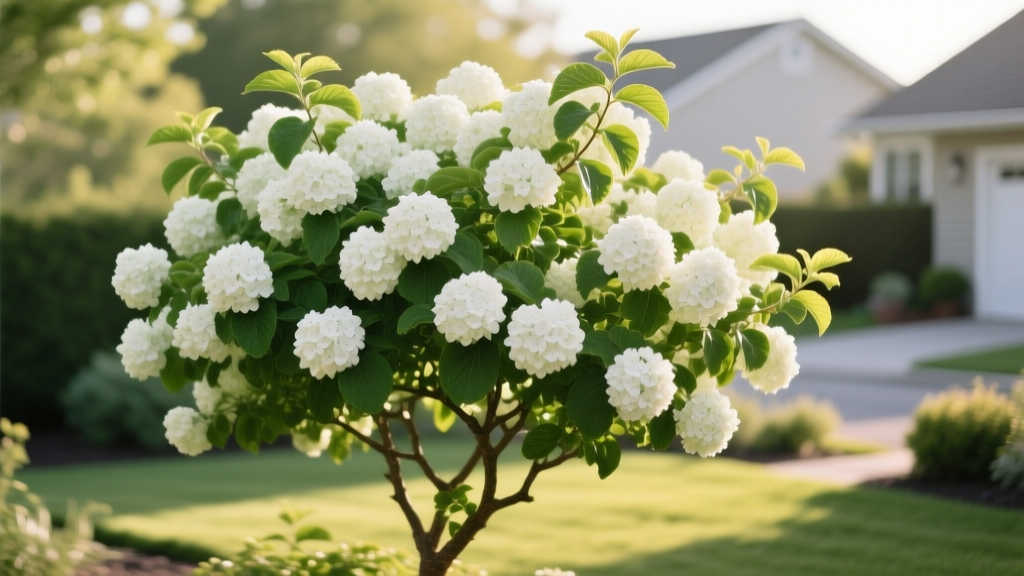
When to Trim Snowball Bush: Species & Zone Calendar
The term "snowball bush" is one of the most common misnomers in residential landscaping, leading to thousands of ruined spring displays every year. Homeowners frequently ask when to trim snowball bush shrubs, but the answer depends entirely on which of the two entirely different species is actually growing in their yard. Pruning at the wrong time of year will not harm the plant's health, but it will completely eliminate the next season's floral display.
To determine your exact pruning calendar, you must first identify whether your shrub is a Viburnum (which blooms on old wood) or an Annabelle Hydrangea (which blooms on new wood). This guide breaks down the physiological differences, provides a regional USDA hardiness zone calendar, and details the exact pruning techniques required for both species.
The Identity Check: Viburnum vs. Hydrangea Snowballs
Before touching your pruning shears, verify your shrub's identity. The European Snowball (Viburnum opulus) and Chinese Snowball (Viburnum plicatum) are frequently confused with the 'Annabelle' Smooth Hydrangea (Hydrangea arborescens). Both produce massive, spherical white flower clusters, but their growth habits dictate opposite pruning schedules.
| Feature | Viburnum Snowball (V. opulus / V. plicatum) | Hydrangea Snowball (H. arborescens 'Annabelle') |
|---|---|---|
| Leaf Shape | Maple-like, lobed (opulus) or oval/veined (plicatum) | Broad, heart-shaped, coarsely toothed margins |
| Bloom Time | Mid-to-Late Spring (May/June) | Early-to-Mid Summer (June/July) |
| Blooms On | Old Wood (previous year's growth) | New Wood (current season's growth) |
| Pruning Window | Immediately after spring flowers fade | Late winter / early spring before sap rises |
If your shrub has leaves that resemble a maple leaf, you have a European Viburnum. If the leaves are wide, heart-shaped, and grow on smooth, tan-colored canes that often flop to the ground under the weight of the blooms, you have an Annabelle Hydrangea. For a visual reference, examine the foliage closely:
When to Trim Viburnum Snowball Bushes
Viburnums are spring bloomers that set their flower buds for the following year during the late summer and early fall of the current year. This physiological process, known as bud differentiation, occurs at the apical meristems (the tips of the branches).
⚠️ The Mid-Summer Deadline: Never prune a Viburnum snowball bush after July 15th in most temperate zones. By late July, the shrub is actively forming next year's flower buds. Pruning in August, fall, or early spring will shear off these dormant buds, guaranteeing a sterile, bloomless shrub the following May.
The "Post-Bloom" Pruning Rule
The ideal time to trim a Viburnum snowball bush is within two to four weeks after the white flower clusters begin to fade and turn brown. This timing allows the shrub ample time to push new vegetative growth, which will then harden off and set buds before winter dormancy. According to the University of Minnesota Extension, pruning spring-flowering deciduous shrubs immediately after bloom is the gold standard for preserving floral displays while managing size.
When to Trim Hydrangea Snowballs ('Annabelle')
Unlike Viburnums, the 'Annabelle' Hydrangea blooms on new wood. The flower buds are not formed until the spring of the current growing season, emerging from the tips of fresh shoots that push out after the last frost.
Because they bloom on new growth, Annabelle hydrangeas are incredibly forgiving. You can prune them aggressively in late winter or early spring while the shrub is fully dormant. In fact, cutting them back hard encourages the plant to push out thicker, sturdier canes that are better equipped to hold up the massive 10-inch flower heads without flopping over in summer rainstorms. Clemson University's Home & Garden Information Center recommends cutting smooth hydrangeas back to 6 to 12 inches above the ground in late winter for the most robust summer blooms.
Regional Pruning Calendars by USDA Hardiness Zone
Seasonal timing shifts dramatically depending on your local climate. A gardener in Zone 4 will prune weeks later than a gardener in Zone 8. Use the following regional calendar to pinpoint your exact pruning windows for both species.
| USDA Zone | Regions Included | Viburnum Pruning Window (Old Wood) | Hydrangea Pruning Window (New Wood) |
|---|---|---|---|
| Zones 3-5 | Upper Midwest, New England, MT, WY | late June – Mid July | Late April – Early May |
| Zones 6-7 | Mid-Atlantic, Lower Midwest, PNW | Late May – Mid June | late March – Mid April |
| Zones 8-9 | Deep South, Coastal West, TX, FL | Early May – Late May | Late February – Mid March |
Step-by-Step Pruning Technique & Tool Selection
Using the correct tools and cut angles prevents the introduction of fungal pathogens and promotes rapid callus formation over the pruning wound. Avoid anvil pruners, which crush the vascular tissue of the stem. Always use high-quality bypass pruners.
Recommended Tool Loadout
- Hand Pruners (Stems up to 3/4"): Felco F-2 Classic Bypass (approx. $65) or Corona BP 7100D ($38). The Felco F-2 features a hardened steel blade that holds an edge through hundreds of cuts and replaceable parts.
- Loppers (Stems 3/4" to 1.5"): Fiskars 28" PowerGear2 Bypass Loppers ($45). The geared mechanism provides 3x leverage, crucial for cutting thick, woody Viburnum base canes.
- Pruning Saw (Stems over 2"): Silky Gomboy 210mm folding saw ($45) for flush cuts on mature, multi-year wood.
The Proper Cut Anatomy
- Locate the Node: Identify an outward-facing leaf node or bud. Cutting above an outward-facing node forces the new branch to grow away from the center of the shrub, improving air circulation and reducing powdery mildew risk.
- Measure the Distance: Position your bypass blade exactly 1/4 inch above the node. Cutting too close dries out the bud; cutting too far leaves a dead stub that invites borers and cankers.
- Angle the Blade: Make a clean 45-degree cut sloping away from the bud. This angle ensures rainwater runs off the cut surface rather than pooling against the emerging bud.
Pro Tip for Viburnum Thinning: Instead of just shearing the outer canopy (heading cuts), use thinning cuts to remove entire branches back to their point of origin at a larger lateral branch or the main trunk. This maintains the natural, arching architecture of the Viburnum while reducing interior shading.
Rejuvenation Pruning for Overgrown Snowballs
If you have inherited a Viburnum snowball bush that is 12 feet tall, heavily shaded in the center, and producing sparse blooms, standard maintenance pruning will not fix it. You need a structural rejuvenation plan. Do not attempt to cut the entire shrub to the ground in one year; Viburnums do not respond well to total hard pruning and may suffer severe dieback or fail to recover.
The Three-Year Renewal Framework
Execute this framework over three consecutive dormant seasons (late winter/early spring) to slowly lower the canopy and stimulate new basal growth without shocking the root system:
- Year 1 (Dormant Season): Identify the oldest, thickest canes (usually gray, heavily furrowed bark). Cut exactly 1/3 of these oldest canes completely to the ground, leaving a 2-inch stub. Remove any dead, diseased, or crossing branches.
- Year 2 (Dormant Season): Cut the next 1/3 of the oldest remaining canes to the ground. You will notice vigorous new shoots emerging from the base where you pruned the previous year.
- Year 3 (Dormant Season): Remove the final 1/3 of the original old wood. By the end of this year, the shrub's canopy will consist entirely of young, vigorous wood that produces larger, denser flower clusters.
Common Pruning Mistakes and How to Fix Them
Even with the right calendar, execution errors can compromise the shrub. Here are the most frequent mistakes observed in residential landscapes:
- Mistake: Shearing into a formal hedge. Snowball bushes have a naturally graceful, arching habit. Shearing them into flat-sided boxes removes the terminal buds where flowers form and creates a dense outer canopy that shades out interior leaves, leading to a "hollow" shrub. Fix: Switch to selective thinning cuts to preserve the arching silhouette.
- Mistake: Pruning Hydrangeas in late fall. While Annabelles bloom on new wood, cutting them back in November or December leaves the hollow pith of the stems exposed to winter moisture, leading to freeze-thaw cracking down the length of the cane. Fix: Leave the dried brown flower heads on the plant through winter for structural interest, and wait until late February or March to make your cuts.
- Mistake: Ignoring the graft union. Some European Snowball Viburnums are grafted onto vigorous rootstock. If you see suckers emerging from the soil below the graft union (a visible bulge near the base), they will not produce snowball flowers. Fix: Trace the sucker down to the root crown and tear it off at the source rather than snipping it at soil level, which encourages multiple dormant buds to sprout.
Quick Reference Summary:
• Viburnum Snowball: Prune in early summer, immediately after blooms fade. Never prune after mid-July.
• Annabelle Hydrangea: Prune in late winter/early spring before new green shoots emerge.
• Tools: Bypass pruners only. Cut 1/4" above an outward-facing node at a 45-degree angle.
• Rejuvenation: Remove 1/3 of the oldest canes at ground level annually over a 3-year cycle.
• Viburnum Snowball: Prune in early summer, immediately after blooms fade. Never prune after mid-July.
• Annabelle Hydrangea: Prune in late winter/early spring before new green shoots emerge.
• Tools: Bypass pruners only. Cut 1/4" above an outward-facing node at a 45-degree angle.
• Rejuvenation: Remove 1/3 of the oldest canes at ground level annually over a 3-year cycle.