
Tree Care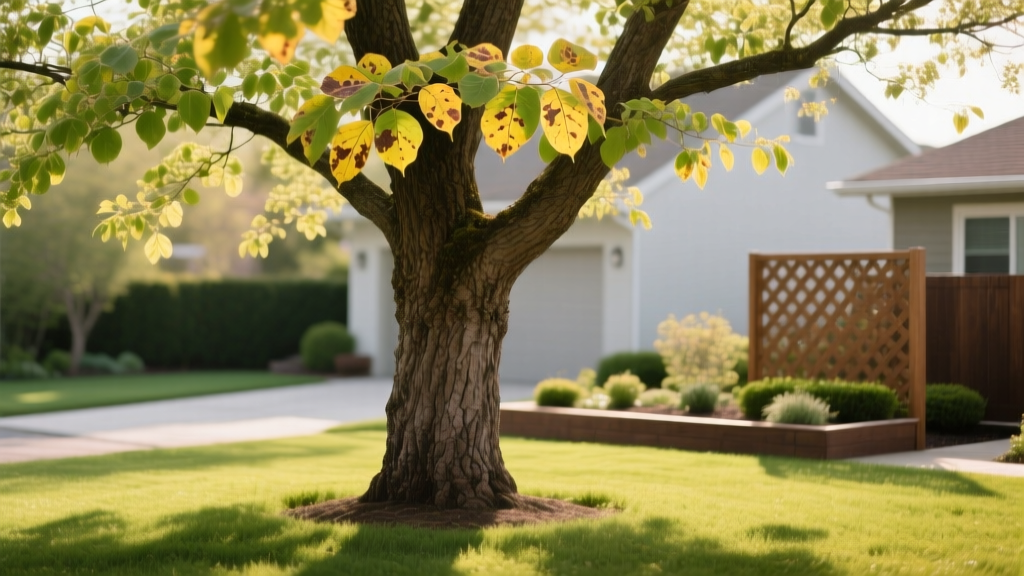
Will Glyphosate Kill Trees? Identifying Damage and Recovery
The Short Answer: How Glyphosate Affects Tree Physiology
Will glyphosate kill trees? The direct answer is yes, but the severity depends entirely on the exposure pathway, the concentration of the formulation, and the tree species involved. Glyphosate (N-(phosphonomethyl)glycine) is a non-selective, systemic herbicide. Unlike contact herbicides that only burn the tissue they touch, glyphosate is translocated through the phloem to the meristematic tissues (growing points) and root systems. Once inside the tree's vascular system, it inhibits the enzyme EPSP synthase, effectively blocking the shikimic acid pathway. This prevents the synthesis of essential aromatic amino acids—phenylalanine, tyrosine, and tryptophan—leading to cellular starvation, necrosis, and eventually, tree death if the dose is high enough.
⚠️ Critical Warning: Products labeled as 'Extended Control' or 'Weed & Grass Killer Plus' often contain a secondary soil-residual herbicide like imazapic or diquat. These secondary chemicals can remain active in the soil for months and are far more lethal to shallow feeder roots than pure glyphosate.
Identifying Herbicide Injury vs. Environmental Stress
Diagnosing glyphosate damage requires careful observation. Symptoms typically manifest 7 to 14 days after exposure, beginning as a generalized chlorosis (yellowing) that rapidly progresses to necrotic (brown) margins. Because these symptoms mimic other common tree ailments, misdiagnosis is rampant. Below is a diagnostic matrix to differentiate glyphosate toxicity from standard environmental stressors.
| Diagnostic Feature | Glyphosate Damage | Drought Stress | Verticillium Wilt |
|---|---|---|---|
| Onset Timeline | 7-14 days post-application | Gradual over weeks of low rain | Sudden branch flagging in summer |
| Leaf Pattern | Uniform yellowing, strapping, or cupping on newest growth first | Marginal scorch, wilting on older leaves first | One-sided wilting, vascular streaking |
| Branch Dieback | Terminal dieback progressing inward | Canopy-wide thinning | Isolated to specific scaffolds |
| Root Appearance | Fine feeder roots slough off and die | Dry, brittle fine roots | Healthy roots, internal sapwood stained |
For a deeper understanding of how non-selective herbicides behave in landscape environments, the UC Statewide IPM Program provides extensive guidelines on managing weeds near sensitive ornamental plantings without causing collateral vascular damage.
The Three Primary Exposure Pathways
Trees do not absorb herbicides through thick, mature bark easily. Damage occurs when the chemical bypasses the tree's natural exterior defenses via three specific routes:
1. Foliar Drift and Volatilization
The most common cause of injury is physical drift during application. When applicators use flat-fan nozzles producing fine droplets (<200 microns), wind can carry the mist into the lower canopy. Furthermore, applying ester-based formulations in temperatures exceeding 85°F can cause the chemical to vaporize and drift as a gas, settling on the stomata of tree leaves hours after the initial spray.
2. Root Uptake in Sandy Soils
A common misconception is that glyphosate is entirely inactive in soil. While it binds tightly to phosphorus in heavy clay soils (rendering it unavailable to roots), this binding capacity plummets in sandy soils with low organic matter (<2%). In these conditions, applying a 41% glyphosate concentrate directly over a tree's drip line allows the chemical to remain mobile. Shallow feeder roots of species like Dogwoods (Cornus florida) and Birches (Betula) can absorb the solution directly from the soil profile.
3. Bark Penetration via Surfactants
Commercial formulations like Ranger Pro or Roundup Pro include nonionic surfactants or pelargonic acid to strip the waxy cuticle off weeds. If sprayed directly against the thin, green bark of saplings or species like Japanese Maples (Acer palmatum), these surfactants compromise the bark's integrity, allowing the active ingredient to enter the cambium layer directly.
Emergency Mitigation and Recovery Protocol
If you suspect a tree has been exposed to a lethal dose of glyphosate, immediate intervention is required to interrupt the translocation process. Follow this 48-hour emergency protocol:
- Immediate Foliar Flushing: If drift occurred on the foliage within the last 2 hours, wash the canopy with a high-pressure hose. Glyphosate absorption through the leaf cuticle is not instantaneous; flushing can remove up to 60% of the chemical before it enters the phloem.
- Soil Drenching: If the chemical was applied to the soil over the root zone, apply 1.5 to 2 inches of water immediately. This pushes the chemical past the primary feeder root zone (top 6 inches of soil) and dilutes the concentration.
- Activated Charcoal Application: For soil exposure, apply a highly porous activated charcoal product (such as Gro-Safe) at a rate of 2 lbs per 100 square feet over the drip line. Charcoal has a massive surface area that adsorbs glyphosate molecules, neutralizing them before root uptake can occur.
- Bio-Stimulant Injection: To aid recovery, apply a liquid soil drench containing humic acid and kelp extract (Ascophyllum nodosum). This promotes rapid regeneration of fine feeder roots and provides cytokinins to counteract the stress response.
💡 Pro Tip: Do not apply nitrogen fertilizer to a glyphosate-damaged tree. Forcing rapid, succulent new growth while the vascular system is compromised will deplete the tree's stored carbohydrate reserves and accelerate dieback.
Prevention: Equipment and Application Thresholds
Preventing herbicide damage requires strict adherence to application physics and environmental thresholds. According to the Environmental Protection Agency (EPA), proper equipment selection is the primary defense against off-target movement.
- Establish a Buffer Zone: Maintain a strict 10 to 15-foot no-spray buffer around the drip line of any mature tree. Use a string trimmer or mechanical edger within this zone instead of chemical controls.
- Upgrade Your Nozzles: Discard standard flat-fan nozzles. Equip your backpack or skid sprayer with Air Induction (AI) nozzles, such as the TeeJet AIXR11004. These inject air into the liquid stream, producing massive >400-micron droplets that are virtually immune to wind drift.
- Monitor Weather Thresholds: Never apply glyphosate when wind speeds exceed 5 mph, or when temperatures are forecast to exceed 85°F within 24 hours of application to prevent vapor drift.
- Use Shielded Sprayers: When working near the trunk of thin-barked trees, utilize a physical spray shield (like the Spraying Systems ConeJet shield) to prevent bounce-back and direct contact with the cambium.
Frequently Asked Questions
Will a small amount of Roundup kill a mature oak tree?
A single, accidental foliar hit from a consumer-grade Roundup (typically 2% to 18% glyphosate) is highly unlikely to kill a mature, established oak tree (Quercus spp.). The tree's massive carbohydrate reserves and extensive vascular system will dilute the toxin. However, you will likely see localized 'flagging'—where the specific branch that absorbed the chemical dies back—while the rest of the canopy remains healthy.
How long does glyphosate stay active in the soil around trees?
Glyphosate does not persist indefinitely in the soil. Its half-life ranges from 2 to 197 days, heavily dependent on soil microbiology and organic matter content. In a healthy, biologically active landscape bed with high organic matter, soil microbes will break down the chemical into harmless aminomethylphosphonic acid (AMPA) and carbon dioxide within 30 to 45 days. It is not a long-term soil sterilant.

