
Tree Care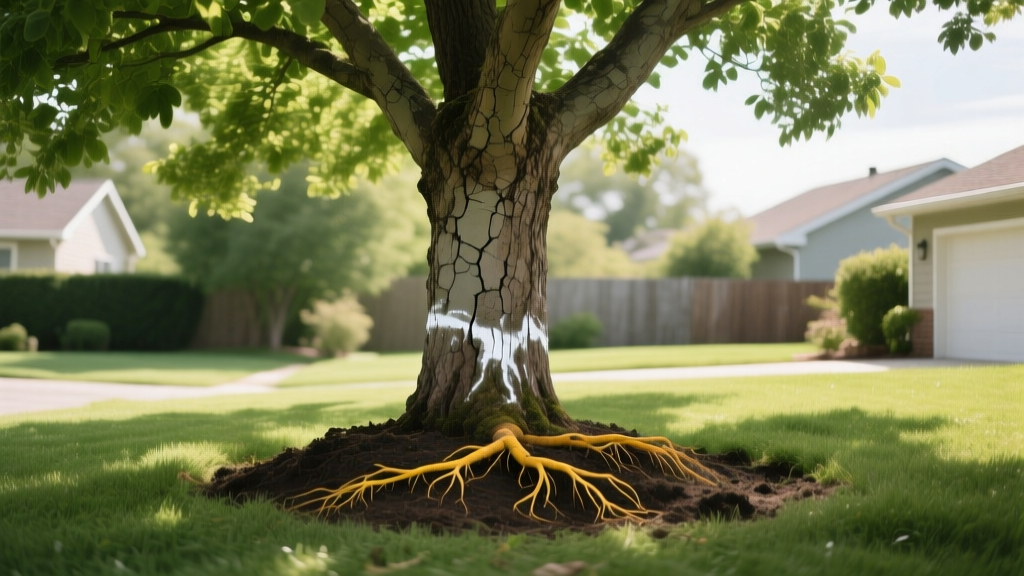
Will Roundup Kill a Tree? Glyphosate's Impact on Roots and Bark
The Short Answer: Will Roundup Kill a Tree?
Yes, Roundup can kill a tree, but the outcome depends entirely on the tree's age, the concentration of the herbicide, and the method of exposure. The active ingredient in Roundup, glyphosate, is a systemic, non-selective herbicide. It kills plants by inhibiting the EPSP synthase enzyme, which halts the production of essential amino acids. When applied directly to foliage or green bark, it translocates through the phloem down to the root system, causing total plant failure.
However, accidentally spraying the thick, corky bark of a mature tree trunk rarely causes fatal damage. The real danger lies in root uptake, exposure of the root flare, and a phenomenon known as root grafting. Understanding the physiological mechanics of glyphosate absorption is critical for homeowners managing weeds near valuable landscaping trees.
The Science of Glyphosate Absorption in Trees
Glyphosate requires entry into the plant's vascular system to be lethal. It moves primarily through the phloem (the tissue that transports sugars from leaves to roots). Because it is systemic, a localized application on leaves or green stems will eventually poison the entire root network.
Concentration Matters: Ready-to-Use vs. Pro Formulas
Standard Roundup Ready-To-Use contains roughly 2% glyphosate alongside fast-acting contact herbicides like pelargonic acid. This formulation burns foliage quickly but may not translocate deeply enough to kill a large root system. Conversely, Roundup Pro or Super Concentrate contains up to 41% glyphosate. This higher concentration is specifically designed for deep systemic translocation and is highly lethal to trees if it reaches their vascular tissue.
Tree Age and Vulnerability Matrix
A tree's natural defenses against chemical absorption change drastically as it matures. The outer layer of a tree trunk, the periderm (bark), acts as a physical barrier. Young trees lack this protective cork layer.
| Tree Stage | Bark Characteristics | Glyphosate Risk Level | Primary Exposure Danger |
|---|---|---|---|
| Sapling (<2 years) | Green, uncorked, highly permeable | Extreme | Direct trunk spray, foliage drift |
| Young Tree (2-5 years) | Thin, transitioning to brown cork | High | Lower trunk spray, root flare exposure |
| Mature Tree (5+ years) | Thick, fissured, corky periderm | Low (Trunk) | Soil drench over feeder roots, root grafting |
Accidental Exposure: Bark, Roots, and Soil Dynamics
Does Glyphosate Penetrate Brown Bark?
No. Mature bark is composed of dead cells and suberin, a waxy substance that repels water-based solutions. Spraying Roundup on the lower trunk of a 20-year-old oak will not harm the tree, provided the spray does not reach the leaves, green shoots, or the exposed root flare at the soil line. However, if the trunk has fresh pruning wounds, mechanical damage from a lawnmower, or deep fissures that expose the inner cambium, glyphosate can enter the vascular system directly.
Root Uptake and Soil Half-Life
A common misconception is that Roundup poisons the soil. According to the U.S. Environmental Protection Agency, glyphosate binds tightly to soil particles (adsorption), rendering it largely inactive to plant roots once it contacts the dirt. Its soil half-life ranges from 3 to 140 days, depending on microbial activity.
However, the surfactants (like POEA) included in commercial Roundup formulations to help the chemical stick to leaves can damage delicate root membranes. If you spray herbicide directly over a tree's shallow feeder roots or root flare, the surfactant can compromise root tissue, leading to localized dieback and making the tree susceptible to secondary pathogens like Phytophthora root rot.
The Hidden Killer: Root Grafting
This is the most overlooked risk in tree care. Trees of the same species growing in close proximity (such as oaks, maples, and elms) often fuse their roots underground, a process called root grafting. They share water, nutrients, and unfortunately, systemic herbicides. If you apply a high-concentration glyphosate treatment to a stump or a volunteer sapling, the chemical can translocate through the root graft and kill the adjacent, healthy mature tree. Always use mechanical removal or targeted, non-systemic stump treatments when clearing trees near established groves.
Recognizing Glyphosate Damage (Symptom Identification)
Herbicide injury can mimic nutrient deficiencies or viral diseases. According to research from University of Minnesota Extension, glyphosate damage presents specific physiological markers:
- Leaf Cupping and Strapping: New growth emerges elongated, narrow, and curled upward, resembling a strap. This is caused by disrupted auxin (growth hormone) regulation.
- Interveinal Chlorosis: The tissue between leaf veins turns yellow while the veins remain green, typically appearing 7 to 14 days after exposure.
- Witches' Broom: An abnormal, dense clustering of twigs caused by the death of the terminal bud, forcing lateral buds to break dormancy simultaneously.
- Delayed Canopy Dieback: Because glyphosate moves slowly through the phloem, a mature tree might not show canopy necrosis until the following spring, making diagnosis difficult.
Step-by-Step Remediation for Accidental Exposure
If you accidentally spray a tree's foliage or root flare, immediate action can mitigate systemic failure. Time is the critical variable; you have roughly 30 to 60 minutes before the herbicide fully binds to plant proteins.
- Flood the Area: Immediately apply 1 to 2 inches of water to the exposed foliage and soil. Glyphosate is highly water-soluble and can be washed off leaves if done before it dries.
- Apply Activated Charcoal: If the chemical reached the soil near the root flare, spread a layer of activated charcoal (available at garden centers) over the soil surface. Charcoal adsorbs the herbicide, neutralizing it before root uptake occurs.
- Prune Exposed Foliage: If a specific branch was heavily coated, prune it back to the main trunk immediately to remove the chemical source before it translocates.
- Avoid Fertilization: Do not apply nitrogen fertilizer to a stressed tree. Pushing rapid new growth depletes the tree's stored carbohydrates, which it needs to compartmentalize the chemical damage.
Safe Application Protocols Near Trees
To manage weeds near valuable trees without risking herbicide drift or root uptake, follow these strict application parameters:
Best Practices for Yard Maintenance
- Use a Physical Shield: Always place a plastic or cardboard cone shield over the nozzle when spraying within 5 feet of a tree trunk.
- Monitor Wind Speed: Never spray when wind speeds exceed 5 mph. Micro-droplet drift can travel up to 100 feet under the right thermal conditions.
- Switch to Sponge Applicators: For treating stumps or volunteer saplings near mature trees, use a foam brush to paint a 41% glyphosate solution directly onto the cut cambium rather than spraying.
- Protect the Root Flare: Keep mulch and soil pulled back to expose the root flare, but avoid directing any chemical spray into this highly absorptive zone.
Managing weeds around trees requires balancing effective vegetation control with the physiological realities of tree biology. By respecting the protective limits of mature bark, understanding the dangers of root grafting, and utilizing targeted application techniques, you can maintain a pristine landscape without compromising the health of your canopy.

