
Tree Care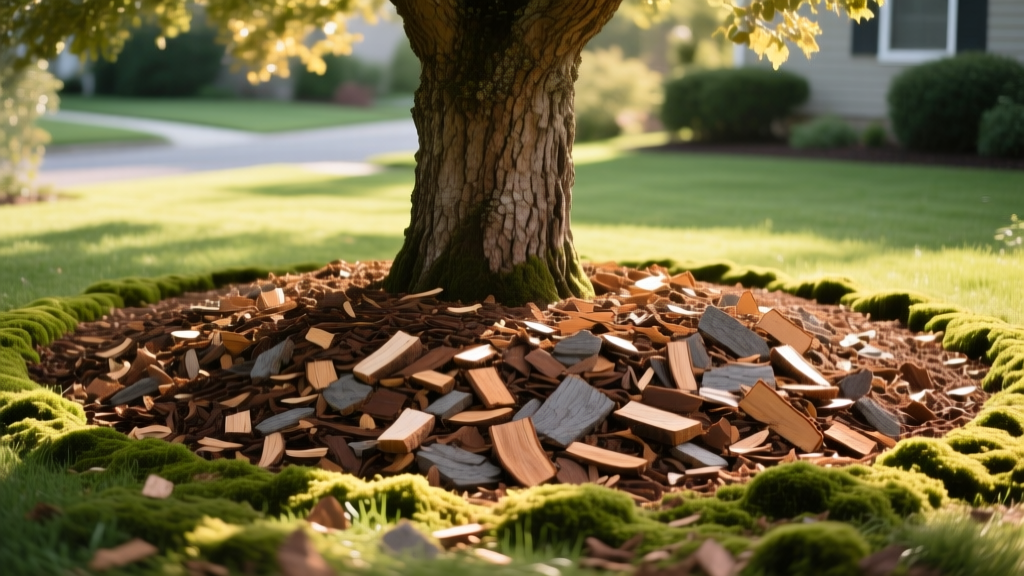
Using Wood Chip as Mulch for Trees: Depth, Types, and Mistakes
The Nitrogen Robbery Myth: Fact vs. Fiction
One of the most persistent myths in arboriculture is that using wood chip as mulch will rob your soil of nitrogen, starving your trees. This misconception stems from a misunderstanding of the Carbon-to-Nitrogen (C:N) ratio. Wood chips have a high C:N ratio, typically around 400:1, while soil microbes require a ratio of roughly 24:1 to efficiently break down organic matter. When microbes consume high-carbon materials, they do temporarily tie up available nitrogen to fuel the decomposition process.
However, extensive research from university extension programs confirms that this nitrogen immobilization only occurs at the exact interface where the mulch touches the top millimeter of the soil. Because tree roots reside much deeper in the soil profile, the nitrogen tie-up at the surface has zero measurable impact on the tree's root zone nutrient uptake. The only time wood chips will cause nitrogen deficiency is if they are tilled or mixed directly into the soil, which disrupts soil structure and forces microbes to process the carbon throughout the entire root zone. As long as the wood chip as mulch remains strictly on the surface, your trees will not suffer nitrogen deprivation.
Expert Insight: To accelerate the breakdown of wood chips and support surface microbial life without tilling, apply a thin layer of nitrogen-rich compost (such as well-aged chicken manure or leaf mold) directly to the soil before laying down the wood chips. This provides the surface microbes with the nitrogen they need without altering the deep root zone.
Sourcing Wood Chips: Cost and Quality Matrix
Not all wood chips are created equal. The source of your mulch dictates its cost, longevity, and potential risk factors like contamination or allelopathic toxins. Below is a breakdown of the primary sourcing options available to homeowners in 2026.
| Source | Est. Cost (Per Cubic Yard) | Pros | Cons |
|---|---|---|---|
| Arborist Drop Services (e.g., ChipDrop) | $0 - $40 (Tip-based) | Fresh, diverse species mix, includes nutrient-rich leaves. | Unpredictable delivery timing, large minimum drop sizes (10-15 yards). |
| Municipal Yard Waste Centers | $15 - $25 | Highly affordable, locally sourced, usually well-aged. | May contain invasive weed seeds or pallet wood if not properly sorted. |
| Commercial Landscape Suppliers | $35 - $60 (Plus delivery) | Consistent texture, guaranteed species, clean and aged. | Highest cost, delivery fees can double the price for small orders. |
Step-by-Step Application: Calculating Volume and Placement
Improper application of wood chip as mulch is responsible for more tree declines than almost any other landscaping practice. Follow these precise measurements to ensure optimal moisture retention and gas exchange.
1. Calculate Your Required Volume
Ordering too little leads to patchy coverage, while ordering too much leads to the temptation of over-applying. Use this standard landscaping formula to calculate cubic yards:
Formula: (Square Footage × Desired Depth in Inches) / 324 = Cubic Yards
Example: If you are mulching a circular bed with a 10-foot radius (approx. 314 sq. ft.) and want a 3-inch depth: (314 × 3) / 324 = 2.9 cubic yards. Always round up to 3 yards to account for settling.
2. Establish the Mulch-Free Zone
The most critical step is exposing the root flare—the area where the trunk transitions into the root system. Piling mulch against the bark (often called 'volcano mulching') traps moisture against the trunk, leading to fungal cankers, bark decay, and the development of girdling adventitious roots. Maintain a strict 3 to 6-inch mulch-free radius around the base of the trunk.
3. Apply at the Correct Depth
Spread the wood chips to a uniform depth of 2 to 4 inches. According to the Arbor Day Foundation, exceeding 4 inches restricts oxygen flow to the shallow feeder roots and creates a hydrophobic barrier that sheds water away from the root ball during light rains.
Warning: The Volcano Mulching Failure Mode
If you inherit a property with years of compacted 'volcano' mulch piled against the trunks, do not just add more on top. Use a hand trowel and a gentle stream of water to excavate the old, matted mulch and expose the root flare before applying a fresh, properly spaced layer of coarse wood chips.
If you inherit a property with years of compacted 'volcano' mulch piled against the trunks, do not just add more on top. Use a hand trowel and a gentle stream of water to excavate the old, matted mulch and expose the root flare before applying a fresh, properly spaced layer of coarse wood chips.
Species to Avoid: Toxicity and Allelopathy
When sourcing raw arborist chips, you rarely get to choose the exact tree species processed. However, if you are buying from a landscape supplier or sourcing from a specific tree removal, you must screen for toxic or allelopathic woods.
- Black Walnut (Juglans nigra): Contains juglone, a natural herbicide that causes severe wilting and death in sensitive species like tomatoes, pines, and birches. While juglone breaks down over a few months of composting, fresh black walnut chips should never be used around sensitive understory plantings.
- Treated Lumber and Pallets: Municipal chip piles are sometimes contaminated with construction debris. Avoid chips that contain painted wood or pressure-treated lumber, which can leach Chromated Copper Arsenate (CCA) and heavy metals into your soil profile. Look for unnatural green or brown tinting in the wood fibers.
- Fresh Cedar and Redwood: These species contain natural allelopathic oils (like thujopsene) that inhibit seed germination and stunt the growth of shallow-rooted plants. If using cedar chips, ensure they have been aged and composted for at least 6 to 12 months to allow the volatile oils to off-gas.
For comprehensive guidelines on selecting safe organic amendments, refer to the Penn State Extension guide on landscape mulching, which details the breakdown rates of various regional hardwoods and softwoods.
Maintenance and Top-Dressing Protocols
Wood chips decompose slower than shredded bark or compost, typically lasting 18 to 24 months before requiring replenishment. When it is time to top-dress your tree rings, do not simply add another 3 inches on top of the existing layer. Over time, this creates a 6-to-8-inch mat that suffocates the soil food web.
Instead, use a steel landscaping rake to fluff and break up the existing matted layer. Remove any heavily decomposed 'fines' (the dark, soil-like material at the bottom of the mulch layer) and add only enough fresh wood chip to bring the total depth back to the 3-to-4-inch maximum. This maintains the structural integrity of the mulch bed, ensuring water infiltration and gas exchange remain optimal for the life of the tree.

