Tree Care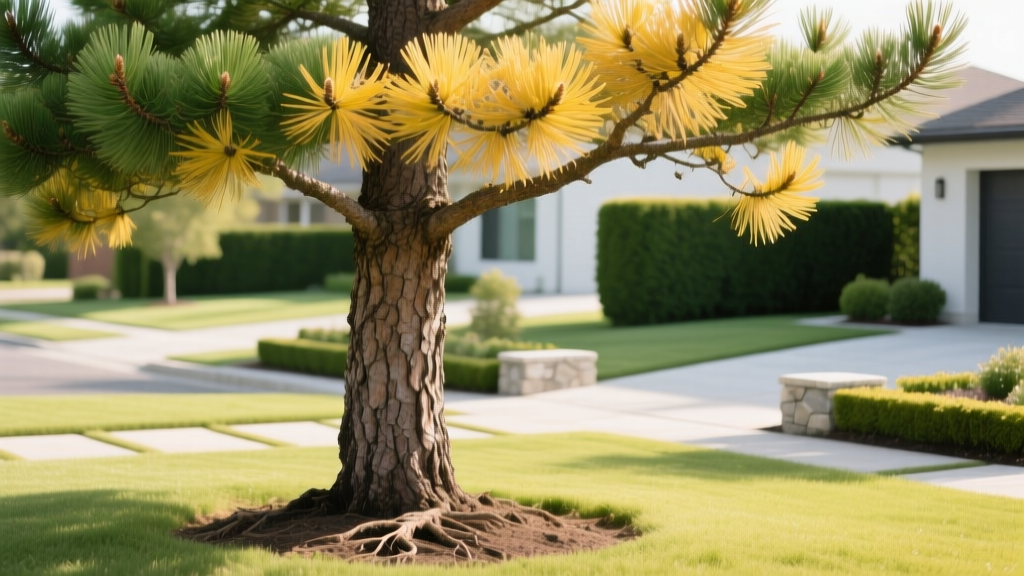
Yellowing Pine Tree Diagnosis: Causes and Rescue Fixes
A yellowing pine tree is a critical stress signal that demands immediate, precise intervention. Unlike deciduous trees that naturally shed leaves, evergreen pines retain their needles for two to five years depending on the species. When needles turn yellow or brown outside of the natural autumn shedding cycle, it indicates a severe disruption in the tree’s vascular system, root health, or nutrient uptake. Misdiagnosing the root cause often leads to wasted money on ineffective treatments and, ultimately, tree mortality.
This diagnostic guide provides a structured framework to identify the exact cause of your yellowing pine tree and execute targeted rescue protocols using professional-grade arboricultural methods.
The Triage Matrix: Differentiating Natural Shedding from Pathology
Before purchasing fungicides or soil amendments, you must determine if the yellowing is a natural physiological process or a pathological decline. Use this diagnostic matrix to triage your tree’s symptoms.
| Symptom Pattern | Location on Tree | Likely Cause | Immediate Action Required |
|---|---|---|---|
| Uniform yellowing of inner, older needles | Lower and interior canopy | Natural needle drop (senescence) | None; rake and compost fallen needles. |
| Yellowing starting at needle tips, moving inward | New growth and branch tips | Fungal needle cast or tip blight | Prune affected tips; apply systemic fungicide. |
| Overall pale yellow/green canopy (chlorosis) | Entire tree, especially new flush | Iron/Manganese deficiency (high soil pH) | Soil test; apply chelated iron and elemental sulfur. |
| Rapid yellowing turning brown, resin bleeding | One side of tree or entire crown rapidly | Pine Wilt Nematode or bark beetle infestation | Confirm via lab assay; schedule removal if positive. |
| Yellowing accompanied by stunted new growth | Lower canopy moving upward | Phytophthora root rot (waterlogged soil) | Improve drainage; apply phosphite-based fungicide. |
Abiotic Stressors: Soil Chemistry and Moisture Failures
The most frequent cause of a chronically yellowing pine tree in residential landscapes is abiotic stress, specifically soil alkalinity and improper moisture levels. Pines are calcifuges; they require acidic soil with a pH between 5.0 and 6.5 to efficiently absorb micronutrients.
Iron Chlorosis in Alkaline Soils
When soil pH exceeds 7.0, iron becomes chemically locked in the soil matrix, unavailable to the pine’s root system. The tree cannot synthesize chlorophyll, resulting in interveinal chlorosis (yellow needles with green veins). According to Colorado State University Extension, simply adding standard iron sulfate to alkaline soils is ineffective because the iron quickly oxidizes and precipitates.
The Rescue Fix for Chlorosis:
1. Send a soil sample to a university lab (approx. $20-$30) to confirm pH and baseline nutrient levels.
2. For immediate relief, apply a foliar spray of Fe-EDDHA chelated iron. EDDHA chelates remain stable in high-pH soils (up to pH 9.0), unlike cheaper EDTA chelates. Expect to pay around $35-$45 per quart of professional-grade Fe-EDDHA.
3. For long-term correction, broadcast pelletized elemental sulfur at a rate of 1 lb per 100 square feet of root zone to lower the pH by approximately 0.5 points over six months.
1. Send a soil sample to a university lab (approx. $20-$30) to confirm pH and baseline nutrient levels.
2. For immediate relief, apply a foliar spray of Fe-EDDHA chelated iron. EDDHA chelates remain stable in high-pH soils (up to pH 9.0), unlike cheaper EDTA chelates. Expect to pay around $35-$45 per quart of professional-grade Fe-EDDHA.
3. For long-term correction, broadcast pelletized elemental sulfur at a rate of 1 lb per 100 square feet of root zone to lower the pH by approximately 0.5 points over six months.
The Moisture Paradox: Drought vs. Waterlogging
Pines are highly susceptible to Phytophthora root rot in heavy clay soils that retain water. Conversely, shallow-rooted species like Eastern White Pine will yellow rapidly under drought stress. Perform the "Screwdriver Test": push a 10-inch flathead screwdriver into the soil at the drip line. If it penetrates easily and comes out with wet soil clinging to it, the tree is overwatered. If you cannot push it past 3 inches, the soil is hydrophobic and the tree is drought-stressed.
Biotic Threats: Fungal Pathogens and Nematodes
If soil chemistry and moisture are optimal, you must investigate biotic pathogens. Fungal needle casts and vascular nematodes require aggressive, chemically precise interventions.
Dothistroma and Brown Spot Needle Cast
Needle cast fungi infect the stomata of pine needles during wet spring weather. The pathogen kills the needle tissue, causing yellow bands that eventually turn brown, leading to premature defoliation. Over several years, the loss of photosynthetic capacity starves the tree. University of Minnesota Extension notes that Austriean and Ponderosa pines are particularly vulnerable to these pathogens.
Chemical Intervention Protocol:
- Active Ingredient: Propiconazole 14.3% (e.g., Banner MAXX) or Thiophanate-methyl (e.g., Cleary’s 3336 DG).
- Timing: Two applications are mandatory. The first must occur in mid-spring (May) just as new needles are emerging from the sheath. The second application is required in late summer (August/September) to protect mature needles from fall infections.
- Cost & Application: Propiconazole 14.3% costs approximately $120 per gallon. Mix at a rate of 2 to 4 fluid ounces per 100 gallons of water. Use a high-pressure pump sprayer (minimum 60 PSI) to ensure complete canopy coverage, as pines have dense, waxy cuticles that repel low-pressure sprays.
The Death Sentence: Pine Wilt Nematode
If your mature pine tree (particularly Scots, Austrian, or Japanese Black pines) turns yellow and then entirely brown within a 30-to-60-day window during late summer, suspect the Pine Wilt Nematode (Bursaphelenchus xylophilus). The nematode is vectored by the pine sawyer beetle and rapidly clogs the tree’s resin canals.
"Once a pine tree exhibits rapid, uniform wilting and yellowing caused by the pine wilt nematode, there are no chemical cures. The tree is dead even if the needles remain attached. Immediate removal and chipping of the wood to below 1-inch dimensions is required to prevent the sawyer beetle from breeding in the dead wood and spreading the nematode to adjacent healthy pines." — Kansas State University Plant Pathology
Step-by-Step Rescue Protocol for Declining Pines
When a pine tree shows early-stage yellowing without rapid wilt, execute this 4-step rescue protocol to restore vigor.
- Core Aeration and Vertical Mulching: Compacted soil suffocates pine roots. Use a 2-inch auger to drill holes 12 inches deep in a grid pattern starting 3 feet from the trunk and extending 5 feet past the drip line. Fill the holes with a 50/50 mix of calcined clay (like Turface) and compost to permanently improve gas exchange and water infiltration.
- Targeted Fertilization: Avoid high-nitrogen lawn fertilizers (e.g., 30-0-0), which promote weak, succulent pine growth highly susceptible to aphids and fungi. Use a slow-release, low-phosphorus tree fertilizer with an NPK ratio of 12-6-6, enriched with minor micronutrients (boron, zinc, manganese). Apply at a rate of 2 lbs per 1,000 square feet of root zone in early spring.
- Canopy Cleaning and Sanitation: Prune out dead, heavily diseased branches using bypass pruners sterilized with a 10% bleach solution between every single cut. Rake and destroy all fallen needles to eliminate fungal overwintering spores. Do not compost diseased pine needles.
- Mycorrhizal Inoculation: Pines rely heavily on symbiotic ectomycorrhizal fungi to forage for water and nutrients. If your soil has been degraded by construction or heavy chemical use, inject a liquid mycorrhizal inoculant (containing Pisolithus tinctorius spores) directly into the root zone using a soil drench or root feeder tool.
Critical Warning Regarding Mulch: Never pile mulch against the trunk of a pine tree ("volcano mulching"). Pines have shallow, lateral root flares that require oxygen. Keep mulch exactly 3 inches away from the trunk bark, maintaining a 2-to-3-inch layer of arborist wood chips extending to the drip line. Bark contact invites Armillaria root rot and secondary bark beetle attacks.
When to Remove vs. When to Save
Not every yellowing pine tree can be saved. If the tree has lost more than 50% of its live canopy, exhibits extensive resinosis (pitch tubes) on the lower trunk indicating fatal bark beetle colonization, or tests positive for pine wilt, the cost of professional treatments (often $300-$600 per application for large trees) will not yield a return. In these cases, budget $800 to $1,500 for professional felling and stump grinding, and replant with a resistant species like the Eastern Redcedar or a disease-resistant deciduous shade tree.