Home & Garden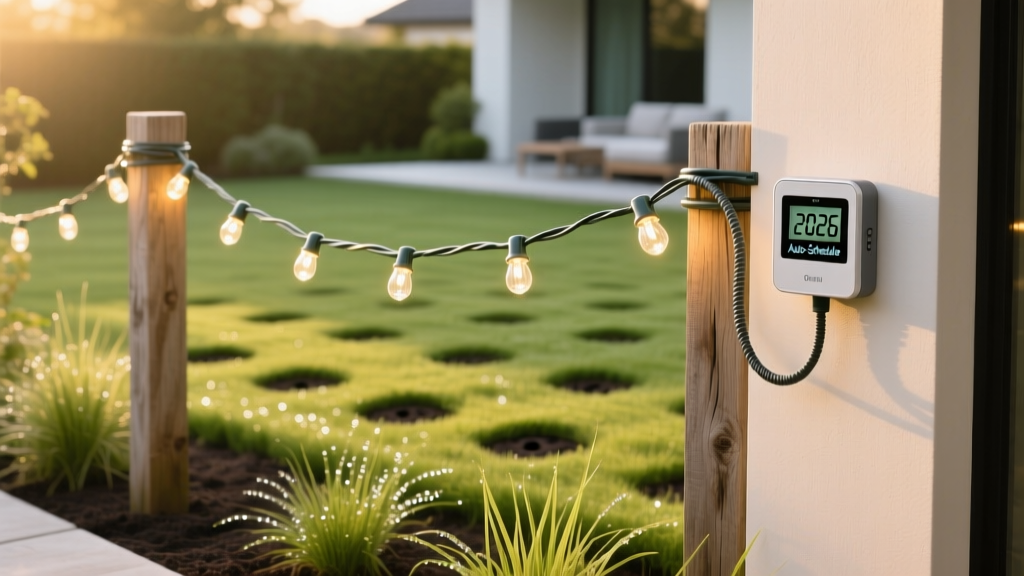
2026 Guide Wire String Lights: Aeration-Safe Setup
James MillerPublished
The Intersection of Landscape Lighting and Soil Health
As we move through 2026, the trend of bridging indoor comfort with outdoor living spaces has reached new heights. Homeowners are increasingly investing in bistro-style outdoor string lights to illuminate patios, fire pits, and garden pathways. However, as lawn care specialists, we often see a devastating aftermath: the destruction of meticulously maintained turf during the installation process. Specifically, the heavy foot traffic, post-hole digging, and equipment dragging required to install guide wires and lighting poles can severely compromise a lawn that has recently undergone—or is in desperate need of—core aeration.
At LawnsGuide, we approach outdoor decor through the lens of holistic lawn health. Core aeration is the vital practice of removing small plugs of thatch and soil to alleviate compaction, allowing water, oxygen, and nutrients to penetrate the root zone. If you install heavy hardscaping elements or drag ladders across your yard immediately after aerating, you will re-compact the soil and crush vulnerable grassroots. This guide will teach you how to execute a flawless, tensioned guide wire string light installation with smart timer integration, all while adhering to an 'Aeration-Safe' protocol that protects your soil structure.
Understanding Core Aeration and Soil Compaction
Before driving a single ground spike or mounting an eye bolt, it is crucial to understand the science of your soil. According to the University of Minnesota Extension, core aeration reduces soil bulk density and enhances microbial activity, which is essential for breaking down thatch. When soil is freshly aerated, the structural integrity of the turf is temporarily weakened as the roots recover and the plugs break down.
Installing a guide wire system requires immense physical effort. You are carrying wooden or metal posts, bags of concrete, ladders, and spools of steel cable. Walking across an aerated lawn with heavy loads presses the soil particles back together, effectively undoing the benefits of the aeration process. Furthermore, dropping tools or dragging a ladder across the turf can tear the crowns of the grass plants, leading to brown, dead patches that will plague your yard for the rest of the 2026 growing season.
The 2026 Aeration-First Timeline
To harmonize your landscape lighting project with your lawn care schedule, you must follow a strict timeline. The golden rule of the Aeration-Safe protocol is to complete all sub-surface and heavy-impact hardscaping at least two weeks before your scheduled core aeration, or wait four full weeks after aeration has taken place.
Pre-Aeration Installation (Recommended)
By installing your guide wire posts and running your cables before the aerator arrives, you allow the aeration process to relieve any minor compaction caused by your foot traffic during the build. The aerator's tines will pull plugs around your newly set posts, ensuring the soil immediately adjacent to your hardscape remains healthy and well-oxygenated.
Post-Aeration Installation (Low-Impact Method)
If you must install your lights after aerating, you must utilize temporary load-bearing pathways. Lay down thick plywood sheets or specialized turf-protection mats to distribute your weight and the weight of your equipment. Never drag a ladder; carry it or use padded, wide-stance step stools that minimize ground pressure.
Step-by-Step: Aeration-Safe Guide Wire Installation
Hanging string lights directly from trees or fascia boards often leads to sagging, wind damage, and bark stripping. A dedicated guide wire system is the professional standard for 2026. Here is how to do it safely.
Step 1: Sourcing the Right Hardware
Do not rely on the thin, plastic-coated wires included in cheap lighting kits. Invest in 1/16-inch galvanized stainless steel aircraft cable. You will also need 3/8-inch forged eye bolts, heavy-duty turnbuckles, and wire rope clips (U-bolts). For posts, opt for 10-foot cedar 4x4s or powder-coated steel mounting poles.
Step 2: Setting Posts Without Soil Destruction
If you are in the post-aeration window, avoid digging massive holes for concrete footings, which destroys the surrounding root network. Instead, use heavy-duty, 30-inch steel ground spikes designed for 4x4 posts. Using a sledgehammer and a protective post cap, drive the spike directly into the earth. This displaces the soil rather than removing it, preserving the microbial networks established after your core aeration.
Step 3: Threading and Tensioning the Cable
Attach the eye bolts to the top of your posts. Run the aircraft cable through the eye bolts and secure it with wire rope clips. On one end, attach the turnbuckle. Slowly tighten the turnbuckle using a wrench. You want to achieve roughly 50 to 70 pounds of tension. The cable should sing with a low hum when plucked, ensuring your lights will not droop during heavy 2026 summer storms. If the span between your posts exceeds 20 feet, you must use a turnbuckle on both ends to ensure even tension distribution. Use a wire rope thimble inside the loop of your cable before applying the U-bolt clips; this prevents the cable from kinking and snapping under the stress of high winds or ice accumulation during the winter months.
Step 4: Hanging the Lights
Using UV-resistant zip ties or specialized snap clips, attach the string light cord to the guide wire every 12 inches. Never let the weight of the bulbs rest solely on the electrical cord; the guide wire must bear 100% of the physical load.
Smart Timer Integration for 2026 Dark-Sky Compliance
Leaving outdoor lights on all night is not only a waste of electricity but contributes to light pollution, disrupting local wildlife and violating many municipal dark-sky ordinances updated for 2026. Integrating a smart outdoor timer is essential.
We recommend using a Wi-Fi-enabled, weatherproof smart plug like the Kasa Smart Outdoor Plug (EP40P) or a hardwired Lutron Caseta Outdoor controller. These devices allow you to set 'astronomical timers,' which automatically adjust your lighting schedule based on the exact sunset and sunrise times in your specific zip code.
Many municipalities have updated their 2026 zoning laws to strictly penalize upward light trespass. Ensure your string light bulbs are oriented downward and feature warm color temperatures (2700K or lower). Warm LED light scatters less in the atmosphere and is significantly less disruptive to nocturnal pollinators and migrating birds. Pairing these dark-sky friendly bulbs with an automated smart timer guarantees you never accidentally leave the patio lights blazing until dawn. According to the U.S. Department of Energy, utilizing smart controls and LED fixtures for outdoor lighting can reduce exterior energy consumption by up to 75% compared to traditional incandescent setups.
Installation Materials & Soil Impact Comparison
| Installation Method | Soil Impact & Compaction Risk | Aeration Compatibility | Estimated 2026 Cost |
|---|---|---|---|
| Traditional Concrete Footings | High (Extensive digging, heavy mixing) | Poor (Requires 4-week post-aeration wait) | $150 - $250 per post |
| Steel Ground Spikes (Low-Impact) | Low (Displaces soil, no removal) | Excellent (Can be done pre or post-aeration) | $45 - $65 per post |
| Tree-Mounting (No Posts) | None (But risks bark/root damage) | N/A (Does not affect soil directly) | $10 - $20 (Hardware only) |
| Fascia/Eave Mounting | None (Requires ladder on lawn) | Moderate (Ladder feet can compact turf) | $15 - $30 (Hardware only) |
Final Thoughts on Holistic Landscaping
Creating a stunning outdoor living space in 2026 requires more than just buying the right decor; it requires respecting the living ecosystem beneath your feet. By treating your landscape lighting installation as a soil-conscious project, you ensure that your guide wires remain taut, your smart timers keep your energy bills low, and your lawn remains lush, deeply rooted, and perfectly aerated. Plan your timeline, use the right hardware, and enjoy your beautifully illuminated, healthy yard for years to come.
