Home & Garden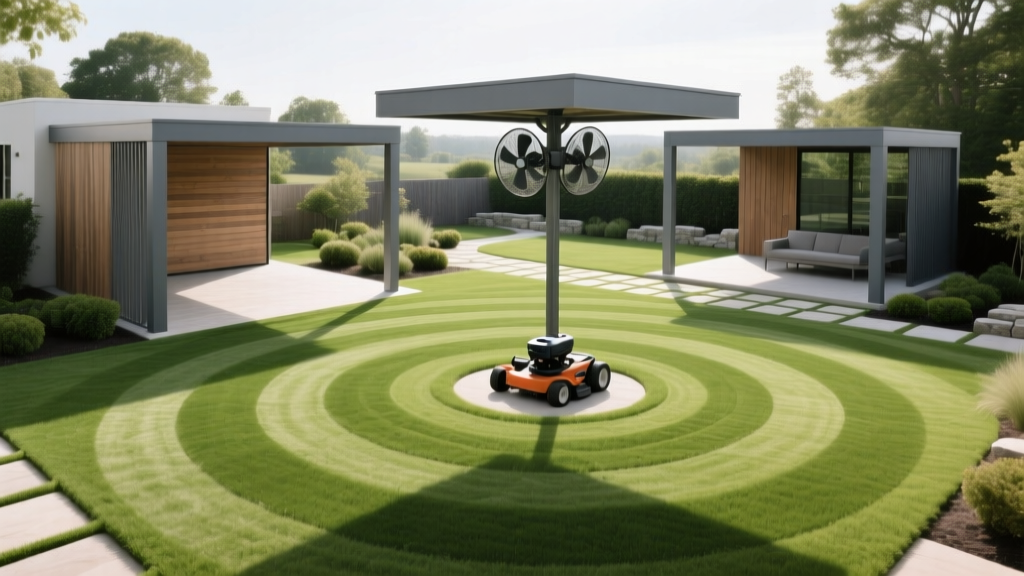
Attached vs Freestanding Pergolas: 2026 Mowing Patterns Guide
Anna KowalskiPublished
The Intersection of Hardscape and Lawn Striping in 2026
As outdoor living spaces continue to evolve in 2026, the boundary between architectural hardscaping and precision lawn care has effectively blurred. Homeowners are no longer just building pergolas for shade; they are integrating them into the broader geometry of their landscapes. For lawn care enthusiasts who treat their turf like a canvas, the decision between constructing an attached pergola versus a freestanding pergola with a ceiling fan mount is not merely an aesthetic choice. It is a fundamental landscaping decision that dictates mower maneuverability, striping patterns, and long-term turf health.
When you invest in a premium 2026 zero-turn mower or a high-end push mower with a striping kit, you want a lawn that allows for uninterrupted diagonal lines, crisp checkerboards, or sweeping concentric circles. A poorly planned pergola footprint can force you into awkward multi-point turns that scalp the grass, disrupt the visual flow of your mowing patterns, and create shaded microclimates that harbor fungal diseases. In this comprehensive guide, we break down exactly how attached and freestanding fan-mounted pergolas interact with advanced mowing techniques, helping you design an outdoor oasis that complements your lawn care regimen.
The Geometry of Lawns: How Pergolas Dictate Mowing Patterns
Lawn striping relies on bending grass blades in alternating directions to reflect light differently, creating dark and light bands. To achieve the sharpest stripes, your mower must travel in long, continuous, straight lines. Every time you stop, turn, or navigate around an obstacle, you risk breaking the visual continuity of the stripe and potentially damaging the turf through tire scrubbing.
The physical footprint of a pergola introduces vertical obstacles—specifically, the support posts and the overhead beam structure. Furthermore, the shade cast by the pergola alters the growth rate and color of the grass beneath it, which can either enhance or ruin the contrast of your striping pattern depending on how you align your mowing passes with the sun's trajectory. Therefore, choosing between an attached and freestanding design requires a deep understanding of your preferred mowing patterns.
Attached Pergolas: Preserving the Diagonal Stripe
An attached pergola is anchored directly to the exterior wall of your home, typically extending over a patio or deck. From a mowing perspective, the primary advantage of an attached pergola is that it preserves the open, rectangular geometry of the main lawn. Because the structure hugs the house, it does not introduce isolated posts into the middle of your turf.
Optimizing for Diagonal and Checkerboard Patterns
Diagonal striping is highly sought after because it creates an illusion of depth and makes the lawn appear larger. To execute a perfect diagonal pattern, you need long, unobstructed sightlines from corner to corner. An attached pergola keeps the central lawn completely clear, allowing you to push your mower from the far property line directly toward the house without navigating around freestanding hardscape islands.
Furthermore, attached pergolas simplify the 'perimeter pass'—the crucial first mowing step where you trim the edges to create a turning radius for subsequent passes. Because the pergola is integrated into the home's hardscape, you can run your string trimmer cleanly along the patio edge without worrying about maneuvering around isolated wooden or composite footings in the grass.
Freestanding Pergolas: Mastering the Post-Halo Technique
Freestanding pergolas act as destination islands within the landscape. While they offer incredible flexibility in placement—allowing you to create a shaded retreat at the back of the property or near a pool—they introduce significant challenges for lawn mowing. A standard 10x10 or 12x12 freestanding pergola requires at least four substantial support posts, typically 6x6 or 8x8 inches in diameter.
Navigating Zero-Turn Radiuses
If you operate a 2026 zero-turn mower with a 54-inch or 60-inch deck, navigating around pergola posts requires precise spatial planning. If the posts are placed too close together, or if the pergola is situated too near a fence line, you will be forced to perform multi-point turns. These turns cause the mower's caster wheels to pivot sharply on the turf, tearing the grass roots and resulting in unsightly brown patches that ruin your striping contrast.
To maintain pristine turf around a freestanding pergola, landscape architects recommend a minimum clearance of 72 inches between the pergola posts and any adjacent hardscape or fence. This allows a commercial-grade zero-turn mower to execute a smooth 'halo turn'—a wide, sweeping arc around the post that prevents tire scrubbing and maintains the integrity of the grass blades.
The Fan Mount Factor: Microclimates and Turf Health
One of the most popular upgrades for 2026 pergola construction is the integration of a damp-rated outdoor ceiling fan mount. While most homeowners focus on the fan's ability to cool the patio seating area, the aerodynamic impact of a fan mount extends directly to the health of the surrounding lawn.
Airflow and Fungal Prevention
Pergolas create shaded zones that retain moisture longer than the rest of the lawn. Morning dew and post-irrigation water can linger on the grass blades beneath and immediately adjacent to the pergola, creating an ideal breeding ground for turf diseases like dollar spot and brown patch. According to turfgrass pathology experts, stagnant, humid air is a primary catalyst for fungal outbreaks.
By installing a high-CFM (cubic feet per minute) smart fan on your pergola mount, you generate a localized downdraft. Running the fan for 30 to 45 minutes after your morning mowing session or irrigation cycle accelerates the drying of the grass blades in the shaded perimeter. This simple mechanical intervention significantly reduces fungal pressure, ensuring that the grass under the pergola remains as dense and vibrant as the grass in full sun, preserving the uniform color required for high-contrast mowing patterns.
2026 Hardscape vs. Turf Comparison Matrix
To help you decide which construction method aligns with your lawn care goals, review the comparison matrix below detailing the operational differences between attached and freestanding fan-mounted pergolas.
| Feature | Attached Pergola | Freestanding Pergola |
|---|---|---|
| Mowing Pattern Suitability | Excellent for continuous diagonal and checkerboard patterns. | Best for concentric circles; requires halo-mowing around posts. |
| Post Obstruction | None in the main lawn; posts anchor to house or patio edge. | 4 to 6 posts in the turf; requires strategic spacing. |
| Zero-Turn Maneuverability | Unrestricted; allows full use of wide mower decks. | Restricted; requires wide post-spacing to prevent turf tearing. |
| Fan Mount Complexity | Easier electrical routing via house eaves and interior walls. | Requires trenching and running conduit through posts or underground. |
| Shade Impact on Turf | Shade falls mostly on hardscape/patio, sparing the lawn. | Shade falls directly on turf; requires shade-tolerant grass varieties. |
Execution: Step-by-Step Mowing Around Pergola Footings
If you opt for a freestanding design, mastering the mowing technique around the footings is critical. Follow this protocol to protect your turf and maintain your patterns:
- The Perimeter Pass: Begin by mowing a wide perimeter around the outside of the freestanding pergola. Do not attempt to cut tight against the posts yet. Establish your outer boundary stripe first.
- The Approach: When mowing your parallel passes toward the pergola, approach the posts at a slight angle rather than head-on. This allows the mower deck to glide past the post without the chassis clipping the wood or composite material.
- The Halo Turn: Instead of stopping and reversing at the post, use the momentum of the zero-turn mower to carve a wide, teardrop-shaped turn around the post. This 'halo' technique distributes the weight of the mower over a larger surface area, preventing soil compaction and root shearing.
- The String Trimmer Finish: Never use a zero-turn mower to cut flush against a pergola post. The deck will inevitably strike the post, damaging both the mower and the structure. Leave a 3-inch buffer and use a precision string trimmer to finish the edge, keeping the trimmer head parallel to the ground to avoid scalping.
Selecting Shade-Tolerant Turf for Pergola Perimeters
The shadow cast by a pergola, especially one with a dense louvered roof or thick canopy, will reduce the amount of photosynthetically active radiation (PAR) reaching the grass below. If you are planting or maintaining turf around a freestanding pergola, you must select a shade-tolerant variety to ensure the lawn remains thick enough to stripe effectively.
According to the University of Minnesota Extension, fine fescues and specific shade-adapted Kentucky bluegrass cultivars are excellent choices for northern climates, while Palmetto St. Augustine and Zoysia varieties perform better in southern regions. It is also vital to adjust your mowing height. The Clemson University Home & Garden Information Center recommends raising the mowing height by 0.5 to 1 inch in shaded areas. Taller grass blades have more surface area to capture limited sunlight, promoting deeper root growth and preventing the thin, weak turf that ruins mowing patterns.
Water Management and Hardscape Runoff
Finally, the construction of your pergola impacts how water moves across your lawn. Freestanding pergolas with solid or louvered roofs can create 'rain shadows'—areas beneath the structure that receive significantly less natural rainfall. Conversely, the gutters and downspouts often attached to pergola roofs can dump massive volumes of water onto specific turf zones, leading to soil erosion and muddy ruts from mower tires.
To mitigate this, integrate French drains or underground catch basins at the base of your pergola posts. As noted by the EPA WaterSense program, efficient outdoor water management not only conserves resources but also prevents the soil saturation that makes precision mowing impossible. By keeping the soil around the pergola firm and well-drained, you ensure that your heavy mowing equipment can operate without sinking or leaving destructive tire tracks in your carefully crafted stripes.
Conclusion
Designing an outdoor living space in 2026 requires a holistic approach that bridges architecture and agronomy. Whether you choose the unobstructed canvas of an attached pergola or the destination appeal of a freestanding fan-mounted structure, understanding the spatial and environmental impacts on your lawn is paramount. By aligning your pergola's footprint with your preferred mowing patterns, utilizing halo-turning techniques, and leveraging fan mounts for microclimate control, you can achieve a landscape that is as functional and healthy as it is beautiful.
