Home & Garden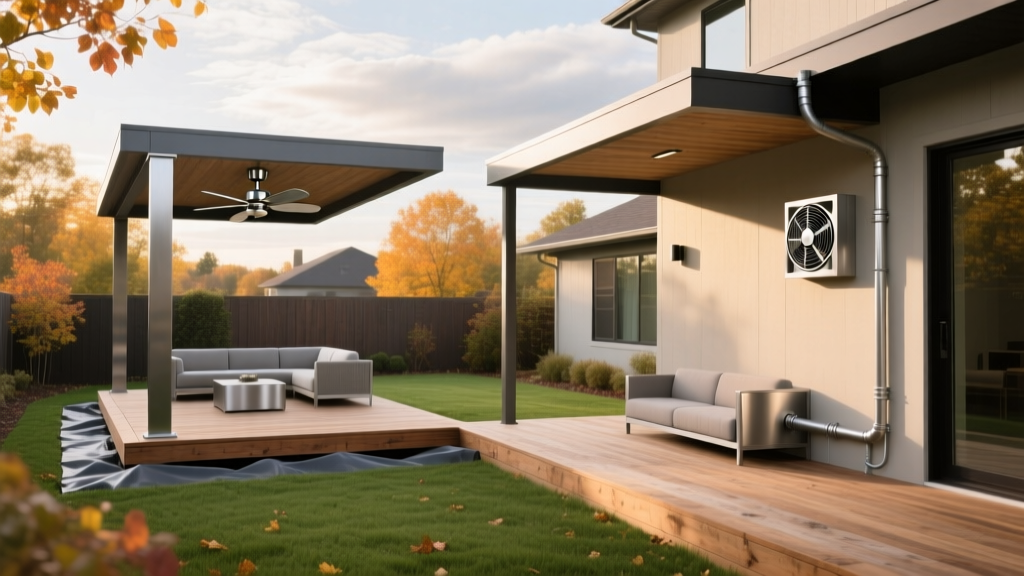
2026 Pergola Guide: Attached vs Freestanding Fan Mounts
James MillerPublished
Why Fall 2026 is the Ultimate Season for Pergola Construction
When homeowners think about outdoor living upgrades, spring usually comes to mind. However, landscaping and turf experts increasingly point to autumn as the superior season for major hardscape and structural projects. As we navigate the 2026 outdoor living season, building a pergola in the fall offers distinct advantages, particularly when it comes to preserving your turf. During autumn, cool-season grasses like Kentucky Bluegrass and Tall Fescue are focusing energy on root development rather than top growth. This means the soil is firm enough to support heavy lumber and concrete mixing, yet the grass is entering dormancy, making it far more resilient to the foot traffic and equipment associated with construction.
Furthermore, integrating a pergola into your yard requires careful planning around your fall lawn care regimen. Tasks like core aeration, overseeding, and applying late-fall winterizer fertilizers can be seamlessly coordinated with your pergola's footprint. According to the University of Minnesota Extension, fall is the most critical time for turfgrass recovery and preparation for winter. By timing your pergola build in early to mid-autumn, you can complete your soil aeration before the post-hole diggers arrive, ensuring your lawn remains healthy and vibrant for the following spring.
Attached vs. Freestanding Pergolas: The 2026 Breakdown
Choosing between an attached and a freestanding pergola is the first major decision you will face, and this choice heavily influences both your lawn care strategy and your ability to mount a heavy outdoor ceiling fan.
The Attached Pergola: House Integration and Easy Wiring
An attached pergola is anchored directly to your home's exterior wall via a structural ledger board, with the opposite side supported by two or more posts. From an electrical standpoint, this is the gold standard for mounting a ceiling fan. Because the structure is tethered to the house, an electrician can easily route power through the exterior wall and into the pergola's main beam, completely avoiding the need to dig trenches across your freshly aerated fall lawn. Attached pergolas also benefit from the structural rigidity of the home, which helps dampen the dynamic vibration caused by large outdoor ceiling fans.
The Freestanding Pergola: Yard Placement and Trenching Challenges
A freestanding pergola relies on four or more posts set in concrete, allowing you to place the structure anywhere in your yard—perhaps over a detached patio, a fire pit area, or near a garden-to-table vegetable plot. While this offers ultimate design flexibility, mounting a ceiling fan introduces a significant hurdle: power delivery. To wire a fan to a freestanding pergola in 2026, you will likely need to trench underground conduit from your home's main electrical panel to the base of one of the posts. If you are also undertaking fall overseeding, trenching can disrupt your seedbed, requiring careful backfilling, topsoil replacement, and targeted reseeding to prevent muddy bare spots come spring.
Engineering a Safe Outdoor Ceiling Fan Mount
Mounting a ceiling fan on a pergola is not as simple as hanging one in your living room. Outdoor fans designed for damp or wet locations—such as the highly rated 2026 models like the Minka-Aire Xtreme H2O 84-inch or the Hunter Astwood 60-inch—are exceptionally heavy due to their sealed, weatherproof DC motors and solid wood or composite blades. More importantly, they generate significant dynamic wind loads when operating on high speeds.
To safely support a fan mount, the primary overhead beam of your pergola must be engineered for the load. A standard 2x6 rafter is insufficient. Best practices for 2026 pergola construction dictate using a minimum 2x8 or 2x10 load-bearing beam, reinforced with steel joist hangers. Additionally, you must install a heavy-duty, UL-rated outdoor fan box that is bolted directly through the beam, rather than simply nailed to it. This prevents the fan's rotational torque from slowly loosening the mount over time, which could lead to catastrophic failure during autumn windstorms.
Feature Comparison: Attached vs. Freestanding with Fan Mounts
| Feature | Attached Pergola | Freestanding Pergola |
|---|---|---|
| Fan Mount Stability | Excellent (house dampens vibration) | Good (requires heavier, thicker beams) |
| Electrical Routing | Direct from house wall (no lawn damage) | Requires underground trenching across yard |
| Impact on Fall Lawn Care | Minimal (mostly confined to hardscape edges) | High (post holes and trenching disrupt turf) |
| Average 2026 Cost (Materials) | $3,500 - $6,000 | $4,500 - $8,500 |
| Permitting Requirements | Strict (ledger board attachment inspections) | Moderate (mostly focused on frost-line footings) |
Protecting and Restoring Your Fall Lawn During the Build
Construction traffic is the enemy of a healthy lawn. Even though cool-season grasses are tough in the fall, the repeated weight of contractors, wheelbarrows filled with concrete, and stacks of pressure-treated lumber will cause severe soil compaction. Compacted soil restricts oxygen flow to the roots, negating the benefits of your fall lawn care efforts.
To mitigate this, lay down heavy-duty turf protection mats or 3/4-inch plywood sheets along the designated pathways from the street to the build site. This distributes the weight and prevents the grass crowns from being crushed. Once the pergola is erected and the fan is wired, you must address the soil compaction around the post footings.
According to the Environmental Protection Agency (EPA), maintaining healthy, uncompacted soil is essential for natural water absorption and reducing runoff. Use a manual or gas-powered core aerator to pull plugs from the soil in a 10-foot radius around your new pergola. Follow this immediately with a fall application of a high-potassium winterizer fertilizer (such as a 32-0-10 NPK blend) to help the grass recover from construction stress and build the cellular wall thickness needed to survive freezing winter temperatures.
Smart Home Integration for Autumn Breezes
As we embrace smart home ecosystems in 2026, your new pergola fan should be part of your automated landscape. Because outdoor fans are exposed to the elements, integrating them with smart switches requires weatherproof enclosures. The most reliable method is to install a smart fan canopy module (like the Bond Home Smart Fan Controller or a Lutron Caseta PD-FSQNX) directly inside the pergola's reinforced fan box or beam cavity.
This allows you to set automated schedules based on local weather APIs. For instance, you can program the fan to automatically turn on when the outdoor temperature exceeds 75°F, or integrate it with your smart irrigation system so the fan powers down when your sprinklers activate. The U.S. Department of Energy highlights that strategic use of outdoor fans and shading structures can significantly reduce the cooling load on your home's interior by creating a comfortable outdoor microclimate, allowing you to set your indoor thermostat higher during early autumn heatwaves.
Final Thoughts on Your 2026 Outdoor Oasis
Building a pergola with a ceiling fan mount is a transformative project that bridges the gap between indoor comfort and outdoor beauty. By choosing the right structure—whether an attached model for easy wiring or a freestanding centerpiece for your yard—and timing the build to coincide with your fall lawn care routine, you protect your turf while maximizing your property's value. Remember to prioritize structural integrity for your fan mount, protect your soil from compaction, and embrace smart technology to enjoy your new outdoor living space for years to come.
