Home & Garden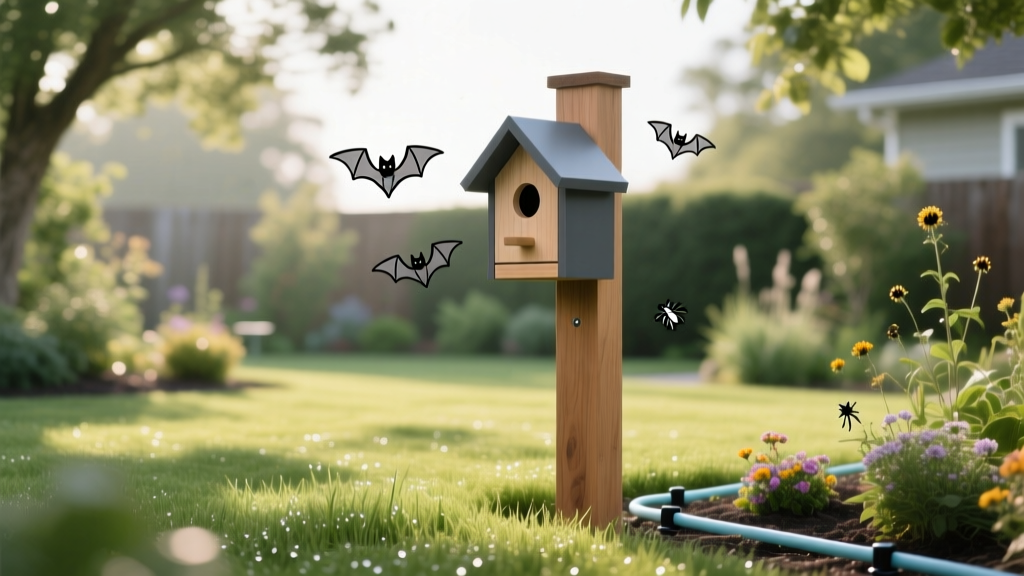
2026 Bat House Guide: Height & Orientation for Mosquitoes
Mike RodriguezPublished
Integrating Biological Pest Control with Smart Irrigation
Welcome to the 2026 outdoor living season, where the intersection of ecological landscaping and smart home technology has never been more refined. As homeowners increasingly seek sustainable alternatives to chemical pesticides, biological pest control has taken center stage. One of the most effective, yet frequently misunderstood, synergies in modern lawn care is combining precision sprinkler management with bat house installation to decimate local mosquito populations. While your smart irrigation system works to eliminate the standing water where mosquitoes breed, a properly installed bat house acts as the ultimate aerial defense, consuming thousands of pests each night. However, the success of this biological control method hinges entirely on precise installation parameters. If a bat house is mounted at the wrong height or orientation, or if it is placed directly in the line of fire of your lawn sprinklers, it will remain unoccupied. This comprehensive guide details exactly how to position your bat house to maximize mosquito foraging while harmonizing with your 2026 smart irrigation layout.
The Irrigation Connection: Why Mosquitoes Thrive Near Sprinkler Zones
Before discussing the physical installation of the bat house, it is vital to understand the relationship between your sprinkler system and mosquito breeding cycles. Mosquitoes require stagnant, standing water to lay their eggs. In poorly managed lawns, overwatering, leaky irrigation valves, and overlapping sprinkler heads create micro-puddles in soil depressions and thatch layers. Modern smart irrigation controllers in 2026 utilize hyper-local evapotranspiration (ET) data and soil moisture sensors to prevent overwatering, drastically reducing these breeding grounds. The Environmental Protection Agency (EPA) strongly advocates for this type of source reduction as the first line of defense against mosquito-borne illnesses.
Yet, even with the most advanced weather-based irrigation controllers, micro-climates, heavy clay soils, and temporary drainage issues can lead to occasional pooling. This is where bats become your landscape's best allies. A single little brown bat can consume up to 1,000 mosquitoes in a single hour of foraging. By eliminating the bulk of the breeding sites via smart irrigation and deploying bats to hunt the remaining airborne adults, you create a holistic, chemical-free pest management ecosystem.
Optimal Bat House Height for Maximum Mosquito Foraging
When it comes to bat house installation, height is a non-negotiable factor that directly impacts occupancy rates and foraging efficiency. According to guidelines published by Bat Conservation International, bat houses should be mounted between 12 and 20 feet above the ground. This specific elevation serves multiple critical purposes, particularly in irrigated landscapes.
- Predator Avoidance: Mounting the house at least 12 feet high protects the colony from terrestrial predators such as cats, raccoons, and snakes.
- Flight Path Clearance: Bats need a clear, unobstructed drop zone of at least 10 to 15 feet below the house to gain momentum when taking flight. If mounted too low, nearby shrubs or patio furniture can impede their exit.
- Sprinkler Interference Prevention: This is crucial for irrigated lawns. High-pressure gear-driven rotor heads and impact sprinklers can project water streams up to 15 feet into the air. If your bat house is mounted too low, the morning irrigation cycle will soak the roost. Bats require a dry, draft-free environment to maintain their body temperature and rear their pups. A house that is routinely sprayed by your sprinkler system will be quickly abandoned.
For the best results in 2026, aim for a mounting height of 15 feet on a dedicated metal or treated wood pole. This keeps the roost well above the spray radius of standard residential rotors while providing the necessary drop zone for the bats to swoop down and catch mosquitoes hovering just above the grass canopy.
Orientation and Sun Exposure: Getting the Temperature Right
Bats are highly sensitive to temperature, and maternity colonies require significant ambient heat to incubate their young and ensure pup survival. The orientation of your bat house dictates its solar gain. Penn State Extension notes that proper sun exposure is often the deciding factor in whether a bat house becomes a thriving colony or an empty wooden box.
In most North American climate zones, the ideal orientation is South or Southeast. This ensures the house receives the necessary 6 to 8 hours of direct, unfiltered sunlight per day. The internal temperature of the roost should ideally hover between 80°F and 100°F during the summer months. However, your local climate and the specific micro-climate created by your landscape design (including shade from mature trees planted for energy-efficient landscaping) will dictate the exact orientation.
2026 Climate Zone Orientation and Irrigation Adjustment Chart
| Climate Zone | Ideal Orientation | Daily Sun Required | Irrigation Note for Surrounding Area |
|---|---|---|---|
| Zones 3-4 (Northern) | South | 8-10 Hours | Use drip irrigation near the pole base to avoid cooling the air with sprinkler evaporation. |
| Zones 5-6 (Midwest/Mid-Atlantic) | South to Southeast | 6-8 Hours | Ensure smart controllers reduce watering on the south-facing side to prevent excess humidity. |
| Zones 7-8 (Southern) | East or Southeast | 6 Hours (Morning Sun) | Avoid afternoon sun to prevent overheating; keep surrounding soil evenly moist via rotors. |
| Zones 9-10 (Deep South/Coastal) | East | 4-6 Hours | High mosquito pressure; utilize soil moisture sensors to eliminate all standing water near the pole. |
Spacing Bat Houses Away from High-Volume Sprinkler Heads
One of the most common mistakes homeowners make is mounting a bat house on a fence line or tree that sits directly inside an active sprinkler zone. While bats drink water by skimming the surface of ponds or pools, they do not want to be subjected to artificial rain while they sleep. In 2026, irrigation design emphasizes precision, utilizing multi-stream rotary nozzles (like the Hunter MP Rotator or Rain Bird R-VAN) which produce larger, wind-resistant droplets. While these are excellent for reducing water waste, their throw radius can easily engulf a poorly placed bat house.
When mapping your sprinkler zones, treat the bat house pole as a 'no-spray' island. You should maintain a minimum clearance of 15 feet between the bat house and any high-volume spray heads or rotors. If your landscape design requires irrigation near the pole, transition to subsurface drip irrigation or micro-bubblers at the base of the pole. This ensures the surrounding vegetation or newly planted pollinator garden receives adequate hydration without creating airborne moisture that could drift into the bat roost or create muddy, mosquito-breeding puddles at the base.
Step-by-Step Installation Guide for Irrigated Lawns
Installing a bat house pole in a lawn equipped with an underground sprinkler system requires careful planning to avoid catastrophic damage to your irrigation mainlines and lateral pipes.
- Call Before You Dig: Always contact your local utility locating service (such as 811 in the US) to mark public underground lines. However, remember that private irrigation lines are not marked by these services.
- Map Your Irrigation Zones: Use your smart controller's zone map or consult your original irrigation blueprint to identify where PVC or polyethylene lateral lines run. Lateral lines are typically buried 8 to 12 inches deep, while mainlines can be 12 to 18 inches deep.
- Probe the Soil: Before using a gas-powered auger or digging a deep post hole, manually probe the soil with a thin metal rod to a depth of 24 inches to ensure you will not pierce an irrigation pipe.
- Set the Pole: Dig a hole at least 3 feet deep. Set your galvanized steel or pressure-treated wooden pole in concrete. Ensure the pole is perfectly plumb, as a leaning pole can cause water to pool asymmetrically inside the bat house.
- Mount the House: Attach the bat house at the 15-foot mark using stainless steel hardware to prevent rust. Ensure the mounting brackets do not block the ventilation slots at the bottom of the house.
- Adjust Sprinkler Heads: Once the pole is set, run a manual test cycle of your sprinkler system. Observe the wind drift and throw radius of nearby heads. Adjust the arc and radius screws on your rotors to guarantee zero water contact with the bat house.
Smart Controller Integration: Creating a Bat Foraging Zone
To truly optimize your landscape for mosquito control in 2026, consider creating a dedicated 'Bat Foraging Zone' within your smart irrigation controller. Bats prefer to hunt in open areas or along the edges of tree lines where mosquitoes congregate. By slightly reducing the irrigation frequency in this specific zone, you encourage the soil surface to dry out faster between watering cycles. This makes the area inhospitable for mosquito larvae, forcing the adult mosquitoes to seek moisture elsewhere, often bringing them directly into the open flight paths of your resident bats. Pairing this targeted irrigation strategy with a correctly oriented, 15-foot-high bat house creates a formidable, eco-friendly defense system that protects your outdoor living spaces all summer long.
Conclusion
Integrating a bat house into your irrigated landscape is a brilliant, sustainable strategy for mosquito control. By adhering to the strict height requirements of 12 to 20 feet, ensuring a South or Southeast orientation for optimal solar gain, and meticulously managing your sprinkler head placement to keep the roost dry, you provide a safe haven for these incredible pest-control mammals. As you maintain your smart irrigation system throughout the 2026 season, remember that every drop of water saved and every puddle eliminated works in perfect harmony with the bats hunting above your lawn.
