Home & Garden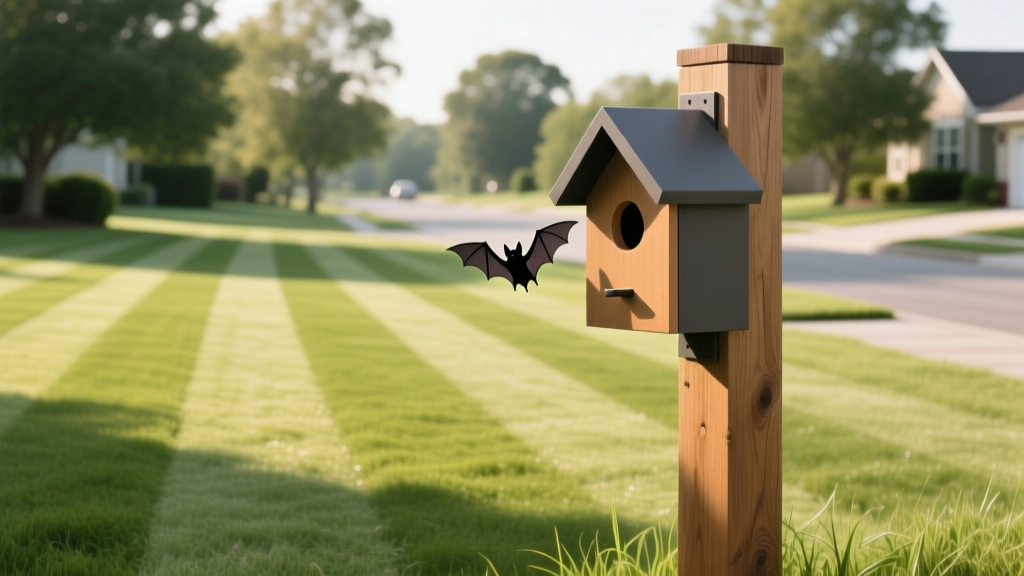
Bat House Placement & Mosquito Control Guide 2026
James MillerPublished
The Intersection of Lawn Aesthetics and Bat Conservation
As we move into the 2026 landscaping season, homeowners are increasingly seeking ways to merge pristine, professional-grade lawn aesthetics with sustainable, eco-friendly pest management. Lawn striping—the art of bending turfgrass blades in alternating directions to create striking visual patterns—has evolved from a mere stadium novelty to a staple of high-end residential landscaping. However, achieving those perfect checkerboards, diamonds, or parallel lines requires an unobstructed canvas. This presents a unique challenge when integrating functional wildlife structures, such as bat houses, into your outdoor living space.
Bats are nature's most efficient mosquito control agents. A single little brown bat can consume up to 1,000 mosquitoes in an hour, making them invaluable for maintaining a comfortable outdoor environment without relying on chemical sprays that can harm beneficial pollinators. According to Bat Conservation International, properly installed bat houses can sustain thriving local colonies that drastically reduce biting insect populations. But how do you mount a bat house at the correct height and orientation without casting disruptive shadows that ruin your meticulously striped lawn? The answer lies in strategic placement, understanding solar geometry, and treating the bat house not as an eyesore, but as a deliberate architectural focal point.
Optimal Bat House Height for Maximum Mosquito Foraging
When installing a bat house specifically for mosquito control, height is a critical variable that impacts both the bats' foraging efficiency and your lawn's visual integrity. The general consensus among wildlife experts, including the U.S. Fish and Wildlife Service, is that bat houses should be mounted between 12 and 20 feet above the ground. For mosquito control, aiming for the 15-to-18-foot range is often the sweet spot in 2026 residential setups.
Mosquitoes typically fly and breed close to the ground, especially near shaded, damp areas or garden features. Bats hunting mosquitoes will swoop down from their roost, catch their prey, and return. If the house is mounted too low (under 10 feet), bats are more vulnerable to ground predators like cats or raccoons, and the pole itself becomes an obstacle for your zero-turn mower when executing tight striping turns. Conversely, mounting the house above 20 feet on a residential property can make annual maintenance and cleaning difficult without specialized equipment.
From a lawn striping perspective, a 15-foot pole will cast a significant shadow. To prevent this shadow from creating a dark, dead-looking stripe across your meticulously patterned turf during the golden hours of late afternoon, the pole must be positioned at the absolute perimeter of your striping zone. Use the bat house pole as a 'terminus' or 'target' point. When laying out your primary striping lines, align them so they point directly toward the pole. This turns the shadow into a deliberate leading line rather than a chaotic interruption.
Orientation: Balancing Solar Gain with Lawn Shadows
Bats require warm roosts to raise their pups and conserve energy. The ideal orientation for a bat house in the Northern Hemisphere is facing South or Southeast, ensuring it receives at least six to eight hours of direct sunlight daily. This biological requirement perfectly aligns with advanced lawn striping strategies.
When you stripe a lawn North-to-South, the alternating light and dark bands are most visible when the sun is in the East or West. If your bat house is placed on the Northern edge of your property, facing South, it will receive the necessary solar exposure while standing proudly at the top of your North-South visual corridor. The shadow it casts will fall directly behind the pole relative to the primary viewing angle from your patio or back door, effectively hiding the shadow within the pole's own footprint.
Furthermore, the Centers for Disease Control and Prevention emphasizes that reducing mosquito habitats requires managing water and shade. By placing the south-facing bat house on the northern perimeter, you ensure that the area directly beneath the house (which receives the pole's shadow) remains dry and well-ventilated, preventing the damp soil conditions where mosquitoes breed. Integrating a smart drip irrigation ring around the pole base—programmed via your 2026 smart home hub to water only the surrounding deep-rooted perimeter plants—ensures the immediate pole base stays dry and mosquito-free.
Aligning Striping Patterns with Bat House Placement
| Stripe Pattern | Ideal Bat House Location | Shadow Management Strategy | Mowing Approach |
|---|---|---|---|
| North-South Lines | North Perimeter | Shadow falls behind pole from main view | Mow away from house, turn at perimeter edge |
| East-West Lines | East Perimeter | Shadow stretches West in morning, fades by noon | Use pole as primary turning marker |
| Checkerboard | Corner Anchor Point | Shadow aligns with diagonal cross-pattern | Execute 3-point turns to avoid turf tearing |
| Diagonal Diamond | Far Corner Terminus | Shadow becomes a deliberate leading line | Mow parallel to property lines, angle toward pole |
Choosing the Right 2026 Bat House and Mounting Hardware
To maintain a high-end aesthetic, the physical appearance of the bat house and its mounting pole must complement your outdoor decor. In 2026, the market offers several Bat Conservation International (BCI) certified models that feature sleek, modern designs rather than the rustic, splintery wooden boxes of the past. Look for multi-chambered houses constructed from UV-stabilized, molded polyethylene or painted, weather-treated cedar. Dark green, charcoal, or matte black finishes absorb the necessary heat while blending seamlessly into the backdrop of privacy hedges or tree lines that border your striped lawn.
Ensure the house features an extended landing pad with deep horizontal grooves. Bats need to grip this surface to crawl into the roosting chambers. Aesthetically, a flush-mounted landing pad looks much cleaner than wire mesh, which can rust and stain the pole over time. For mounting, avoid thick, rustic wooden 4x4 posts, which can look bulky and disrupt the clean sightlines of a striped yard. Instead, opt for a heavy-duty, powder-coated steel pole with a diameter of at least 2.5 inches. These poles offer a minimal visual footprint, reducing the thickness of the shadow cast on your grass. Ensure the pole is set in a concrete footer below the frost line to prevent leaning; a leaning pole will instantly ruin the geometric symmetry of your landscape design.
Smart Monitoring and Turfgrass Health Integration
One of the most exciting developments in 2026 home and garden care is the integration of smart monitoring for wildlife structures. To observe your bat colony without disturbing them or installing floodlights that ruin your evening lawn aesthetics, mount a weatherproof, infrared-enabled smart camera (such as the latest Wyze or Ring outdoor models) on the pole, facing the house's landing pad. This allows you to monitor mosquito consumption and colony health directly from your smartphone, ensuring the house is functioning as an active pest control node.
Bat guano is an excellent fertilizer, but concentrated deposits at the pole base can burn the turf. In 2026, automated robotic mowers with edge-detection AI can be programmed to skirt a 2-foot radius around the pole, allowing you to manually harvest the nutrient-rich guano for your garden-to-table vegetable beds without the mower spreading it unevenly across your striped lawn. Pay close attention to the turfgrass immediately surrounding the pole base. The constant shade from the pole and the bat house can cause cool-season grasses like Kentucky Bluegrass or Fescue to thin out, creating a brown halo that disrupts your striping pattern. To combat this, overseed the pole base with a shade-tolerant micro-clover mix or install a flush-mounted, decorative gravel ring edged with steel landscaping borders. This not only solves the shade-turf problem but also provides a clean, defined boundary for your mower's striping roller, ensuring your patterns remain razor-sharp right up to the edge of the bat house pole.
By carefully calculating height, leveraging solar orientation, and treating the bat house as a deliberate focal terminus, you can achieve world-class lawn striping while harnessing nature's most effective mosquito control system. The result is a stunning, patterned landscape that is as functional and eco-friendly as it is beautiful.
