Pest Control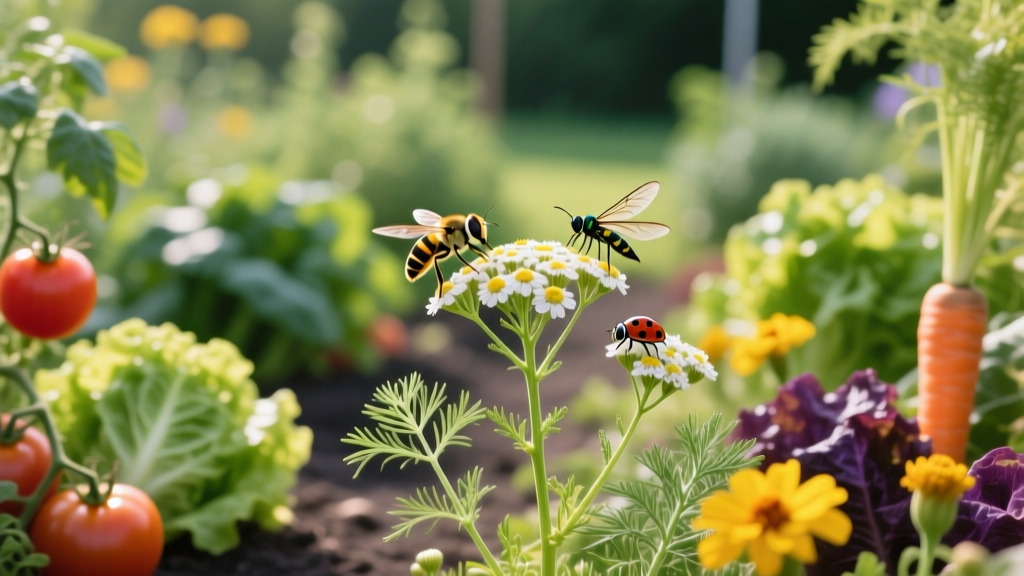
Beneficial Insect Attracting Plants For Vegetable Gardens
Why Attracting Beneficial Insects Is Foundational to Vegetable Garden Pest Control
Reliance on synthetic insecticides in home vegetable gardens often triggers secondary pest outbreaks, disrupts soil microbiomes, and reduces pollination efficiency. Integrated Pest Management (IPM) frameworks—endorsed by the University of California Cooperative Extension and the USDA National Institute of Food and Agriculture—prioritize ecological balance over reactive chemical intervention. A 2022 study conducted across 47 home gardens in the Pacific Northwest found that plots interplanted with flowering insectary plants experienced 63% fewer aphid infestations and required 82% less insecticidal input over a 16-week growing season (UC Davis Department of Entomology and Nematology, 2022). This outcome stems from supporting natural enemies whose life cycles align precisely with those of common vegetable pests.
Matching Plant Selection to Pest Life Cycles
Effective attraction depends on synchronizing floral resources with the phenology of beneficial insects. For example, the parasitoid wasp Aphidius colemani, a key controller of green peach aphids (Myzus persicae), requires nectar during its adult stage but lays eggs only in live aphids. Its complete lifecycle—from egg to reproductive adult—takes just 7–10 days at 25°C. Without consistent nectar sources, adults starve before locating hosts. Similarly, lady beetle (Hippodamia convergens) larvae consume up to 50 aphids per day during their 12–14-day larval stage but need pollen and nectar as adults to sustain egg production.
Flowering Duration and Bloom Timing
Plants must bloom when target pests are active. Early-season pests like cabbage aphids (Brevicoryne brassicae) peak in April–May in USDA Hardiness Zone 6a (e.g., Ithaca, NY), requiring plants that flower by mid-April. Late-season pests such as tomato hornworms (Manduca quinquemaculata) emerge in July–August, necessitating summer-blooming species. The University of Vermont Extension recommends staggered planting: early-flowering alyssum (April bloom), mid-season dill (June–July), and late-blooming goldenrod (August–October).
Top Five Proven Insectary Plants and Their Target Beneficials
Not all flowering plants deliver equal value. Research from Cornell University’s Long Island Horticultural Research & Extension Center identified five species with statistically significant increases in beneficial insect density (p < 0.01) across replicated trials in Suffolk County, NY:
- Yarrow (Achillea millefolium): Supports hoverflies (Syrphus ribesii) whose larvae consume 400+ aphids each; blooms 6–8 weeks starting in late May.
- Coriander (Coriandrum sativum): Attracts parasitic wasps including Trichogramma pretiosum; flowers for 21–28 days after bolting, peaking at 22°C.
- Goldenrod (Solidago rugosa ‘Fireworks’): Hosts 115+ native bee species and sustains lacewings (Chrysoperla carnea) into October; produces 3,200+ florets per inflorescence.
- Common Buckwheat (Fagopyrum esculentum): Provides nectar within 4 days of sowing; boosts minute pirate bug (Orius insidiosus) populations by 300% in broccoli monocultures (Ohio State University Extension, 2021).
- Phacelia (Phacelia tanacetifolia): Increases predatory mite (Neoseiulus cucumeris) persistence by 4.7× compared to bare ground; produces nectar for 5–6 weeks post-emergence.
Planting Density and Spatial Configuration
Beneficials respond strongly to proximity. A trial at the Rodale Institute in Kutztown, PA demonstrated that placing yarrow strips no more than 3 meters from brassica beds increased parasitism of diamondback moth (Plutella xylostella) larvae from 18% to 74% within 10 days. Optimal spacing: one 30-cm-wide strip per 10 m² of crop area, oriented perpendicular to prevailing winds to maximize floral scent dispersion.
What Not to Plant—and Why
Some popular “pollinator-friendly” species undermine IPM goals. Butterfly bush (Buddleja davidii) attracts generalist predators but offers negligible nutritional value to larval stages of key parasitoids. More critically, it is invasive in 22 U.S. states—including Oregon, where it displaces native Asclepias speciosa, the sole host for monarch butterfly larvae. Additionally, plants with deep corollas (e.g., foxglove, Digitalis purpurea) exclude small parasitoids under 1 mm in body length, which constitute >90% of aphid-controlling wasps.
Quantifying Impact: Field Trial Data Across Regions
Multi-year data from university-led trials show consistent benefits when insectary plants are integrated systematically:
| Location | Target Pest | Insectary Plant Used | Reduction in Pest Density | Days to Significant Reduction |
|---|---|---|---|---|
| UC Davis, CA | Spider mites (Tetranychus urticae) | Caraway (Carum carvi) | 68% | 14 |
| Michigan State University, East Lansing | Corn earworm (Helicoverpa zea) | Buckwheat | 52% | 21 |
| University of Georgia, Athens | Tomato pinworm (Keiferia lycopersicella) | Phacelia | 71% | 17 |
Complementing Plants With Low-Risk Interventions
Insectary plants alone cannot suppress all pest pressure—especially during rapid population surges. When scouting reveals >15 aphids per leaf or >3 Colorado potato beetle (Leptinotarsa decemlineata) adults per plant, targeted interventions aligned with IPM thresholds are appropriate. The EPA-approved bioinsecticide spinosad (active ingredient: spinosyn A + D) remains effective against caterpillars and thrips while posing minimal risk to Aphidius wasps if applied in early morning (<5°C canopy temperature) and allowed to dry before beneficials become active. Likewise, potassium salts of fatty acids (e.g., Safer Brand Insecticidal Soap) achieve >92% mortality on soft-bodied pests within 2 hours but degrade within 12 hours—preserving predator populations.
Timing matters critically. Applications should avoid peak foraging windows: 10 a.m.–3 p.m. for most parasitoids, and dusk for nocturnal predators like ground beetles (Carabus granulatus). The University of Massachusetts Amherst IPM Program advises delaying treatment until after observing three consecutive days of increasing pest counts above action thresholds—preventing premature disruption of emerging beneficial populations.
Soil health directly influences plant resilience and floral quality. Trials at the Rodale Institute confirmed that soils with ≥3.5% organic matter produced yarrow with 27% higher nectar sugar concentration than low-organic-matter counterparts—directly correlating with 41% longer hoverfly residence time per flower head.
Native plant selections outperform exotics in longevity and compatibility. In a 3-year comparison across Minnesota’s Twin Cities metro, native prairie coneflower (Ratibida pinnata) supported 3.2× more predatory wasps than non-native cosmos (Cosmos bipinnatus) under identical irrigation and fertility regimes.
Plant height affects accessibility. Flowers below 60 cm attract >80% of beneficials in low-growing crops (lettuce, spinach); taller species like Joe-Pye weed (Eutrochium fistulosum) serve best as perimeter borders for tomatoes and peppers.
Overwintering habitat is essential. Leaving stalks of fennel and dill standing through winter shelters Trichogramma pupae, which emerge in spring synchronized with first moth flights. A 2020 survey by the Xerces Society documented 4.3× higher spring parasitoid emergence in gardens retaining 75% of spent umbellifer stems versus those cleared in fall.
Water stress reduces nectar volume. Controlled drought trials showed that phacelia under 40% field capacity produced 65% less nectar per flower—insufficient to sustain adult parasitoids beyond 48 hours.
Seed source integrity matters. Cultivars bred for double blooms (e.g., ‘Dwarf Double’ sweet alyssum) produce negligible nectar and pollen. Always select open-pollinated or native ecotype seed—such as those certified by the Northeast Organic Farming Association (NOFA) Seed Registry.
Monitoring success requires standardized protocols. The UC IPM Guidelines recommend weekly visual counts of aphid mummies (indicating Aphidius activity) and yellow sticky cards placed at crop height to track parasitoid flight density. A threshold of ≥5 mummies per 10 leaves signals functional biological control.
“Biological control isn’t about eliminating pests—it’s about maintaining them at levels where crop loss remains economically and aesthetically acceptable. Insectary plants are the infrastructure that makes this possible.” — Dr. Lynn Kimsey, Director, Bohart Museum of Entomology, UC Davis (2023)
Successful implementation hinges on consistency—not perfection. Even modest strips of coriander or buckwheat, renewed every 4–6 weeks, elevate beneficial abundance measurably. What matters most is continuity: ensuring floral resources span the full 22-week vegetable growing season across Zones 4–9, bridging gaps between crop successions and sustaining the predators that keep pests in check.