Lawn Care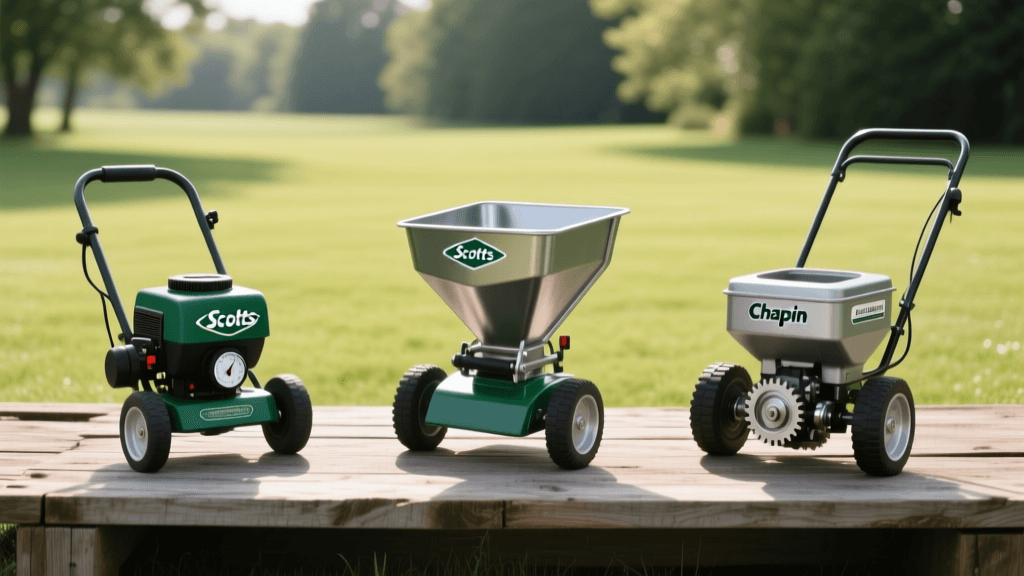
Best Broadcast Spreaders for Lawn Fertilizer: Scotts vs Agri-Fab
Introduction to Lawn Fertilizer Spreaders
Achieving a lush, carpet-like lawn requires more than just buying the right bag of fertilizer; it demands precise, even application. Applying too much fertilizer can lead to severe lawn burn, while applying too little results in patchy, weak turf vulnerable to weeds and disease. The unsung hero of lawn nutrition is the broadcast spreader. In this comprehensive product review and comparison, we evaluate three of the most popular spreaders on the market: the Scotts Turf Builder EdgeGuard Mini, the Agri-Fab 130 lb. Tow-Behind, and the Chapin 50 lb. Professional Broadcast Spreader. Whether you have a small urban lot or a sprawling suburban estate, this guide will help you choose the right tool for the job.
Drop vs. Broadcast Spreaders: A Quick Primer
Before diving into specific models, it is crucial to understand why we focus on broadcast spreaders. Drop spreaders release granules directly below the hopper in a narrow band. While they offer extreme precision near garden beds, they are notoriously slow and require perfect wheel overlapping to avoid visible striping on the lawn. Broadcast spreaders, on the other hand, use an impeller to fling granules outward in a wide, fan-shaped pattern. They cover ground much faster and are far more forgiving regarding overlap, making them the preferred choice for both homeowners and professional turf managers.
Product Review: Scotts Turf Builder EdgeGuard Mini
Best for Small to Medium Lawns (Up to 5,000 Sq. Ft.)
The Scotts Turf Builder EdgeGuard Mini is a staple in suburban garages. Its standout feature is the proprietary EdgeGuard technology, a mechanical lever that blocks the right side of the spread pattern, preventing fertilizer from landing on sidewalks, driveways, and flower beds.
- Capacity: Holds enough product to cover up to 5,000 square feet.
- Build Quality: Lightweight plastic frame with solid plastic wheels.
- Pros: Extremely affordable, lightweight, easy to store, and the EdgeGuard feature saves time on edge cleanup.
- Cons: Small hopper requires frequent refills; plastic gears can strip if used with heavy, coarse organic fertilizers.
- Price Range: $40 - $50
Verdict: If you have a standard suburban yard and primarily use synthetic, spherical fertilizers like Scotts Turf Builder, this is an excellent, budget-friendly entry point.
Product Review: Agri-Fab 130 lb. Tow-Behind Broadcast Spreader
Best for Large Lawns and Rural Properties (Up to 25,000 Sq. Ft.)
For those who maintain expansive properties and already own a riding mower or lawn tractor, the Agri-Fab 130 lb. Tow-Behind is a massive upgrade in efficiency. It hooks directly to your tractor's hitch, allowing you to fertilize an acre in a fraction of the time it would take on foot.
- Capacity: 130 lbs (covers roughly 25,000 square feet per load).
- Build Quality: Heavy-duty steel frame, rust-proof polyethylene hopper, and large pneumatic (air-filled) tires.
- Pros: Massive capacity eliminates constant refilling; pneumatic tires glide over rough terrain; enclosed gearbox prevents debris corrosion.
- Cons: Requires a riding mower; takes up significant garage storage space; lacks a built-in edge guard.
- Price Range: $140 - $170
Verdict: The ultimate time-saver for large properties. The pneumatic tires ensure a smooth ride over uneven ground, maintaining a consistent spread pattern.
Product Review: Chapin 50 lb. Professional Broadcast Spreader
Best for Versatility and Organic Fertilizers
The Chapin 50 lb. Professional Broadcast Spreader bridges the gap between consumer-grade and commercial-grade equipment. It is highly regarded for its ability to handle irregularly shaped granules, making it the top choice for organic lawn care enthusiasts.
- Capacity: 50 lbs (covers up to 15,000 square feet).
- Build Quality: Stainless steel frame, 10-inch pneumatic tires, and an auto-stop agitator.
- Pros: The auto-stop agitator prevents product flow when you stop walking; handles dusty or coarse organics like Milorganite without clogging; highly durable.
- Cons: Heavier to push than the Scotts Mini; higher price point.
- Price Range: $85 - $110
Verdict: If you use organic fertilizers, weed-and-feed products with large granules, or ice melt in the winter, the Chapin's robust agitator and wide hopper opening make it the most versatile tool in the shed.
Head-to-Head Comparison Chart
| Feature | Scotts EdgeGuard Mini | Agri-Fab 130 lb. Tow-Behind | Chapin 50 lb. Professional |
|---|---|---|---|
| Max Capacity | 5,000 sq ft | 25,000 sq ft | 15,000 sq ft |
| Spreader Type | Push Broadcast | Tow-Behind Broadcast | Push Broadcast |
| Tire Type | Solid Plastic | Pneumatic (Air-Filled) | Pneumatic (Air-Filled) |
| Edge Guard | Yes (Right Side) | No | No |
| Best For | Small Yards, Synthetics | Large Estates, Tractors | Organics, Versatility |
Understanding Spreader Settings and Granule Types
Not all fertilizers are created equal. Synthetic fertilizers are typically prilled into perfectly uniform, spherical beads that flow easily through any spreader. Organic fertilizers, such as Milorganite or compost-based blends, are often irregular, dusty, and prone to clumping. According to turf management experts, using a spreader with a weak agitator on organic products will result in severe clogging and uneven application. This is where the Chapin Professional shines, as its aggressive agitator bar breaks up clumps before they reach the impeller. Always cross-reference the fertilizer bag's recommended setting with the manufacturer's chart located on the spreader's packaging or website.
Calibration and Application Best Practices
Even the most expensive spreader will fail if it is not properly calibrated. Penn State Extension strongly recommends calibrating your spreader at the start of every season, as humidity and wear can alter the flow rate. To calibrate, measure a 100-square-foot area (e.g., 10x10 feet), weigh the exact amount of fertilizer needed for that space, and do a test run on a driveway. Adjust the dial until the hopper empties exactly as you complete the test area.
Pro Tip: Always apply fertilizer to a dry lawn, and water it in immediately afterward to activate the nutrients and prevent leaf burn. When walking, maintain a steady, consistent pace; walking too fast will under-apply, while walking too slow will over-apply and risk burning the turf.
Furthermore, the University of Minnesota Extension advises using the 'overlap method' for broadcast spreaders. Because the edges of a broadcast pattern are lighter than the center, you should align your wheel tracks with the outer edge of the previous pass's spread pattern to ensure uniform coverage without striping.
Environmental Stewardship and Runoff Prevention
Responsible lawn care extends beyond your property lines. Over-application of nitrogen and phosphorus can lead to severe environmental consequences. The Environmental Protection Agency (EPA) warns that nutrient runoff from lawns is a primary contributor to algal blooms and dead zones in local waterways. To mitigate this, always utilize the Scotts EdgeGuard feature near storm drains, or manually close the hopper when turning around on hard surfaces. Sweep any stray granules off driveways and sidewalks back onto the grass where they belong, rather than washing them away with a hose.
Maintenance Tips to Extend Spreader Lifespan
Fertilizers are highly corrosive, particularly those containing iron or potassium chloride. To ensure your spreader lasts for years:
- Wash it down: After every use, rinse the hopper, impeller, and wheels with a garden hose.
- Dry it thoroughly: Let the spreader air-dry in the sun to prevent rust on metal springs and gears.
- Lubricate moving parts: Apply a silicone-based spray or lithium grease to the axle and agitator bar at the start and end of the season.
- Store indoors: Never leave your spreader outside exposed to rain and UV degradation.
Final Verdict: Which Spreader Should You Buy?
Choosing the right broadcast spreader ultimately depends on your lawn's size, your equipment, and the type of fertilizer you prefer. If you have a standard-sized suburban lawn under 5,000 square feet and want a hassle-free, affordable tool, the Scotts Turf Builder EdgeGuard Mini is the undisputed champion of convenience. For homeowners with multi-acre properties and a riding tractor, the Agri-Fab 130 lb. Tow-Behind will save you hours of labor and deliver commercial-grade efficiency. Finally, for the lawn care purist who utilizes organic amendments, heavy weed-and-feeds, or winter ice melt, the Chapin 50 lb. Professional offers the durability, pneumatic traction, and anti-clog agitator necessary to handle whatever you put in the hopper. Invest in the right tool, calibrate it properly, and watch your lawn thrive season after season.