The Ultimate Guide to the Best Grass Seed for Shade and Sun

Achieving a lush, uniform lawn is a common goal for many homeowners, but it becomes significantly more challenging when your yard features a mix of bright, open spaces and heavily shaded areas. Finding the best grass seed for shade and sun is the ultimate key to maintaining a vibrant landscape without resorting to patchy, thin turf beneath tree canopies.
Most lawns experience shifting light patterns throughout the day and across different seasons. A single grass species rarely thrives in both extreme heat and deep shade. Instead, the secret to a resilient, mixed-light lawn lies in selecting high-quality seed blends tailored to your specific climate and growing zone. In this comprehensive guide, we will explore the top grass varieties that bridge the gap between sun and shade, how to plant them, and the maintenance routines required to keep them looking their best.
Understanding Light Requirements for Lawns
Before selecting a seed blend, it is crucial to understand how sunlight impacts turfgrass health. Grass relies on photosynthesis to produce the energy needed for root development and blade growth. When light is restricted, grass becomes thin, pale, and highly susceptible to disease.
- Full Sun: Areas receiving 6 to 8 or more hours of direct, unfiltered sunlight daily.
- Partial Shade: Zones receiving 4 to 6 hours of direct sunlight, or dappled light filtering through tree canopies throughout the day.
- Dense Shade: Areas receiving less than 4 hours of direct sunlight. Most turfgrasses will struggle to survive here, and alternative ground covers or shade landscaping strategies may be required.
When shopping for the best grass seed for shade and sun, you are generally looking for blends designed for "partial shade" or "mixed light." These blends combine aggressive, sun-loving grasses with slower-growing, highly shade-tolerant species to ensure complete lawn coverage.
Top Cool-Season Grass Seeds for Mixed Light
Cool-season grasses dominate the northern half of the United States and the transition zone. They thrive in spring and fall, and many possess excellent shade tolerance compared to their warm-season counterparts. If you live in a cooler climate, a carefully formulated cool-season blend is your best option.
Tall Fescue
Tall Fescue is widely considered one of the most adaptable cool-season grasses available. Modern turf-type and dwarf tall fescue varieties feature deep root systems that provide exceptional drought and heat tolerance, allowing them to flourish in full sun. Simultaneously, they possess a moderate to high shade tolerance, making them an excellent standalone choice or base for mixed-light lawns.
- Pros: Deep roots, excellent wear tolerance, good disease resistance, adapts to various soil types.
- Cons: Can develop a clumpy growth habit if not seeded densely; requires occasional overseeding to maintain thickness in the shade.
Fine Fescue Blends
When shade is the primary concern, Fine Fescue (which includes creeping red, chewings, hard, and sheep fescues) is the undisputed champion. Fine fescues have very narrow blades and require significantly less sunlight than other species. However, they can struggle in intense, baking summer sun. Therefore, they are almost always blended with other grasses.
- Pros: Unmatched shade tolerance, low fertilizer requirements, excellent for poor or sandy soils.
- Cons: Poor traffic tolerance, prone to thatch buildup, struggles in extreme summer heat.
Kentucky Bluegrass & Fescue Mixes
Kentucky Bluegrass (KBG) is famous for its beautiful, dark green color and aggressive spreading via rhizomes, which helps it repair damage in sunny areas. While KBG prefers full sun, mixing it with Fine Fescue or Tall Fescue creates a dynamic lawn. The KBG fills in the sunny, high-traffic zones, while the fescue takes over the shaded areas beneath trees.
- Pros: Self-repairing, beautiful aesthetic, highly cold-tolerant.
- Cons: High water and fertilizer needs, shallow root system compared to tall fescue, slow to germinate.
Top Warm-Season Grass Seeds for Sun & Shade
Warm-season grasses are the standard for southern lawns, thriving in the heat of summer. However, they are notoriously intolerant of shade. Furthermore, many popular southern grasses (like St. Augustine and Centipede) are rarely grown from seed and are instead installed via sod or plugs. If you are strictly looking for seed, your options are more limited but still effective.
Zoysiagrass
Zoysiagrass is one of the few warm-season grasses available as seed (specifically varieties like Zenith or Compadre) that offers a reasonable degree of shade tolerance. It forms a dense, carpet-like turf that chokes out weeds and handles full sun brilliantly. While it prefers full sun, it will survive in light to moderate shade better than Bermudagrass.
- Pros: Extremely dense turf, high drought and heat tolerance, low fertilizer requirements.
- Cons: Very slow to establish from seed, prone to thatch, turns brown after the first fall frost.
Shade-Tolerant Bermudagrass Blends
Standard Bermudagrass requires full, blasting sun and will quickly thin out in shaded areas. However, agricultural advancements have produced improved seeded varieties (such as Yukon or Riviera) that exhibit slightly better shade tolerance. For heavily shaded southern lawns, Bermudagrass seed is generally not recommended unless the area receives at least 6 hours of filtered light.
- Pros: Rapid establishment, incredible heat and traffic tolerance, aggressive recovery.
- Cons: Very poor shade tolerance, highly invasive into flower beds, high maintenance requirements.
How to Choose & Plant the Right Seed Blend
Selecting the best grass seed for shade and sun is only the first step. Proper site preparation and planting techniques are vital to ensure the shade-tolerant varieties successfully germinate and compete with the sun-loving grasses.
Evaluate Your Soil and Site
Shaded areas often have different soil conditions than sunny spots. Tree roots compete heavily for moisture and nutrients. Before planting, conduct a soil test to determine your pH and nutrient levels. Amending the soil with organic compost will improve moisture retention in sunny areas while improving drainage in damp, shaded zones.
Seed Selection and Application Rates
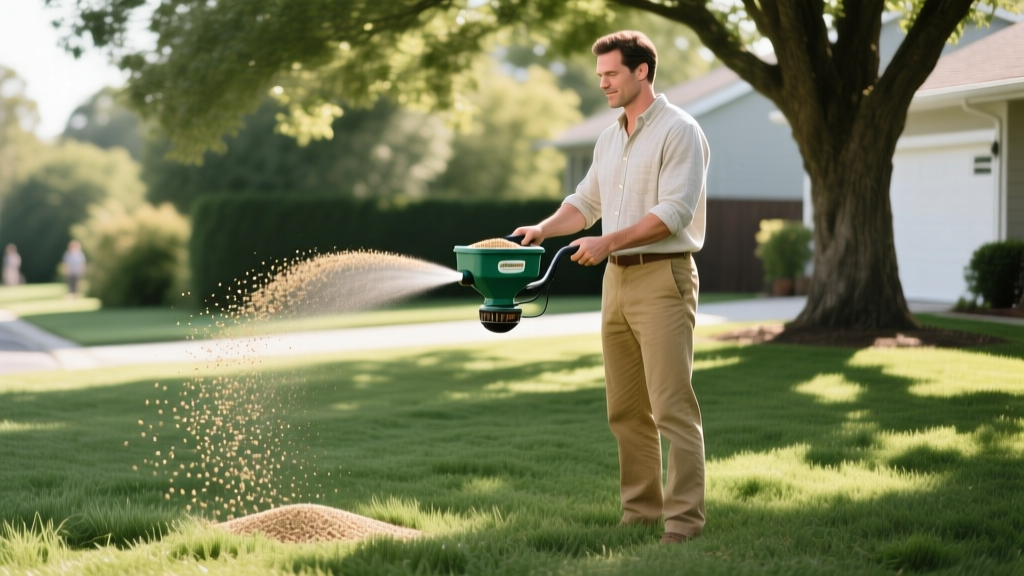
Always read the seed tag carefully. Look for a "Shade & Sun" or "Dense Shade" mix that contains a high percentage of Fine Fescue or Tall Fescue for cool-season lawns. Ensure the seed has a high germination rate (above 85%) and contains less than 0.5% weed seed. When applying, use a broadcast spreader to ensure even coverage, and apply at the higher end of the manufacturer's recommended rate to account for lower germination success in shaded areas.
Watering and Germination
Shaded areas retain moisture longer, but the top layer of soil can still dry out quickly due to tree root competition. Keep the top inch of soil consistently moist until the grass reaches a height of two inches. Be careful not to overwater the shaded zones, as excess moisture combined with low light is a primary catalyst for fungal diseases like powdery mildew and brown patch.
Maintenance Tips for Mixed-Light Lawns
A lawn that transitions from full sun to deep shade requires a nuanced maintenance approach. What works for the sunny front yard might harm the shaded backyard.
Adjust Your Mowing Height
One of the most critical rules of proper lawn mowing is to cut shaded grass higher than grass in full sun. Taller grass blades have more surface area to capture limited sunlight. If you mow your sunny areas at 2.5 inches, raise your mower deck to 3.5 or 4 inches when entering shaded zones. Never remove more than one-third of the grass blade in a single mowing session.
Strategic Fertilization
Grass growing in the shade actually requires less nitrogen than grass in full sun. Excess nitrogen in shaded areas promotes rapid, weak, and succulent blade growth that is highly vulnerable to disease and foot traffic. Apply fertilizer based on the needs of the sunny areas, but reduce the application rate by 25% to 50% when feeding the shaded sections of your lawn.
Pruning and Airflow
To maximize the effectiveness of your shade-tolerant seed, you must manage the environment. Prune lower tree branches to a height of at least 8 to 10 feet. This allows low-angle morning and late-afternoon sunlight to reach the grass. Additionally, thinning out dense tree canopies improves airflow, which helps dry morning dew and prevents fungal outbreaks.
Grass Type Comparison Table
The following table compares the most common grass types used in mixed-light environments to help you make an informed decision for your specific region.
| Grass Type | Climate Zone | Sun Tolerance | Shade Tolerance | Maintenance Level | Best Use Case |
|---|---|---|---|---|---|
| Tall Fescue | Cool-Season / Transition | High | Moderate to High | Moderate | Overall mixed-light lawns, high traffic |
| Fine Fescue | Cool-Season | Low to Moderate | Very High | Low | Heavy shade blends, low-traffic areas |
| Kentucky Bluegrass | Cool-Season | Very High | Low to Moderate | High | Sunny areas, blended with fescues |
| Zoysiagrass | Warm-Season / Transition | Very High | Moderate | Moderate | Southern lawns with partial tree cover |
| Bermudagrass | Warm-Season | Very High | Very Low | High | Full sun only; avoid for shade mixes |
Frequently Asked Questions
Can I just plant one type of grass seed for my entire yard?
While you can plant a single species like Tall Fescue across your entire yard, it is rarely the most effective strategy for mixed-light environments. A single species will thrive in its preferred conditions but struggle in others, leading to an uneven lawn. Using a professionally formulated seed blend ensures that shade-tolerant grasses populate the dark areas while sun-loving grasses dominate the bright spots, resulting in a uniform appearance.
Why is my shade-tolerant grass dying under my trees?
If your shade-tolerant grass is failing, the issue is often competition rather than a lack of sunlight. Mature trees have massive root systems that aggressively consume water and nutrients, starving the grass above. Furthermore, if the tree canopy is too dense, it may be blocking even the minimum light requirements for the grass. Consider deep, infrequent watering to encourage deep grass roots, and consult an arborist about thinning the tree canopy.
How often should I overseed a lawn with mixed sun and shade?
Lawns with heavy shade and high tree competition typically require annual overseeding. Shade-tolerant grasses like Fine Fescue are bunchgrasses that do not spread aggressively via rhizomes or stolons. Over time, they naturally thin out due to environmental stress. Overseeding in the early fall helps replenish the turf density and keeps the shaded areas looking thick and healthy.
Is there a warm-season grass seed that grows in dense shade?
Unfortunately, no warm-season grass seed thrives in dense shade. While St. Augustine grass has the highest shade tolerance among warm-season varieties, it is almost exclusively planted via sod, plugs, or sprigs, not seed. If you have dense shade in a southern climate and insist on using seed, you may need to look into alternative shade-loving ground covers, as warm-season turfgrass seeds will simply not survive the lack of light.
Should I water shaded areas as much as sunny areas?
No, shaded areas require less frequent watering than areas in full sun. Because sunlight and wind exposure are reduced, moisture evaporates much slower in the shade. Overwatering shaded zones keeps the grass blades constantly wet, creating a perfect breeding ground for fungal diseases. Always check the soil moisture in the shade before irrigating, and water deeply but less frequently compared to your sunny lawn zones.

