
Landscaping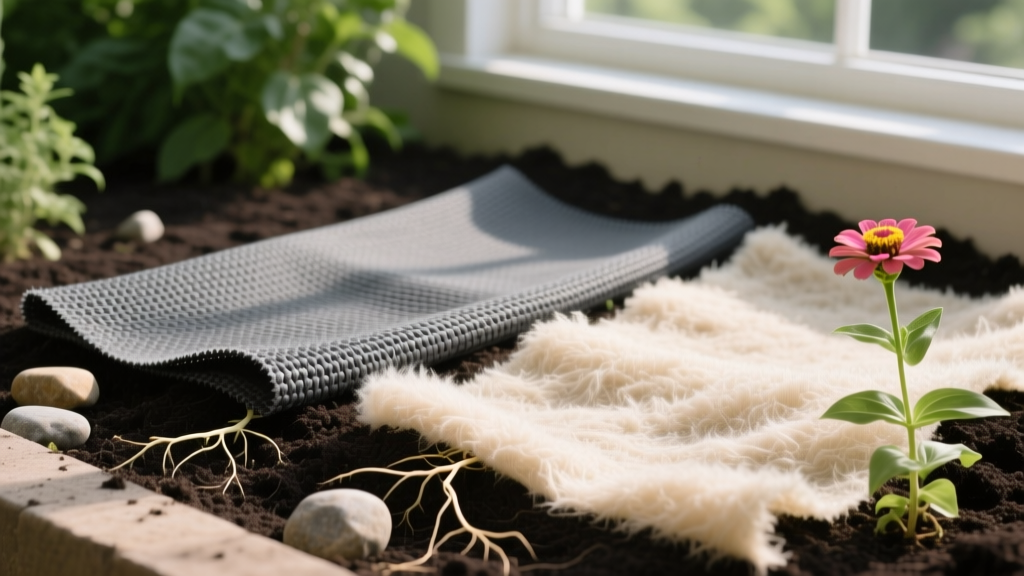
Best Landscape Fabrics Reviewed: Woven vs Non-Woven
Sarah ChenPublished
The Truth About Landscape Fabric and Weed Barriers
For decades, landscape fabric has been marketed as the ultimate silver bullet for weed control in garden beds, hardscaping projects, and pathways. The promise is enticing: lay down a layer of synthetic material, cover it with mulch or gravel, and never pull a weed again. However, modern horticultural science and long-term field testing tell a vastly different story. While weed barriers can be highly effective in specific scenarios—such as under gravel driveways or French drains—they are often misused in perennial garden beds, leading to soil compaction, poor drainage, and eventual weed nightmares.
In this comprehensive product review and comparison, we evaluate three of the most popular landscape fabrics on the market: the DeWitt Pro 5, Scotts Pro Landscape Fabric, and the ECOgardener Premium Weed Barrier. We will break down their material composition, water permeability, ideal use cases, and long-term viability, helping you decide which product (if any) belongs in your next landscaping project.
Top Contenders: Product Reviews
1. DeWitt Pro 5 Weed Barrier (Woven Polypropylene)
The DeWitt Pro 5 is a heavyweight, woven polypropylene fabric that has been a staple in commercial landscaping for years. Weighing in at 5.0 ounces per square yard, it is exceptionally durable and resists tearing when dragged across by heavy wheelbarrows or sharp gravel. Because it is woven, water and air pass through the microscopic gaps between the threads, though this permeability can decrease over time as silt and organic matter clog the pores.
Best For: Hardscaping projects, gravel pathways, retaining wall backfill, and French drain trenches. It is not recommended for vegetable gardens or dense perennial beds where plants need to spread and breathe.
Pros: High tensile strength; excellent UV resistance; holds up well under heavy inorganic mulches like river rock or crushed granite.
Cons: Stiff and difficult to cut cleanly; frays at the edges if not sealed or buried; water pooling can occur on slopes if the fabric clogs.
Cost: Approximately $45 to $55 for a 3-foot by 100-foot roll.
2. Scotts Pro Landscape Fabric (Non-Woven Spunbond)
Scotts Pro Landscape Fabric utilizes a non-woven, spunbond polyester or polypropylene design. If you have ever felt a non-woven weed barrier, you will notice it feels more like a thick felt or medical mask than a traditional tarp. This manufacturing process creates a dense mat that is highly effective at blocking sunlight, which is the primary catalyst for weed seed germination.
Best For: Short-term slope stabilization, temporary weed suppression before hardscaping, and use beneath synthetic turf where high drainage is not the primary concern.
Pros: Very easy to cut with standard utility scissors; conforms well to uneven terrain and curved garden bed edges; excellent initial light blockage.
Cons: Lowest water permeability of the three; highly prone to clogging with fine soil particles, which can lead to water runoff and topsoil erosion during heavy rains.
Cost: Approximately $35 to $40 for a 4-foot by 50-foot roll.
3. ECOgardener Premium Pro Weed Barrier (Woven & Needle-Punched)
The ECOgardener Premium attempts to bridge the gap between heavy-duty woven durability and high-flow permeability. It features a woven polypropylene base that has been needle-punched to create thousands of micro-perforations. This design allows for superior water and nutrient exchange compared to standard woven fabrics, making it slightly more forgiving for use around established shrubs and trees.
Best For: Driveway paver bases, heavy rock gardens, and large-scale commercial shrub borders where heavy-duty weed suppression is needed without completely suffocating the soil.
Pros: Excellent drainage rates; heavy-duty 10.5 oz/sq yd thickness resists punctures from sharp rocks; features built-in measurement lines for easy alignment.
Cons: Heavier and bulkier to transport; premium price point; still susceptible to the 'mulch sandwich' weed effect over time.
Cost: Approximately $50 to $60 for a 4-foot by 100-foot roll.
Side-by-Side Comparison Chart
| Product | Material Type | Weight / Thickness | Water Permeability | Best Application | Avg. Cost (per 100 sq ft) |
|---|---|---|---|---|---|
| DeWitt Pro 5 | Woven Polypropylene | 5.0 oz / sq yd | Moderate | Gravel paths, French drains | $15.00 - $18.00 |
| Scotts Pro | Non-Woven Spunbond | 1.5 oz / sq yd | Low (Prone to clogging) | Slope stabilization, synthetic turf | $17.00 - $20.00 |
| ECOgardener Premium | Woven / Needle-Punched | 10.5 oz / sq yd | High | Paver bases, heavy rock gardens | $12.00 - $15.00 |
The Science: Why Landscape Fabric Fails in Garden Beds
While the products reviewed above excel in hardscaping and inorganic environments, using them in organic garden beds is a common landscaping mistake. According to horticulturist Dr. Linda Chalker-Scott, writing for the Garden Professors, landscape fabric creates a hostile environment for soil biology. The fabric restricts the vital exchange of oxygen and carbon dioxide between the soil and the atmosphere, which starves beneficial soil microbes and earthworms.
Furthermore, the UC Statewide IPM Program notes that weed barriers do not provide permanent weed control. Over time, wind-blown soil, decomposing leaves, and organic mulch break down on top of the fabric, creating a perfect seedbed for weeds. When these weeds germinate, their roots penetrate the fabric. Attempting to pull them later often tears the fabric, ruining its integrity and leaving root fragments behind to resprout.
The University of Minnesota Extension also warns against the 'mulch sandwich' effect. When organic mulch is placed over impermeable fabric, it cannot decompose and integrate into the soil below. This deprives your plants of essential nutrients and leads to a compacted, lifeless soil profile beneath the barrier.
Installation Best Practices for Hardscaping
If your project involves gravel, pavers, or drainage solutions where landscape fabric is genuinely recommended, proper installation is critical to prevent shifting and tearing.
- Trench the Edges: Dig a shallow 3-inch trench around the perimeter of your project area. Tuck the edges of the fabric into the trench and backfill with soil to anchor it securely.
- Overlap Seams: Never butt two pieces of fabric end-to-end. Always overlap seams by a minimum of 6 to 12 inches to prevent weeds from finding the gap.
- Use Heavy-Duty Pins: Secure the fabric using 6-inch galvanized steel landscape staples (sod pins) every 3 to 5 feet. Plastic pins often snap under the pressure of shifting gravel or frost heave.
- Cut X-Slits Carefully: If you must plant through the fabric (e.g., in a shrub border), cut an 'X' rather than a circle. Fold the flaps back, plant, and then tuck the flaps tightly around the base of the plant to minimize light exposure.
Sustainable Alternatives for Garden Beds
For perennial beds, vegetable gardens, and tree rings, skip the synthetic fabrics entirely. Instead, utilize a method known as sheet mulching. Lay down overlapping layers of plain, uncoated cardboard directly over the grass or weeds. Wet the cardboard thoroughly, and then cover it with 3 to 4 inches of high-quality organic wood chips or shredded bark. The cardboard will smother existing weeds by blocking sunlight, while naturally decomposing over 6 to 12 months, feeding the soil ecosystem rather than suffocating it.
Final Verdict
The best landscape fabric depends entirely on your project. For hardscaping, gravel driveways, and drainage trenches, the ECOgardener Premium and DeWitt Pro 5 are exceptional, heavy-duty choices that will keep your aggregate clean and prevent base erosion. However, for ornamental garden beds and planting areas, the smartest landscaping choice is to leave the fabric on the store shelf, opt for thick organic mulch, and embrace the natural soil biology that keeps your plants thriving.

