
Landscaping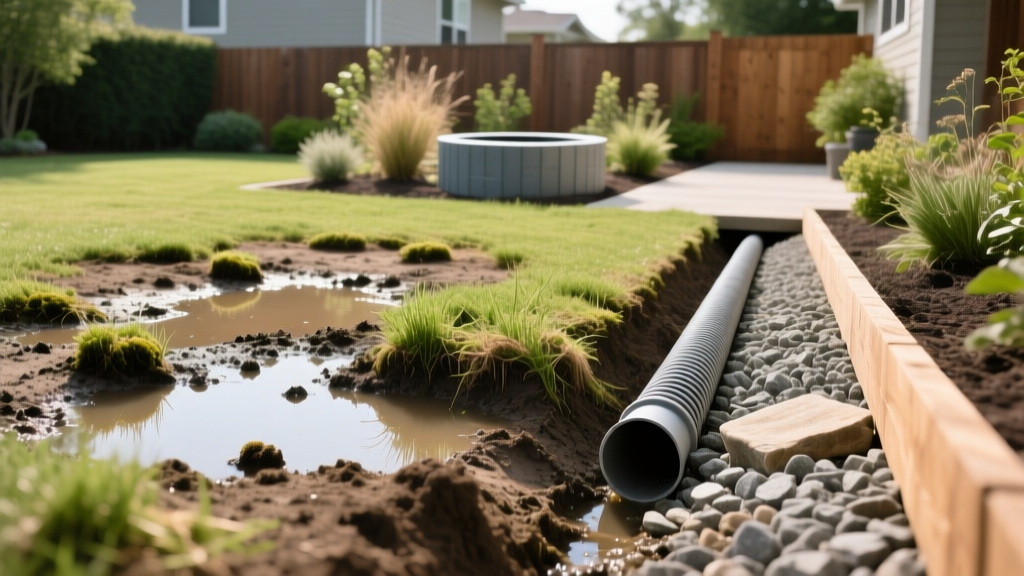
How to Diagnose and Fix Poor Yard Drainage Problems
James MillerPublished
Introduction: The Hidden Dangers of Standing Water
Waking up to a flooded yard after a heavy rainstorm is a frustrating experience for any homeowner. However, poor yard drainage is more than just a cosmetic nuisance or a barrier to enjoying your outdoor living space. Chronic standing water can lead to severe structural damage to your home's foundation, kill expensive turfgrass and ornamental plants by suffocating their root systems, and create prime breeding grounds for disease-carrying mosquitoes. Diagnosing the root cause of soggy soil and implementing the correct landscaping or hardscaping solution is critical to protecting your property value and restoring the health of your landscape.
In this comprehensive troubleshooting guide, we will walk you through the exact steps to diagnose your yard's drainage issues, test your soil's percolation rate, and deploy targeted solutions ranging from simple soil amendments to advanced French drain installations.
Step 1: Diagnose the Problem with a Percolation Test
Before you start digging trenches or buying gravel, you must understand how your soil handles water. The most common culprit for poor drainage is heavy clay soil, which features tightly packed particles that restrict water infiltration. To confirm this, perform a simple DIY percolation test.
- Dig a test hole: Using a post-hole digger or shovel, dig a hole approximately 12 inches deep and 12 inches wide in the lowest, soggiest part of your yard.
- Pre-soak the soil: Fill the hole with water and let it drain completely. This step is crucial because it saturates the surrounding soil, mimicking the conditions of a prolonged rainstorm.
- Measure the drainage rate: Refill the hole with water. Place a ruler or yardstick into the center of the hole. Measure the water level drop every hour for two to three hours.
The Verdict: If the water level drops less than 1 inch per hour, you have poorly draining soil (likely heavy clay or a compacted hardpan layer). If it drops between 1 and 6 inches per hour, your drainage is adequate. If it drains faster than 6 inches per hour, you have sandy soil that may struggle to retain moisture for plants. For a deeper understanding of your native soil profile and historical drainage data, consult the USDA Natural Resources Conservation Service (NRCS) Web Soil Survey, an invaluable free tool for landscapers and homeowners.
Step 2: Troubleshooting Common Drainage Issues
Once you have identified that water is not percolating correctly, you must match the specific symptom to the right landscaping solution. Below is a troubleshooting matrix to help you pinpoint the exact issue and the corresponding fix.
| Symptom | Likely Cause | Recommended Solution | Estimated DIY Cost |
|---|---|---|---|
| Water pooling directly against the home's foundation | Negative grading or settled backfill soil | Regrade soil to create a 5% slope away from the house | $50 - $150 (Topsoil) |
| Large puddles in the center of the lawn | Soil compaction, thatch buildup, or clay hardpan | Core aeration, top-dressing with compost, deep tilling | $75 - $200 (Rental & Compost) |
| Water streaming across the driveway or walkway | Impervious hardscapes blocking natural water flow | Install a trench drain or channel drain system | $150 - $400 (NDS Drain Kit) |
| Soggy soil in low-lying areas far from the house | High water table or natural topographical depression | Install a French drain leading to a dry well or storm sewer | $200 - $600 (Pipe, Gravel, Fabric) |
| Gutter downspouts dumping water onto flower beds | Improper downspout termination | Extend downspouts 10+ feet away or tie into solid PVC pipe | $30 - $100 (Extenders/PVC) |
Step 3: Implementing Hardscape and Grading Solutions
Regrading and Swales
The first line of defense in landscape drainage is gravity. The ground immediately surrounding your home should slope away from the foundation at a minimum rate of 1/4 inch per foot (a 2% grade) for the first 10 feet. If water is pooling near your foundation, use a landscaping rake and a line level to regrade the area using dense, clay-heavy fill dirt rather than loose topsoil, which will settle over time. For larger properties, shaping a shallow, grass-lined depression known as a swale can gently route surface runoff toward a designated drainage area or street curb.
French Drains and Trench Drains
When surface grading is not enough to move subsurface water, a French drain is the industry standard. A French drain consists of a perforated pipe surrounded by gravel, buried in a trench to intercept and redirect groundwater.
- Materials: Use a 4-inch corrugated perforated pipe (such as the NDS EZ-Drain system for easier installation) or rigid Schedule 40 PVC with drilled weep holes. Rigid PVC is highly recommended by professionals because it can be snaked and cleaned if it clogs.
- Gravel: Surround the pipe with 3/4-inch washed crushed stone. Avoid pea gravel or unwashed river rock, as the former does not lock together and the latter contains fine dirt that will clog the pipe.
- Filter Fabric: Always wrap the gravel and pipe in a non-woven geotextile landscape fabric (like Mirafi 500X) to prevent fine soil particles from migrating into the gravel and causing a clog.
- Trench Dimensions: Dig a trench 12 to 18 inches deep and 9 to 12 inches wide, ensuring a continuous 1% downward slope toward the discharge point.
Step 4: Sustainable Landscaping for Wet Yards
If you prefer an eco-friendly approach over burying plastic pipes, sustainable landscaping techniques can turn a drainage problem into a beautiful landscape feature.
Rain Gardens
A rain garden is a shallow, planted depression designed to capture and slowly filter stormwater runoff from roofs, driveways, and lawns. According to the Environmental Protection Agency (EPA), green infrastructure like rain gardens significantly reduces the burden on municipal storm sewers and filters out pollutants like fertilizers and motor oil. To build one, excavate a bowl-shaped area 4 to 8 inches deep in a naturally low spot (but at least 10 feet away from your foundation). Amend the native soil with a mix of 50% sand, 25% topsoil, and 25% compost to ensure rapid infiltration. Plant native, moisture-tolerant species such as Swamp Milkweed, Joe-Pye Weed, and Blue Flag Iris, which possess deep root systems that naturally break up compacted soil.
Dry Wells
When you have nowhere to route a French drain or downspout extension, a dry well is an excellent subsurface solution. A dry well is essentially an underground chamber that collects water and allows it to slowly percolate into the surrounding subsoil. Products like the NDS Flo-Well are popular for residential use. To size a dry well correctly, calculate the square footage of the roof area draining into it; a general rule of thumb is 1 cubic foot of dry well capacity for every 100 square feet of impervious surface.
Step 5: Amending Heavy Clay Soil
If your percolation test revealed heavy clay, you can improve the soil structure over time to naturally enhance drainage. The Clemson University Home and Garden Information Center notes that adding organic matter is the most effective long-term strategy for breaking up clay hardpans.
- Core Aeration: Rent a walk-behind core aerator in the fall or spring to pull 3-inch plugs of soil from the lawn. This relieves compaction and opens channels for water and air.
- Top-Dressing: After aerating, spread a 1/4-inch layer of screened compost or leaf mold over the lawn. The organic matter will work its way into the aeration holes, gradually improving soil tilth and microbial activity.
- Gypsum Application: For highly sodic clay soils, applying pelletized gypsum (calcium sulfate) at a rate of 40 pounds per 1,000 square feet can help flocculate (clump) clay particles together, creating larger pore spaces for water to drain. Note: Gypsum does not work on all clay types, so a soil pH test is recommended first.
When to Call a Professional Landscaper
While many drainage issues can be tackled over a weekend with a shovel and a wheelbarrow, certain scenarios require heavy machinery and professional expertise. You should hire a licensed landscaping or drainage contractor if:
- The water issue is threatening your home's foundation or causing basement leaks.
- You need to tap into a municipal storm sewer, which requires permits and specialized knowledge of local codes.
- The required French drain trench is longer than 50 feet or requires digging deeper than 24 inches, where hitting utility lines or bedrock becomes a severe risk.
- Your yard requires extensive regrading that involves moving several cubic yards of soil with a skid-steer loader.
Conclusion
Poor yard drainage is a solvable puzzle. By systematically diagnosing the issue with a percolation test, identifying the exact symptoms, and choosing the right combination of grading, hardscaping, and sustainable planting, you can transform a soggy, unusable yard into a healthy, vibrant landscape. Whether you opt for a traditional French drain or a beautiful native rain garden, taking action today will protect your home's structural integrity and your landscape investment for decades to come.

