Home & Garden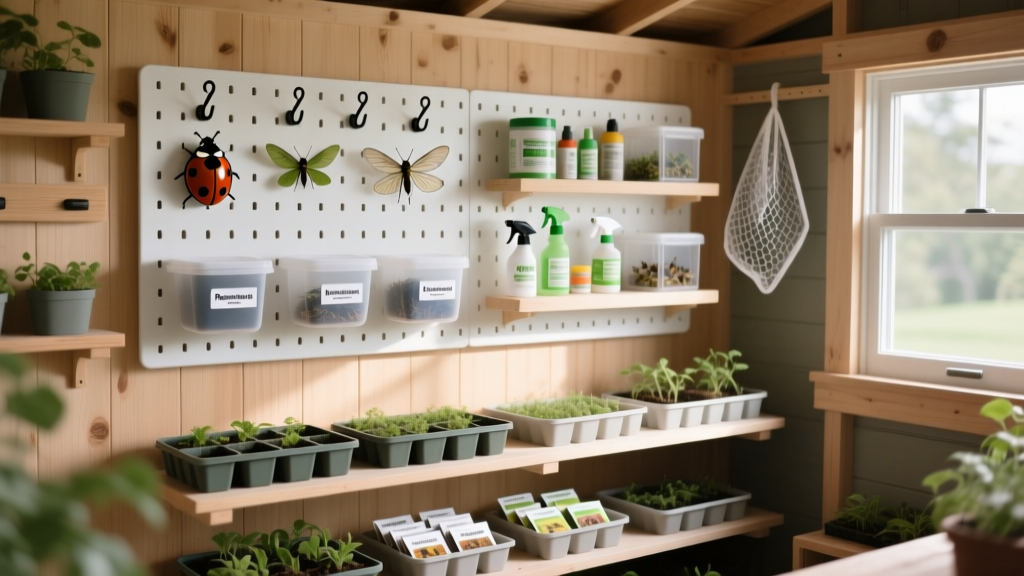
2026 Bio-Control Shed Setup: Pegboards & Insect Shelving
David ParkPublished
The 2026 Shift Toward Backyard Bio-Control Storage
As we navigate the 2026 gardening season, the home landscaping paradigm has decisively shifted away from broad-spectrum chemical pesticides and toward targeted biological control. Homeowners are increasingly relying on beneficial insects, predatory mites, and entomopathogenic nematodes to maintain ecological balance in their gardens. However, this transition introduces a unique logistical challenge: how do you properly store living organisms, delicate pheromone lures, and specialized application equipment in a standard garden shed? Traditional shed organization methods—tossing tools into plastic bins or hanging them on rotting wooden boards—are entirely inadequate for modern bio-control agents. According to the Environmental Protection Agency (EPA), the efficacy of biopesticides and living biological controls relies heavily on proper handling and storage conditions to maintain organism viability. If your shed is disorganized, too hot, or exposed to pests, your expensive beneficial insects will perish before they ever reach your garden beds.
To solve this, advanced gardeners are retrofitting their outdoor storage spaces with specialized metal pegboard walls and climate-smart shelving units. This comprehensive guide will walk you through designing a 2026-ready bio-control command center, ensuring your ladybugs, lacewings, nematodes, and mason bees are stored safely, organized logically, and ready for deployment the moment your garden requires them.
Designing the Bio-Control Pegboard Command Center
The first step in upgrading your shed for beneficial insect management is replacing any existing wooden pegboards with a galvanized steel or powder-coated metal alternative. Wooden pegboards can harbor wood-boring beetles, spider mites, and fungal spores that could inadvertently be transferred to your bio-control supplies. A 4x8-foot steel pegboard mounted on the coolest, most shaded wall of your shed serves as the ultimate command center for your entomological tools.
Essential Pegboard Accessories for Entomological Tools
Organizing bio-control application tools requires specific pegboard accessories that keep equipment visible, accessible, and protected from cross-contamination.
- Magnetic Micro-Bins for Pheromone Lures: Pheromone caps and lures used to monitor pest populations (like codling moths or Japanese beetles) are small and easily lost. In 2026, heavy-duty magnetic bins that snap directly onto steel pegboards are the standard. These keep lures separated by species and prevent the scent cross-contamination that occurs when lures are tossed into a shared drawer.
- Curved 4-Inch Hooks for Spray Wands: When applying liquid bio-controls, such as Beauveria bassiana (a beneficial fungus), you need dedicated spray wands that have never held chemical herbicides. Color-coded curved hooks allow you to hang bio-control-specific wands and nozzle attachments separately from your standard garden hoses.
- Acrylic Holders for Sticky Monitoring Cards: Yellow and blue sticky cards are essential for monitoring aphid, whitefly, and thrip populations before releasing predatory insects. Acrylic pegboard sleeves keep these cards flat, clean, and ready for immediate field deployment.
- Wire Baskets for Insect Release Shakers: Specialized shaker bottles used to distribute predatory mites (Phytoseiulus persimilis) and green lacewing eggs need to be stored upright to prevent the carrier medium (usually vermiculite or bran) from spilling. Wire pegboard baskets provide breathable, secure storage for these application vessels.
Specialized Shelving for Living Bio-Agents
While the pegboard handles tools and monitoring equipment, the shelving units in your shed must be optimized for living organisms. Experts at Cornell University's Biological Control program emphasize that temperature fluctuations and UV exposure are the primary enemies of stored bio-agents. A standard wire or wooden shelf in a sun-baked shed will quickly kill beneficial nematodes and predatory mites.
Temperature-Regulated Shelving Zones
To accommodate the strict environmental needs of bio-control agents, 2026 shed setups utilize insulated shelving inserts and localized cooling solutions.
- The Nematode Cooler Shelf: Beneficial nematodes, such as Heterorhabditis bacteriophora (used for grub control) and Steinernema feltiae (used for fungus gnats), arrive in refrigerated shipments and must be kept at temperatures between 39°F and 42°F until application. Dedicate a lower, shaded shelf to a highly efficient, solar-powered mini-fridge or an insulated cooler box equipped with a digital thermostat. This ensures your nematodes remain in a state of suspended animation without freezing or overheating.
- Predatory Mite Dark-Zones: Predatory mites are highly sensitive to UV light and desiccation. Use solid, opaque shelving bins with tight-fitting lids on your middle shelves. Line these bins with damp paper towels to maintain the 60-70% humidity required to keep the mites hydrated during short-term storage before release.
- Trichogramma Wasp Card Holders: Parasitic wasps like Trichogramma are shipped on small cardboard cards. These cards must be stored in a dry, dark, and well-ventilated area to prevent mold growth while the wasps mature. Slotted wooden organizers placed on high, dry shelves keep the cards separated and allow for adequate airflow.
Overwintering Habitat Shelving Integration
A truly advanced bio-control shed doesn't just store purchased insects; it provides overwintering sanctuary for native and established beneficial populations. The University of California Integrated Pest Management (UC IPM) program notes that providing stable overwintering habitats is crucial for maintaining year-round populations of natural enemies in your landscape.
The top tier of your shelving unit should be dedicated to insect hotels, mason bee cocoons, and ladybug hibernation boxes. However, simply placing an insect hotel on a shelf is not enough. In 2026, shed organization requires rodent-proofing these habitats. Mice and rats will readily consume overwintering mason bee cocoons and lacewing larvae. To protect your bio-control investments, install hardware cloth (1/4-inch galvanized wire mesh) across the front of your top shelving units. This allows for necessary air circulation and insect transit while completely blocking rodent access.
For solitary bees like the Blue Orchard Mason Bee (Osmia lignaria), cocoons should be washed, sanitized, and stored in breathable mesh bags on these top shelves. The shed provides a stable, unheated environment that mimics natural winter conditions, preventing the bees from emerging too early during false spring warm spells.
2026 Shed Organization Matrix: Bio-Control Zones
To visualize the optimal layout for your garden shed, refer to the following zoning matrix. This ensures that incompatible items (like chemical fertilizers and living bio-agents) are kept safely separated.
| Shed Zone | Storage Type | Items Stored | Environmental Requirement |
|---|---|---|---|
| Zone 1: Pegboard Wall | Steel Pegboard & Magnetic Bins | Pheromone lures, sticky cards, bio-spray wands, release shakers | Dry, shaded, organized by pest target |
| Zone 2: Lower Shelving | Insulated Cooler / Solar Fridge | Beneficial nematodes, liquid bio-fungicides | Strict 39°F - 45°F, dark |
| Zone 3: Middle Shelving | Opaque Humidity Bins | Predatory mites, green lacewing eggs, ladybug larvae | 60-70% humidity, UV protected |
| Zone 4: Upper Shelving | Rodent-Proof Mesh Cabinets | Mason bee cocoons, insect hotels, butterfly hibernation boxes | Ambient outdoor temp, high airflow |
Sourcing and Installation Costs in 2026
Upgrading your shed for bio-control is an investment in the long-term health of your garden's ecosystem. Based on 2026 home improvement pricing, here is what you can expect to budget for a complete bio-control organization overhaul:
- 4x8 Galvanized Steel Pegboard: $120 - $180 (plus $40 for heavy-duty mounting brackets).
- Pegboard Accessory Kit (Magnets, Hooks, Acrylic Sleeves): $65 - $90.
- Heavy-Duty Wire Shelving Unit (4-Tier, 48x18 inches): $85 - $110.
- 1/4-Inch Hardware Cloth & Tension Rods (for rodent proofing): $35.
- 12V Solar-Powered Shed Mini-Fridge (for nematodes): $220 - $350.
Total Estimated Investment: $565 - $805.
Pro-Tip for 2026: Never store organic bio-fertilizers (like compost teas or fish emulsion) on the same shelving unit as your living predatory insects. The volatile organic compounds (VOCs) and ammonia off-gassing from concentrated organic fertilizers can suffocate or disorient sensitive beneficial insects like parasitic wasps and predatory mites. Always maintain a minimum distance of six feet between nutrient storage and bio-agent shelving.
Conclusion
Embracing biological control is one of the most impactful decisions a modern gardener can make, but it requires a shift in how we manage our tools and storage spaces. By installing a galvanized steel pegboard for your monitoring and application tools, and configuring climate-smart, rodent-proof shelving for your living agents, you transform your garden shed from a simple storage closet into a vital hub for ecological garden management. With your bio-control supplies properly organized and protected, you will be fully prepared to deploy nature's best pest-control agents exactly when your garden needs them most.
