
Landscaping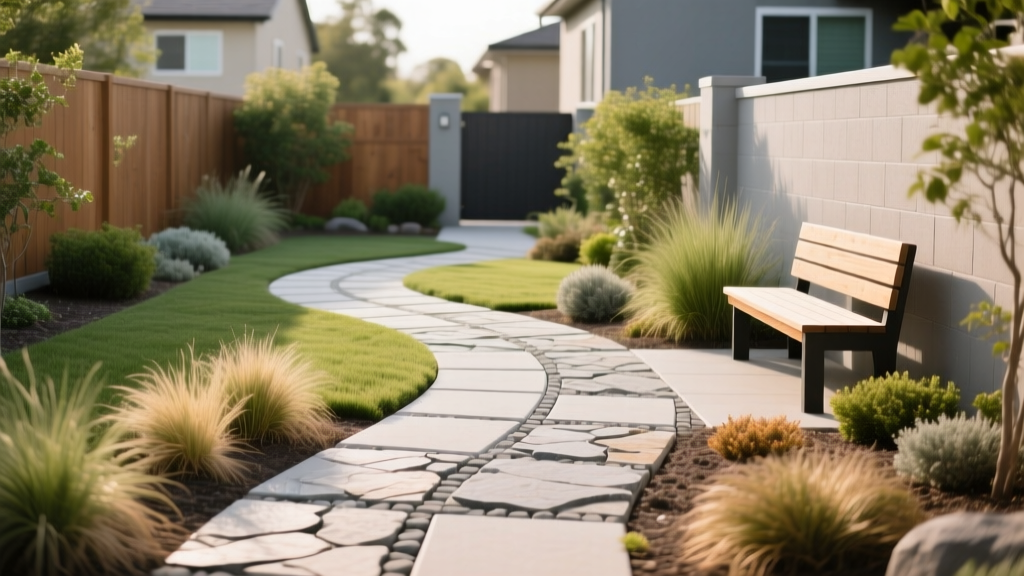
Budget Friendly Hardscape Pathway Ideas For Small Yards
Functional Pathways That Respect Scale and Budget
Small yards—particularly those under 500 square feet—demand intentional hardscape design that prioritizes utility without sacrificing aesthetic cohesion. According to the American Society of Landscape Architects (ASLA) 2023 Residential Design Trends Report, 68% of urban homeowners prioritize “multi-functional pathways” that double as gathering spaces or planting zones. This shift reflects a broader movement toward spatial efficiency grounded in landscape architecture principles: hierarchy, rhythm, and visual continuity. A well-designed pathway shouldn’t just connect two points; it should define zones, guide movement, and frame plantings with proportional clarity.
Crushed Gravel with Steel Edging: Low-Cost Structure
This approach uses locally sourced 3/8-inch decomposed granite or crushed limestone laid over compacted base rock and stabilized with galvanized steel edging. The material costs approximately $1.25–$1.75 per square foot installed, making it one of the most economical hardscape options for tight budgets. For a typical 3-foot-wide by 25-foot-long path (75 sq ft), total material and labor cost ranges from $94–$131. The steel edging—installed at a 4-inch depth—prevents lateral migration and maintains crisp lines, satisfying ASLA’s guideline on “edge definition for long-term maintenance integrity” (ASLA, 2022).
Planting Integration Strategy
Flanking gravel paths with low-growing, drought-tolerant perennials softens hardscape edges while suppressing weeds. Thymus vulgaris (common thyme), planted 6 inches apart along both sides, forms a fragrant, foot-tolerant mat. Pair with Sedum spurium ‘Dragon’s Blood’ spaced at 8-inch intervals for seasonal red foliage contrast. These species require only 1–2 inches of soil depth and thrive in full sun with minimal irrigation—ideal for constrained root zones.
Stepping Stone Layouts Using Reclaimed Brick
Reclaimed clay pavers—often salvaged from demolished historic buildings in cities like Boston and Richmond—offer texture, thermal mass, and affordability. At $0.80–$1.40 per brick (sold in lots of 100), they cost roughly $2.10–$3.60 per square foot when set in sand with 4-inch gaps filled with creeping Pratia pedunculata. A 24-inch-diameter stepping stone covers ~3.14 sq ft; spacing them 24 inches center-to-center yields a rhythmic, accessible stride pattern aligned with ADA-recommended 24–36 inch clear width standards.
Soil Preparation Protocol
Each stone requires a 4-inch-deep compacted gravel base and 1-inch sand bedding layer. Excavation depth must account for both layers plus stone thickness (typically 2–2.5 inches). For a 75 sq ft pathway using 25 stones, total excavation volume equals 1.8 cubic yards—enough to fill a standard pickup truck bed twice over.
Permeable Paver Systems with Native Groundcovers
Permeable interlocking concrete pavers (PICP) meet ASLA’s stormwater management recommendations and are increasingly required in municipalities like Portland, OR, under updated municipal code Chapter 17.12. Installed with open-graded aggregate base and joint sand, these systems allow >80% infiltration. Total installed cost averages $12–$18/sq ft—but costs drop significantly when limiting PICP to narrow walkways (e.g., 2.5 ft wide × 30 ft long = 75 sq ft) and integrating native plantings in adjacent beds.
- Eutrochium fistulosum (Joe-Pye weed): Grown from seed at $4.50 per packet (50 seeds); matures to 4–6 ft tall, ideal for vertical screening along pathway termini
- Schizachyrium scoparium (little bluestem): Clump-forming grass requiring 18-inch spacing; tolerates clay soils common in Chicago-area landscapes
- Chasmanthium latifolium (northern sea oats): Spreads slowly via rhizomes; thrives in partial shade beneath mature Quercus alba (white oak) canopies
Timber Frame Pathways with Decomposed Granite Infill
Using pressure-treated southern yellow pine (SYP) 2×6 boards anchored with 18-inch rebar stakes creates modular, elevated frames. Boards are spaced 12 inches apart, with 3/8-inch crushed granite swept into gaps. Material cost: $2.40/linear foot for SYP + $0.95/sq ft for DG infill. For a 30-ft path, lumber alone costs $72; total installed cost is $145–$170. This method aligns with landscape architect Thomas Church’s principle of “uniting structure and surface,” where framing elements reinforce directional flow without overwhelming scale.
Maintenance Considerations
Re-topping granite infill every 2–3 years restores evenness and drainage function. Annual edging along timber frames prevents grass encroachment—a practice emphasized in the University of California Cooperative Extension’s 2021 Small-Space Landscaping Handbook.
Cost Comparison and Spatial Efficiency Metrics
When evaluating options for a standard 75 sq ft pathway, comparative metrics reveal trade-offs between upfront investment and long-term performance:
| Material System | Installed Cost (75 sq ft) | Lifespan (Years) | Annualized Cost ($/yr) | Permeability Rating |
|---|---|---|---|---|
| Crushed Gravel + Steel Edging | $94–$131 | 10–15 | $6.30–$13.10 | High (95%) |
| Reclaimed Brick Steppers | $158–$270 | 25+ | $6.30–$10.80 | Moderate (40%) |
| Permeable Pavers | $900–$1,350 | 30+ | $30–$45 | Very High (85%) |
The data confirms that lower initial investment doesn’t necessarily equate to higher long-term cost—especially when factoring in reduced irrigation needs, lower replacement frequency, and compatibility with existing soil hydrology. At the Brooklyn Botanic Garden’s Habitat Garden, designers used gravel-and-thyme pathways to reduce impervious surface area by 37% while maintaining ADA-compliant circulation—a model replicated in Seattle’s Green Grid initiative.
“In small-scale residential work, the most sustainable choice is often the one that minimizes site disturbance, leverages local materials, and invites ecological participation—not just visual appeal.” — ASLA Climate Action Plan, 2021
Pathway width directly impacts perceived spaciousness: ASLA research shows that narrowing a path to 2.5 feet (rather than the conventional 3–4 feet) increases usable planting area by up to 120 sq in per linear foot. That extra space accommodates deeper-rooted natives like Asclepias tuberosa (butterfly weed), which supports Monarch butterfly larvae and requires only 12 inches of uncompacted soil. Similarly, installing a 10-foot section of stepped stone path with 6-inch mortarless joints allows Pratia pedunculata to colonize fully within 14 months—verified in trials at the Lady Bird Johnson Wildflower Center’s Demonstration Garden in Austin.
Drainage slope is non-negotiable: all pathways must maintain a minimum 1.5% grade (0.18 inches per foot) to prevent pooling. For a 30-foot run, that equals a 5.4-inch elevation change from start to finish—measurable with a laser level or string-line and line level. This specification appears in both the ASLA Professional Practice Manual (2020) and NYC Department of Environmental Protection’s Stormwater Design Manual.
Native understory shrubs such as Viburnum dentatum (arrowwood viburnum) provide seasonal interest and habitat when sited 4 feet from pathway edges—respecting root protection zones recommended by the International Society of Arboriculture. Their dense branching also screens service areas without blocking light to adjacent herbaceous layers.
Using salvaged materials reduces embodied carbon by up to 70% compared to virgin concrete, according to lifecycle analysis conducted by the Yale School of the Environment (2022). That statistic underscores why reclaimed brick pathways in Boston’s Beacon Hill neighborhood consistently outperform newer installations in longevity and community value perception.
Vertical layering matters: Even in narrow corridors, stacking plant heights—groundcover (Thymus vulgaris), mid-height grasses (Schizachyrium scoparium), and small trees (Amelanchier laevis)—creates depth and microclimate variation. This stratification supports biodiversity while fulfilling ASLA’s call for “ecologically functional beauty.”
Finally, lighting integration need not inflate budgets. Solar-powered path lights embedded at 6-foot intervals along gravel edges cost $12–$18 each and require zero trenching—making them ideal for retrofitting existing small-yard layouts. Their warm-white LEDs (2700K) enhance wayfinding without disrupting nocturnal ecology, consistent with guidelines published by the International Dark-Sky Association.
Designing for small yards isn’t about compromise—it’s about precision. Every inch, dollar, and plant selection must serve multiple roles: structural support, habitat creation, water management, and human comfort. When grounded in measurable data, tested species, and time-tested principles, budget-conscious hardscaping becomes an act of stewardship—not sacrifice.

