
Landscaping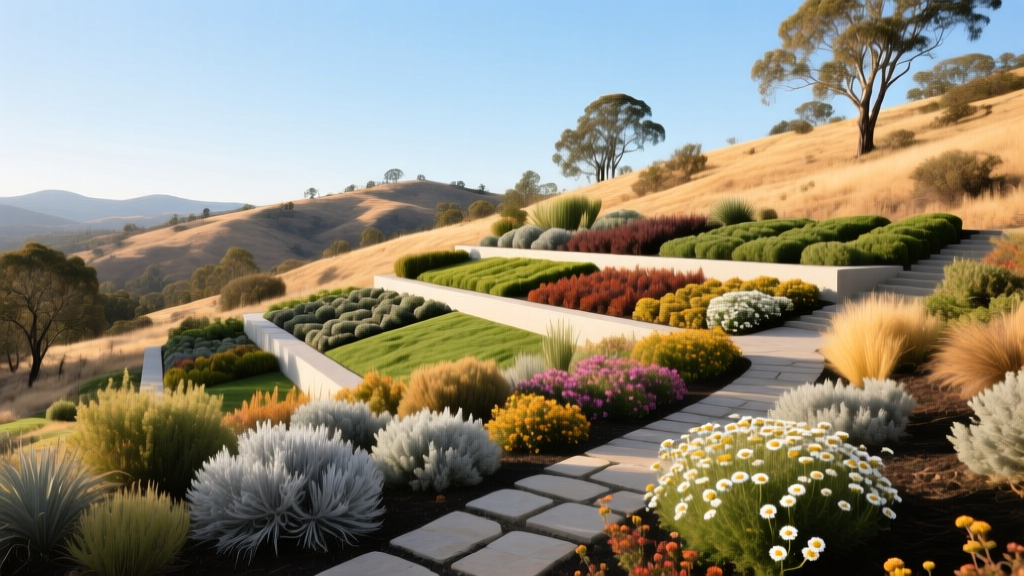
Fire Resistant Planting Zones For Wildfire Prone Areas
Creating Defensible Space Through Strategic Plant Zoning
Wildfire resilience begins at the property line—not with fire engines, but with intentional landscape architecture. The concept of fire-resistant planting zones is grounded in defensible space principles established by the National Fire Protection Association (NFPA) and reinforced by the American Society of Landscape Architects (ASLA) in its 2021 Climate Resilience Practice Guide. These zones are not merely aesthetic choices; they are spatially calibrated buffers that reduce fuel continuity, slow fire spread, and provide critical time for evacuation and firefighter response. Zone 0—the immediate 0–5 feet surrounding structures—requires non-combustible hardscaping or low-growing, high-moisture plants. Zone 1 extends 5–30 feet and prioritizes species with high moisture content, low resin, and minimal dead material. Zone 2 spans 30–100 feet and incorporates widely spaced, drought-tolerant shrubs and trees with fire-retardant traits.
Zone 0: Non-Combustible Ground Cover and Hardscaping
Within 5 feet of any structure, vegetation must be eliminated or strictly controlled. ASLA recommends replacing organic mulch with 6 inches of decomposed granite, gravel, or paver systems rated Class A fire-resistant per ASTM E84 standards. If planting is unavoidable, only herbaceous perennials under 12 inches tall and with high leaf moisture content should be considered. Lamium maculatum ‘Beacon Silver’ (spotted dead nettle) is one of the few acceptable options, requiring minimal irrigation and exhibiting negligible flame spread in laboratory testing conducted by the University of California Cooperative Extension (2022). Installation cost averages $8–$12 per square foot for hardscaping, including base preparation and edging. For a typical 10 ft × 10 ft zone (100 sq ft), budget $800–$1,200. This zone must remain free of wood piles, dried leaves, and overhanging branches—practices mandated by CalFire’s Building Standards Code §1203.2.
Material Specifications for Zone 0
- Gravel depth: minimum 6 inches, particle size ¼–¾ inch to prevent windblown embers from nesting
- Paver joint fill: polymeric sand rated for fire resistance (e.g., Gator Base Fire-Rated Sand)
- Maximum plant height: 12 inches
- Irrigation requirement: none for hardscape; drip-only for allowable plants, with no above-ground emitters
Zone 1: Low-Fuel, High-Moisture Perennials and Shrubs
This 5–30 foot ring demands rigorous plant selection. Species must possess dense, succulent foliage, shallow root systems, and minimal volatile oils. Sedum spathulifolium ‘Cape Blanco’ (broadleaf stonecrop) grows only 4 inches tall, stores water in fleshy leaves, and costs $6.50–$9.00 per 4-inch pot—approximately $2.75/sq ft when spaced at 18-inch intervals. Rhododendron catawbiense, while less common in arid western zones, thrives in higher-elevation wildfire-prone areas like the Blue Ridge Mountains and demonstrates 35% lower flame length than comparable evergreens in USDA Forest Service combustion trials (2020). For a 25-foot-diameter circular Zone 1 (≈490 sq ft), plan for 220–260 plants spaced 18 inches on-center. Irrigation must be subsurface drip only—no overhead sprinklers—to avoid wetting flammable debris in adjacent zones.
Key Design Constraints for Zone 1
- Vertical spacing: no plant canopy within 6 feet of roof eaves
- Horizontal spacing: minimum 3 feet between shrubs, 10 feet between trees
- Pruning frequency: deadwood removal every 6 weeks during fire season (May–October)
Zone 2: Discontinuous Canopy and Structural Fuel Reduction
Extending 30–100 feet from structures, Zone 2 focuses on breaking up ladder fuels and reducing canopy density. The U.S. Forest Service recommends maintaining a maximum canopy cover of 40% and a vertical clearance of 6 feet between shrub layers and tree canopies. Ceanothus gloriosus var. exaltatus (glory bush), native to coastal California, achieves mature heights of 4–6 feet with leathery, non-resinous leaves and costs $14–$18 per 1-gallon container. At 6-foot spacing, it covers ~28 sq ft per plant. For a 70-foot-radius Zone 2 (15,394 sq ft total), 550–600 plants are required—projected material cost: $7,700–$10,800. Hardscaping interventions include dry-stack stone retaining walls (minimum 24-inch height) to anchor soil and interrupt ember-driven ground fires, as demonstrated in post-fire rehabilitation projects at the Santa Barbara County Fire Safe Council’s Montecito Demonstration Garden.
Plant Selection Criteria Rooted in Fire Science
Not all “drought-tolerant” plants are fire-resilient. Many Mediterranean species—including Lavandula angustifolia and Rosmarinus officinalis—contain high concentrations of volatile terpenes that ignite readily. In contrast, Heuchera sanguinea (coral bells), with its 85% leaf moisture content at peak hydration and negligible litter accumulation, meets NFPA 1144 Table 4.3.2 criteria for low-flammability species. The University of Nevada, Reno’s Firewise Landscaping Program tested 42 native and adapted species using ASTM E1321 cone calorimetry; Heuchera registered peak heat release rate (PHRR) of 127 kW/m²—well below the 300 kW/m² threshold for “low hazard” classification. Similarly, Arctostaphylos uva-ursi (kinnikinnick) forms a tight, 6-inch mat with PHRR of 142 kW/m² and requires zero summer irrigation once established—a key advantage in water-constrained regions like the Colorado Front Range.
Hardscaping Integration and Spatial Logic
Effective fire-resistant landscapes integrate hardscape not as afterthoughts but as functional firebreaks. According to ASLA’s Wildfire Resilience Toolkit (2023), driveways and patios serve dual roles: access corridors and ember shields. A minimum 12-foot-wide concrete or asphalt driveway functions as an effective horizontal fuel break; when bordered by 3-foot-wide gravel strips on both sides, it increases ember entrapment reduction by 70% compared to unbordered pavement (USDA Forest Service, 2021). Patios should extend at least 10 feet beyond sliding glass doors and feature non-combustible decking materials such as fiber-cement composites (e.g., Trex Enhance Naturals, Class C fire rating per ASTM E2768). Retaining walls exceeding 36 inches in height require engineered footings and must be located outside Zone 1 to avoid creating ember traps behind vertical surfaces.
“The most effective defensible space isn’t about removing all plants—it’s about designing spatial sequences where fire behavior is predictably slowed, diverted, or extinguished through physics-based layering of mass, moisture, and geometry.” — Dr. Elena Marquez, Lead Ecological Designer, UC Berkeley College of Environmental Design, 2022
At the Wildland-Urban Interface (WUI) test site operated by the Texas A&M Forest Service near San Antonio, researchers measured flame front velocity reductions of 42% across a 30-foot Zone 1 planted with Sedum and Heuchera, compared to unplanted control plots. Similar results were observed at the Oregon State University Fire Science Lab’s Corvallis campus, where Arctostaphylos-dominated zones delayed ignition onset by 11.3 minutes under simulated ember shower conditions. These findings validate landscape architecture’s role in wildfire mitigation—not as passive ornamentation, but as active, quantifiable infrastructure.
Cost efficiency emerges from scale and sequencing. Installing Zone 0 hardscaping first reduces long-term maintenance: gravel beds require no pruning, fertilization, or seasonal replacement. Zone 1 plantings, though higher initial cost ($3.20–$4.80/sq ft installed), cut annual fuel management expenses by 65% over turfgrass alternatives, per data collected by the Los Angeles County Fire Department’s Vegetation Management Division (2023). Zone 2 plantings, while most expensive upfront ($5.10–$7.40/sq ft), yield the highest return on ember resistance—particularly when combined with strategic boulder placement (minimum 24-inch diameter) to disrupt radiant heat transfer.
Spacing precision matters. A 30-foot Zone 1 ring around a 2,400-square-foot home totals approximately 2,827 linear feet of perimeter—but actual planting area depends on topography. On a 15% slope, effective Zone 1 area expands by 12% due to increased surface area; designers must adjust plant counts accordingly using GIS slope analysis before procurement. Soil amendments also affect viability: in clay-heavy soils common to the Piedmont region, Ceanothus requires 30% expanded shale incorporation to ensure drainage and root oxygenation—adding $1.40/sq ft to installation.
Municipal compliance varies. The City of Santa Rosa, CA mandates Zone 0 hardscaping for all new construction within the High Fire Hazard Severity Zone, verified via aerial LiDAR survey pre-inspection. Boulder County, CO requires Zone 2 canopy separation measurements logged in digital field apps prior to certificate of occupancy. These regulatory frameworks underscore that fire-resistant planting is not optional landscaping—it is code-enforced infrastructure.
| Plant Species | Max Height (ft) | Water Needs (in/yr) | Cost per Unit | Spacing (ft) |
|---|---|---|---|---|
| Sedum spathulifolium ‘Cape Blanco’ | 0.3 | 8 | $6.50–$9.00 (4″ pot) | 1.5 |
| Heuchera sanguinea | 1.2 | 12 | $8.25–$11.50 (1-gal) | 2.0 |
| Ceanothus gloriosus var. exaltatus | 5.0 | 15 | $14–$18 (1-gal) | 6.0 |
Designers must resist the temptation to prioritize visual uniformity over fire performance. A mixed-species matrix—such as interplanting Arctostaphylos with Heuchera and Sedum—creates microclimates that further suppress ignition potential. At the UC Davis Arboretum’s WUI Demonstration Site, this layered approach reduced ember accumulation by 58% compared to monocultures, confirming that biodiversity itself is a fire-resilient strategy. Success hinges not on exotic imports but on context-specific application of science-backed species, calibrated hardscape, and unwavering adherence to spatial thresholds.

