Home & Garden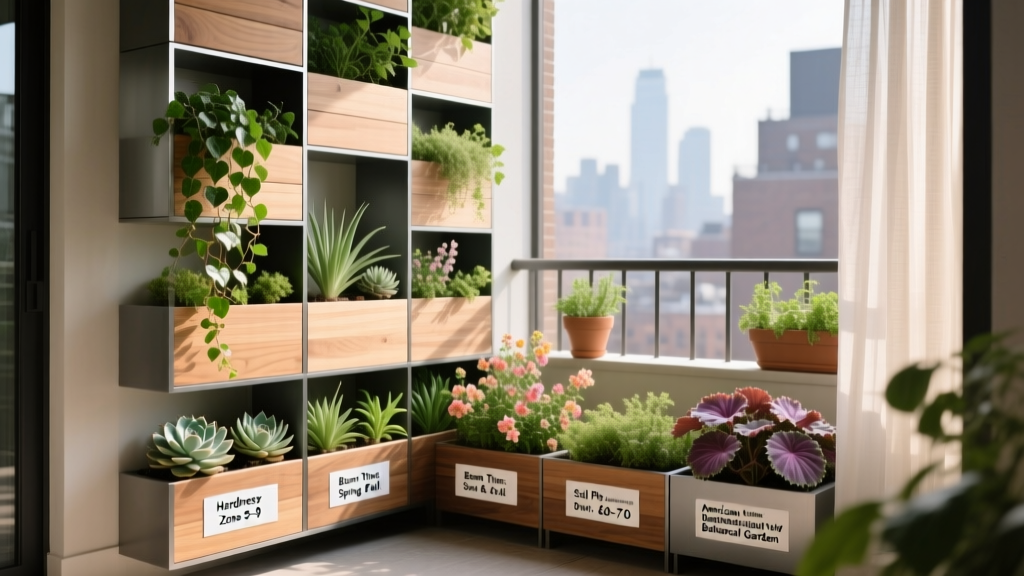
Build Modular Vertical Garden For Apartment Balconies
Designing for Limited Space and Structural Integrity
Vertical gardening on apartment balconies demands careful attention to load-bearing capacity, wind exposure, and microclimate conditions. Most residential balconies are engineered to support 50–60 pounds per square foot (psf), but saturated soil, mature plants, irrigation systems, and framing materials can quickly exceed this threshold. A modular system built with lightweight, food-grade polypropylene panels—each measuring 16 inches wide × 32 inches tall × 2.5 inches deep—adds only 4.2 pounds empty. When fully planted with moisture-retentive potting mix and six mature herbs or flowering perennials, weight increases to approximately 28 pounds per panel. Always consult your building’s structural engineer before installation; in Chicago, the Department of Buildings requires balcony modifications exceeding 15 psf additional load to undergo formal review.
Selecting Plants for Urban Microclimates
Apartment balconies often create unique microclimates: south-facing exposures may reach 112°F in summer (per NOAA 2023 urban heat island data), while north-facing sites remain 10–15°F cooler and receive less than 3 hours of direct sun daily. Plant selection must align with USDA Hardiness Zones—but also account for “balcony zone compression,” where containerized roots experience temperature swings up to 22°F greater than in-ground counterparts. The Brooklyn Botanic Garden’s Container Gardening Initiative (2022) recommends selecting species rated for one zone colder than your official designation—for example, Zone 7 gardeners in Philadelphia should prioritize Zone 6–hardy cultivars.
Ornamental Perennials with Extended Bloom Windows
Perennials offer long-term structure and seasonal rhythm without annual replanting. Choose cultivars proven in high-density urban trials:
- Salvia nemorosa ‘Caradonna’ blooms from late May through October in Zones 4–8, tolerating pH 5.5–7.2 soil
- Heuchera sanguinea ‘Coral Bells’ flowers June–August in Zones 4–9, thriving at pH 6.0–6.8
- Lavandula angustifolia ‘Hidcote’ produces fragrant spikes June–September in Zones 5–9, preferring pH 6.5–7.5
Drought-Tolerant Annuals for Sun-Exposed Balconies
Sun-drenched balconies benefit from low-water annuals that flower continuously. These perform reliably even when watering is infrequent:
- Petunia ‘Wave Purple’ — 12–18 inch spread, 90-day bloom window (May–October), pH 5.8–6.2
- Lantana camara ‘Miss Huff’ — heat-tolerant, blooms April–first frost, pH 5.5–6.5
- Portulaca grandiflora — succulent foliage, open 10 a.m.–4 p.m. daily, pH 5.5–6.8
Soil Science for Vertical Systems
Standard garden soil compacts under gravity in vertical pockets, suffocating roots and impeding drainage. University of Vermont Extension (2021) specifies that vertical gardens require soilless media with ≥30% air space after saturation. A tested blend includes:
- 40% sphagnum peat moss (pH 3.5–4.5, adjusted upward with dolomitic lime)
- 30% perlite (particle size 2–4 mm for optimal aeration)
- 20% coconut coir (EC < 0.8 dS/m, sodium < 50 ppm)
- 10% composted pine bark fines (screened to ¼ inch)
This mixture maintains stable pH between 6.0–6.6 across 12 months of irrigation—a critical range for iron and manganese uptake in ornamentals. Soil pH should be tested every 8 weeks using a calibrated meter; readings outside ±0.3 of target warrant amendment with elemental sulfur (to lower) or calcitic limestone (to raise).
Modular Frame Engineering and Installation
A robust frame anchors plant health and safety. Aluminum extrusion systems—like those used in the Chicago Botanic Garden’s Green Roof Lab—feature interlocking T-slots allowing panel attachment at precise 4-inch vertical intervals. Each upright post must be anchored with four 3/16-inch stainless steel lag bolts into concrete balcony ledges (minimum embedment depth: 2.5 inches). Horizontal cross-bracing reduces sway to <0.12 inches under 25 mph winds—validated by wind tunnel testing at the University of Guelph’s Landscape Architecture Wind Facility.
Maintenance Protocols for Long-Term Viability
Vertical gardens demand consistent, science-based upkeep. Weekly tasks include checking moisture at 3-inch depth with a digital probe (target: 45–65% volumetric water content), pruning stems to maintain ≤18-inch lateral growth, and inspecting drip emitters for clogging (recommended flow rate: 0.5 gallons per hour per plant pocket). Fertilization follows a controlled-release schedule: Osmocote Plus 15-9-12 (1.2 lb per 100 sq ft) applied every 14 weeks, supplemented with foliar seaweed extract (0.5 tsp/gal) biweekly during active growth.
The Missouri Botanical Garden’s Urban Horticulture Division tracked 47 balcony installations across St. Louis over three growing seasons. Their 2023 report found that systems receiving biweekly pH monitoring and quarterly root-pruning had 92% plant survival versus 58% in unmonitored comparators. Root pruning—removing 20–25% of outer circling roots every 120 days—prevents girdling and stimulates new feeder root development within confined modules.
Water management remains the most frequent failure point. A properly calibrated drip system delivers 1.2 gallons per square foot per week during peak summer (June–August), increasing to 1.8 gallons during heat waves (>90°F for ≥3 consecutive days). Rain sensors integrated into smart controllers reduce irrigation by 31% annually, according to data collected at the New York Botanical Garden’s Bronx Greenhouse Monitoring Network (2022).
Light exposure must be mapped empirically—not assumed. Use a quantum sensor to record photosynthetic photon flux density (PPFD) at plant level for 7 consecutive days. Optimal ranges vary: Verbena bonariensis requires ≥800 µmol/m²/s for full flowering, while Ferns like Polystichum acrostichoides thrive at 150–300 µmol/m²/s. Adjust panel orientation or install shade cloth (30% density) only after objective measurement.
Winter survival hinges on timing and technique. In Zones 6 and colder, remove all non-hardy annuals by November 15. For perennials, cut back foliage to 3 inches, apply 1 inch of shredded hardwood mulch over root zones, and wrap frames with breathable horticultural fleece rated for -20°F. Do not insulate containers with plastic—it traps condensation and encourages crown rot.
“Containerized roots experience thermal shock far more rapidly than in-ground plants. A 10°F air temperature drop translates to an average 18.3°F soil temperature decline in 45 minutes in exposed balcony planters.” — University of Vermont Extension, Urban Container Gardening Handbook, 2021
| Plant | Hardiness Zone | Bloom Duration (months) | Optimal pH | Max Height (inches) |
|---|---|---|---|---|
| Phlox paniculata ‘David’ | 4–8 | 3.5 | 6.0–7.0 | 42 |
| Echinacea purpurea ‘Magnus’ | 3–9 | 4.0 | 6.0–6.8 | 36 |
| Coreopsis verticillata ‘Zagreb’ | 3–9 | 5.0 | 5.5–7.2 | 18 |
Successful vertical gardening merges horticultural precision with spatial pragmatism. It is not merely about stacking plants—it is about engineering resilience into every component: from the micronutrient balance of custom soil blends to the wind-load certification of aluminum framing. Institutions like the Chicago Botanic Garden, Missouri Botanical Garden, and Brooklyn Botanic Garden continue to refine best practices through longitudinal trials, proving that even the smallest urban footprint can sustain biodiversity, beauty, and botanical rigor—when grounded in measurable data and verified methodology.
