Home & Garden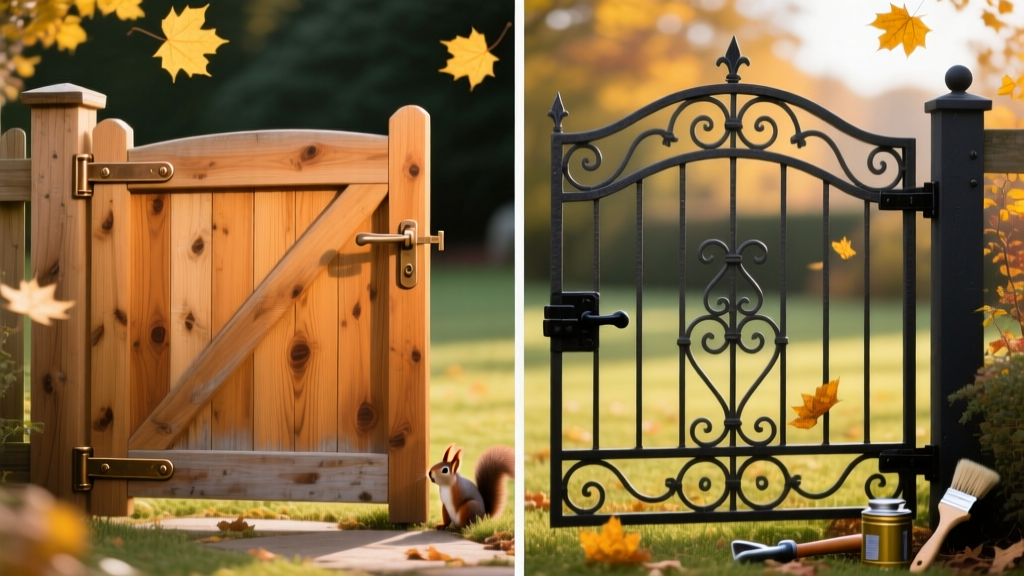
Cedar vs Wrought Iron Gates: 2026 Fall Hardware Guide
Robert HayesPublished
The Intersection of Fall Lawn Care and Gate Design
As the air turns crisp and the leaves begin to fall, your lawn care routine shifts from aggressive growth management to protection, winterization, and soil preparation. While most homeowners focus on core aeration, overseeding, and leaf mulching, an often-overlooked component of your landscape infrastructure plays a massive role in your fall success: the garden gate. In 2026, the debate between cedar and wrought iron garden gates remains a central topic for landscape designers, but when you factor in the necessity of a reliable self-closing hinge for autumn lawn maintenance, the choice becomes highly functional.
During the fall, wildlife foraging peaks as deer and rabbits prepare for winter. Furthermore, the constant traffic of hauling wheelbarrows full of mulch, dragging leaf vacuums, and maneuvering heavy core aerators requires a gate that operates flawlessly under pressure. A self-closing hinge is no longer a luxury; it is a critical piece of hardware that ensures your gate never accidentally swings open, leaving your freshly seeded fall lawn vulnerable to trampling or wildlife destruction. Let us break down the nuances of cedar versus wrought iron gates, specifically through the lens of fall lawn care and seasonal maintenance.
Cedar Garden Gates: Natural Beauty and Autumn Maintenance
Western Red Cedar has long been the gold standard for wooden outdoor structures, and garden gates are no exception. Cedar contains natural tannins and oils that make it inherently resistant to rot, decay, and insect infestations—traits that are particularly valuable during the damp, leaf-covered months of late autumn. Aesthetically, a cedar gate blends seamlessly with the warm, earthy tones of fall foliage and hardscaping.
However, cedar requires dedicated fall maintenance. As humidity fluctuates and temperatures drop, wood expands and contracts. If your cedar gate is not properly sealed before the first frost, moisture can seep into the end grains, leading to warping. A warped gate will drag on the ground, putting immense strain on your self-closing hinge and potentially snapping the spring mechanism. For fall 2026, experts recommend applying a penetrating oil-based sealer rather than a surface-level polyurethane, as oils move with the wood during thermal shifts.
From a weight perspective, cedar is relatively lightweight. A standard 48-inch by 72-inch cedar gate panel weighs between 60 and 90 pounds. This allows you to use standard-duty self-closing hinges, such as the D&D Technologies TruClose, which can be easily adjusted with a screwdriver to compensate for the slight drag caused by accumulated autumn leaves on the threshold.
Wrought Iron Gates: The Ultimate Fall Wildlife Fortress
If your primary fall lawn care concern is wildlife destruction, wrought iron is the undisputed champion. As temperatures drop, deer and rabbits become increasingly desperate for food, often targeting tender fall-planted perennials, newly seeded grass, and winterizing shrubs. According to Penn State Extension, physical exclusion via fencing and secure gates is the only 100% effective method for preventing deer damage in residential landscapes. Furthermore, University of Minnesota Extension highlights that rabbits can girdle and destroy young ornamental trees in a single autumn night if they gain access to your yard.
Wrought iron gates offer unparalleled structural integrity. They do not warp, they do not absorb moisture, and they provide a rigid barrier that wildlife cannot breach. Modern 2026 wrought iron gates are typically finished with advanced thermoplastic powder coatings that resist chipping, scratching, and rusting, even when battered by flying debris from fall leaf blowers.
The primary drawback of wrought iron is its sheer mass. A comparably sized wrought iron gate can easily weigh between 150 and 250 pounds. This massive weight requires heavy-duty, industrial-grade self-closing hinges with high-torque torsion springs. If the hinge is undersized, the gate will fail to close completely, leaving a gap just wide enough for a rabbit to slip through and decimate your fall garden beds.
Sizing Your Gate for Fall Lawn Equipment
When designing your garden gate, you must consider the equipment you will be using during your fall lawn care regimen. Standard 36-inch pedestrian gates are entirely insufficient for autumn maintenance. You must plan for the width of your equipment:
- Standard Wheelbarrows and Leaf Carts: Require a minimum clearance of 42 inches.
- Tow-Behind Core Aerators and Dethatchers: These heavy, rigid implements require a minimum gate width of 54 to 60 inches to navigate corners without tearing up your gate posts.
- Zero-Turn Mowers and Riding Tractors: If you use a riding mower for mulching fall leaves, you need a double-gate setup or a single sliding gate spanning at least 72 inches.
Wider gates mean more weight and more leverage against your posts. For any gate exceeding 60 inches in width, a self-closing hinge system must be paired with a heavy-duty drop rod or a magnetic latch to prevent wind from catching the gate and ripping the hinges from the post during autumn storms.
The Hardware: Self-Closing Hinges for Heavy Autumn Traffic
The self-closing hinge is the unsung hero of the fall landscape. When you are dragging a heavy tarp full of wet leaves, or maneuvering a rented aerator, you do not have a free hand to close the gate behind you. A reliable self-closing hinge ensures the gate shuts and latches every time, maintaining the perimeter of your lawn.
There are two main types of self-closing hinges to consider in 2026:
- Pneumatic Hinges: These use air pressure to close the gate. They are excellent for lightweight cedar gates but can struggle in freezing temperatures, as the internal lubricants can thicken, causing the gate to close too slowly to catch the latch.
- Torsion Spring Hinges: These use coiled steel springs and are the superior choice for heavy wrought iron gates and cold climates. Models like the Mighty Hinge feature adjustable tension screws, allowing you to increase the closing force in late autumn to overcome the resistance of fallen leaves and early snow accumulation on the ground.
Comparison Chart: Cedar vs. Wrought Iron for Fall Prep
| Feature | Western Red Cedar | Wrought Iron |
|---|---|---|
| Average Weight (48x72 in) | 75 lbs | 180 lbs |
| Wildlife Deterrence | Moderate (Visual barrier) | Excellent (Physical barrier) |
| Fall Maintenance | High (Requires annual sealing) | Low (Inspect for coating chips) |
| Hinge Requirement | Standard Spring or Pneumatic | Heavy-Duty Torsion Spring |
| Susceptibility to Frost Heave | Posts may shift; hinges bind | Posts highly stable if set in concrete |
| 2026 Average Installed Cost | $650 - $950 | $1,200 - $1,800 |
Fall Winterization Checklist for Gate Hardware
To ensure your gate and self-closing hinges survive the winter and remain functional for the spring lawn care season, complete this checklist before the first hard freeze:
- Clear the Sweep Zone: Rake all leaves, mulch, and debris away from the gate's swing path. Accumulated wet leaves create immense drag, which can burn out the internal springs of a self-closing hinge.
- Lubricate the Pivot Points: Apply a dry PTFE (Teflon) or graphite-based lubricant to the hinge pins. Avoid wet oils like WD-40, which attract dirt and will freeze into a gummy paste in sub-zero temperatures.
- Adjust the Tension: Use the adjustment wrench to increase the spring tension slightly. Cold metal contracts, and the latch mechanism may require a harder strike to engage securely during the winter months.
- Inspect Post Plumbness: Autumn rains can soften the soil around your gate posts. Use a level to ensure your posts are perfectly plumb. If a post leans, the self-closing hinge will bind, and the gate will fail to latch.
- Check the Latch Alignment: Frost heave can shift the ground and the latch post. Ensure the strike plate and the latch catch are perfectly aligned so the self-closing mechanism doesn't have to force the gate shut, which causes premature wear.
Conclusion
Choosing between a cedar and wrought iron garden gate ultimately depends on your specific fall lawn care priorities. If you value a natural aesthetic and are willing to commit to annual autumn sealing, a cedar gate paired with a standard self-closing hinge offers a beautiful, functional entrance. However, if your primary goal is absolute wildlife exclusion and zero-maintenance durability during the chaotic fall equipment-hauling season, a wrought iron gate equipped with heavy-duty torsion spring hinges is the superior investment for 2026 and beyond. By properly sizing your gate for your equipment and winterizing your hardware, you ensure your landscape remains secure, pristine, and ready for the seasons ahead.
