Home & Garden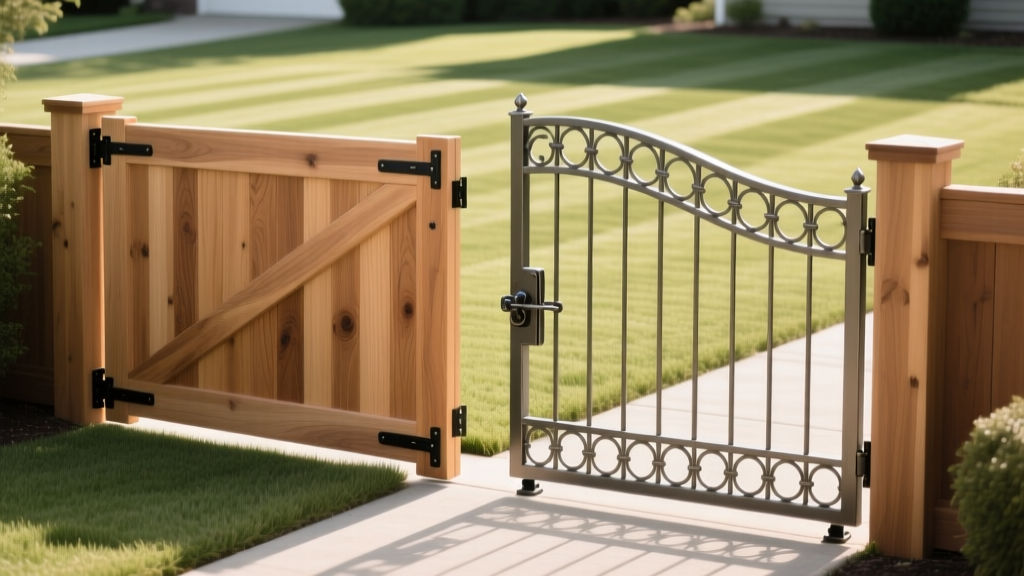
Cedar Vs Wrought Iron Gates 2026: Mowing Access & Patterns
James MillerPublished
The Intersection of Gate Design and Lawn Care Access
When homeowners envision a new garden enclosure, they rarely picture the weekly mowing routine. Yet, as we navigate the 2026 landscaping season, the integration of hardscape barriers and turf management has never been more critical. You can invest in the latest 2026 zero-turn mower with a premium striping kit, but if your garden gate restricts access or forces awkward turning patterns, your lawn's health and aesthetic will suffer. The debate between cedar and wrought iron garden gates—specifically those equipped with self-closing hinges—is usually framed around privacy, security, and curb appeal. However, from a 'Mowing Techniques & Patterns' perspective, the structural nuances of these materials dictate mower clearance, threshold scalping, and the fluidity of your perimeter mowing passes.
Choosing the right gate material and hinge configuration is essential for maintaining pristine turf. According to turfgrass experts at the University of Minnesota Extension, consistent mowing patterns and avoiding sudden terrain drops or tight, repetitive turning zones are vital for preventing soil compaction and turf tearing. Let us break down how cedar and wrought iron gates compare when it comes to optimizing your 2026 mowing strategy.
The Clearance Conundrum: Cedar vs. Wrought Iron Frames
The most immediate impact a garden gate has on your mowing routine is net clearance. In 2026, the average residential zero-turn mower features a deck width ranging from 42 to 54 inches. When you are threading a machine like the 2026 Toro TimeCutter through a garden entryway, every fraction of an inch matters.
Cedar Gate Dimensions
Western Red Cedar is a staple for garden privacy, but its structural requirements eat into your clearance. A standard 4-foot (48-inch) cedar gate is typically built with heavy 2x4 or 2x6 framing. Once you account for the frame, the latch hardware, and the hinge pins, the actual pass-through clearance drops to roughly 41 or 42 inches. If you are operating a 42-inch mower deck, you will have less than half an inch of clearance on either side. This forces you to slow to a crawl, increasing the risk of clipping the gate posts and damaging your mower's discharge chute.
Wrought Iron Gate Dimensions
Wrought iron, by contrast, offers a vastly superior profile for mower access. A 4-foot wrought iron gate utilizes slim, 1-inch tubular steel or solid iron pickets. The structural integrity comes from the weld points rather than bulky frames. A 48-inch wrought iron gate routinely provides 46 inches of true clearance. This extra breathing room allows you to maintain momentum when entering and exiting the garden enclosure, which is crucial for executing smooth, continuous mowing patterns without tearing the turf during hesitation turns.
Self-Closing Hinges and the Perimeter Pass
In 2026, self-closing hinges are practically mandatory for garden gates, especially those enclosing pools or areas where pets and children roam. The U.S. Consumer Product Safety Commission (CPSC) heavily advocates for self-closing and self-latching mechanisms on all barrier gates to prevent accidental egress. While essential for safety, heavy-duty self-closing hinges (like the D&D Technologies TruClose series) introduce a unique challenge to the 'perimeter pass'—the boundary mowing pattern also known as the headland.
When executing a perimeter pass, you are driving parallel to the fence line. If you need to back out of a narrow garden gate to continue your striping pattern, the spring tension of a self-closing hinge can cause the gate to snap shut aggressively. If the tension is not properly calibrated, the heavy cedar or iron gate can bounce off the rear tires or the ROPS (Roll-Over Protection Structure) of your mower. This not only risks damaging the gate's latch alignment but also forces you to abort your straight-line striping pattern to manually secure the gate.
Pro Tip for 2026: Always install adjustable-tension self-closing hinges. Calibrate the spring tension so the gate closes firmly enough to engage the latch, but slowly enough that it will not strike your mower if you are executing a slow, controlled reverse Y-turn out of the garden.
Threshold Grading and Scalping Prevention
One of the most common mowing errors occurs at the gate threshold. When a mower's front caster wheels drop into a depressed gate track or transition zone, the rear of the mower deck tilts downward, resulting in severe turf scalping. The University of Nebraska-Lincoln Turfgrass Science program frequently highlights that scalping exposes the soil to weed seeds and stresses the grass crown, undoing weeks of careful fertilization.
- Wrought Iron Bottom Rails: Most wrought iron gates feature a bottom rail positioned 2 to 3 inches above the soil line to allow for ground clearance when swinging. This allows you to grade the soil slightly higher under the gate swing zone without obstructing the gate's movement, creating a smoother transition for your mower deck.
- Cedar Bottom Boards: Cedar gates often feature solid bottom kick-boards that sit flush or drag slightly on the ground to keep small pets contained. This requires a perfectly level, hardscaped threshold (like pavers or poured concrete). If the grass grows up against a cedar kick-board, the mower deck will inevitably scalp the turf line every time you approach the gate at an angle.
Data Table: Gate Materials for Lawn Care Access
| Feature | Cedar Wood Gate | Wrought Iron Gate |
|---|---|---|
| Net Clearance (4ft Gate) | ~41.5 inches | ~46.5 inches |
| Mower Deck Compatibility | Best for 36-inch push/stand-on mowers | Accommodates 42 to 48-inch zero-turns |
| Hinge Strain & Sag | High (wood warps, alters swing plane) | Low (rigid steel maintains level swing) |
| Threshold Scalping Risk | High (solid bottom boards limit grading) | Low (open bottom allows soil mounding) |
| Pattern Flow Interference | Wide posts disrupt continuous striping | Slim posts allow tighter turning radii |
Adapting Your Mowing Patterns to Gate Swing Zones
Your mowing pattern must adapt to the physical footprint of your gate. The 'swing zone'—the semicircular area the gate sweeps across when opening—is effectively dead space for turf health. Grass in the swing zone of a heavy cedar gate is frequently trampled, shaded when left open, or torn by the gate's leading edge.
When striping your lawn in 2026, treat the gate swing zone as a hardscape island. Instead of trying to run continuous parallel stripes through the gate opening, use the 'island method'. Mow a tight, circular perimeter around the gate's swing radius. This isolates the high-traffic, compacted soil of the swing zone, allowing you to maintain crisp, unbroken straight lines in the rest of the garden enclosure. Wrought iron gates, which are generally lighter and can be ordered with narrower swing arcs, allow you to keep these isolation circles smaller, maximizing the square footage of your pristine striping patterns.
Post Placement and Zero-Turn Radii
If you are installing a new gate in 2026, do not rely on standard 36-inch or 48-inch rough openings. Modern zero-turn mowers have specific turning radii that dictate how you navigate choke points. A 54-inch commercial deck requires a minimum 60-inch clear opening to execute a forward turn without reversing. When setting your cedar or wrought iron gate posts, factor in the width of the posts themselves. A 6x6 cedar post takes up 5.5 inches of space on each side. To achieve a 60-inch net clearance for your mowing patterns, your rough opening between the outer edges of the posts must be nearly 71 inches. Planning your hardscape around your mower's dimensions ensures that your mowing patterns remain fluid, efficient, and free of the three-point turns that tear up turf roots.
Conclusion
As lawn care technology advances in 2026, your landscape architecture must evolve alongside it. While cedar offers classic privacy, wrought iron provides the slim profile and structural rigidity necessary for seamless mower access and complex striping patterns. By pairing your chosen material with properly calibrated self-closing hinges and mindful threshold grading, you ensure that your garden gate enhances your property without compromising your meticulously crafted mowing techniques.
