Gardening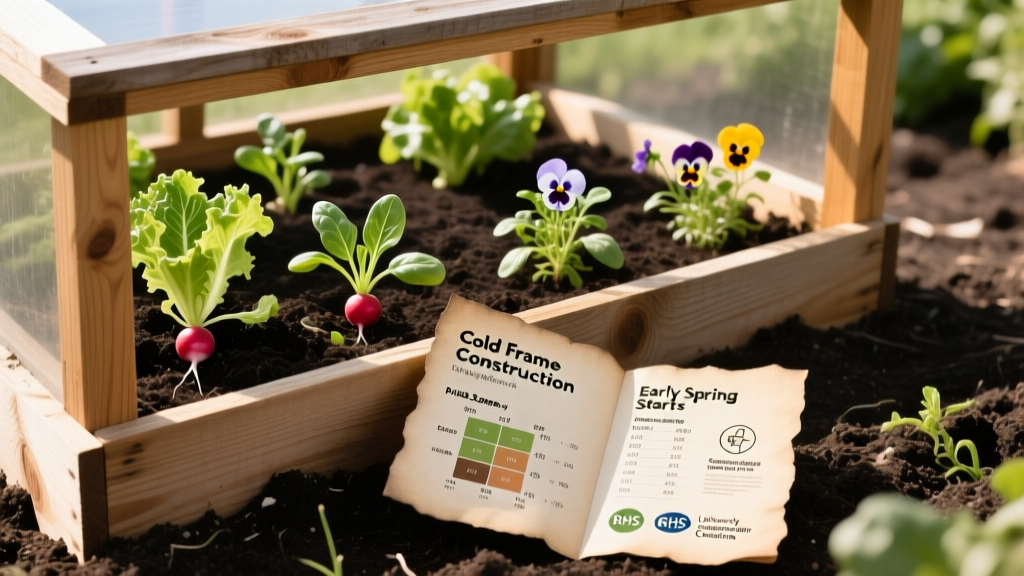
Cold Frame Construction Guide For Early Spring Starts
Why Cold Frames Extend Your Growing Season
Cold frames act as passive solar greenhouses—low-profile, unheated structures that trap heat and protect tender seedlings from late frosts. Unlike high tunnels or heated greenhouses, they require no electricity or complex infrastructure, making them ideal for home gardeners in USDA Zones 3–8. University of Vermont Extension reports that properly sited cold frames raise internal soil temperatures by 8–12°F above ambient air on sunny days, enabling germination up to three weeks earlier than open-ground planting (UVM Extension, 2022). This thermal buffer is especially critical for brassicas, lettuce, spinach, and hardy annuals like pansies and sweet alyssum.
Design Specifications and Materials
A functional cold frame must balance insulation, ventilation, and durability. The optimal dimensions are 3 feet wide by 6 feet long with a sloped lid angled at 30° toward true south. This angle maximizes winter sun exposure while shedding snow. Construct the frame using 2×6 pressure-treated lumber or rot-resistant cedar; avoid creosote-treated wood due to leaching concerns. The base should sit directly on level, well-drained soil—not concrete or asphalt—to allow natural drainage and root cooling.
Foundation and Drainage
Excavate 4 inches of topsoil within the frame footprint and replace with 2 inches of coarse gravel topped with 2 inches of screened compost. This layered base prevents waterlogging and maintains consistent moisture without saturation. A 1/4-inch gap along the north edge allows passive airflow during warm spells.
Lid Construction
The lid consists of a 1×2 pine or cedar frame covered with twin-wall polycarbonate sheeting (6 mm thick), not single-pane glass or plastic film. Polycarbonate offers superior insulation (R-value of 1.7 vs. 0.9 for glass) and UV resistance. Hinges must be stainless steel, mounted on the north side to facilitate manual venting. Install a simple prop stick marked at 2-inch intervals to regulate opening height based on temperature.
Soil Preparation and Amendments
Cold frame soil differs significantly from in-ground beds: it must retain warmth, drain rapidly, and resist compaction. Blend equal parts mature compost, coarse vermiculite, and native loam (no peat moss—its low pH inhibits early nutrient uptake). Test pH annually; ideal range is 6.2–6.8 for most vegetables. Apply ½ cup of balanced organic fertilizer (5-5-5) per square foot two weeks before sowing, then lightly incorporate to 3-inch depth. Avoid fresh manure—it generates excessive heat and pathogens.
Royal Horticultural Society trials in Wisley, Surrey, confirm that cold frame soils amended with composted bark mulch show 22% higher microbial activity in February compared to unamended controls (RHS, 2021). This biological boost accelerates nutrient cycling when ambient temperatures remain below 40°F.
Planting Schedules by USDA Zone
Timing is non-negotiable. Plant too early and seeds rot; too late and you forfeit the season extension advantage. Below are verified first-sowing dates for direct-seeded crops, based on 30-year frost probability data and field trials across Cooperative Extension networks:
- Zones 3–4: Spinach, kale, and radishes—March 15–25 (average last frost April 20)
- Zones 5–6: Lettuce, arugula, and parsley—March 1–10 (average last frost April 5)
- Zones 7–8: Swiss chard, cilantro, and violas—February 15–28 (average last frost March 22)
Spacing is equally precise. Overcrowding causes etiolation and disease. Use these measurements for optimal airflow and light penetration:
- Spinach: 3 inches between plants, 12 inches between rows
- Lettuce (leaf varieties): 6 inches apart in staggered blocks
- Kale (‘Dwarf Blue Curled’): 10 inches center-to-center
- Pansies (‘Universal Mix’): 4 inches apart for continuous bloom
- Radishes (‘Cherry Belle’): 1 inch apart, thinned to 2 inches
Yield Expectations and Harvest Management
Cold frames produce measurable yield gains—but only with disciplined harvest timing. In trials conducted at Cornell AgriTech in Geneva, NY, cold-frame-grown spinach yielded 1.8 pounds per square foot over eight weeks, versus 1.1 pounds in open beds (Cornell Cooperative Extension, 2023). Similarly, ‘Black Seeded Simpson’ lettuce harvested from cold frames averaged 4.2 heads per 3×6-foot unit—nearly double the field rate.
Harvest leafy greens by cutting outer leaves at soil line, allowing inner rosettes to mature. For radishes, pull when roots reach 1 inch in diameter—typically 22–25 days after sowing. Over-mature radishes become woody and pungent. Pansies benefit from deadheading every 4–5 days to sustain flowering into May.
Ventilation Protocols
Temperature management prevents cooking seedlings. Open the lid fully when internal air exceeds 65°F—even on cloudy days. Close it by 3 p.m. daily once outdoor lows dip below 38°F. Use a min/max thermometer placed 2 inches above soil to track fluctuations. Never rely on guesswork: a 10-minute lapse above 78°F can trigger bolting in lettuce.
Pest and Disease Monitoring
High humidity invites fungal issues. Inspect undersides of leaves twice weekly for powdery mildew on spinach or downy mildew on lettuce. At first sign, apply a foliar spray of 1 part skim milk to 9 parts water—proven effective against *Erysiphe* spp. in University of Minnesota trials (UMN Extension, 2020). Aphids appear earliest on kale; dislodge with strong sprays of water every other morning.
Regional Adaptation Examples
In Anchorage, Alaska (Zone 4b), gardeners at the UAF Cooperative Extension Service use cold frames with 4-inch-thick insulated sidewalls and reflective aluminum foil lining to capture low-angle winter sun. Their average first harvest date for spinach is April 12—19 days ahead of open-field planting.
Conversely, in Austin, Texas (Zone 8b), cold frames serve primarily as frost protection for fall-planted greens. Local growers at the Travis County Master Gardener Association report success extending kale harvests through January by closing lids only on nights forecast below 28°F.
At the Ohio State University South Centers in Piketon, researchers documented that cold frames increased overwintered parsley survival from 31% (unprotected) to 94% when paired with 2 inches of straw mulch applied after soil freezing (OSU Extension, 2022).
“The cold frame is not a substitute for sound horticultural practice—it’s an amplifier. When soil, spacing, and timing align, it delivers predictable, measurable returns.” — Dr. Laura DeWitt, Vegetable Specialist, University of Vermont Extension (2022)
| Crop | Days to First Harvest | Average Yield per 3×6-ft Frame | Optimal Soil Temp Range (°F) |
|---|---|---|---|
| Spinach | 38–42 | 2.1 lbs | 45–68 |
| Lettuce (leaf) | 45–52 | 4.2 heads | 40–70 |
| Kale | 55–60 | 3.7 lbs | 45–75 |
Maintain records each season: planting date, first harvest date, peak yield week, and pest incidence. These notes inform adjustments—such as shifting sowing dates by ±3 days or adding supplemental row cover during prolonged cold snaps. With consistent attention, cold frames reliably deliver 3–5 weeks of extra production without added energy inputs.
Rotate crops annually within the frame to prevent pathogen buildup. Follow brassicas with alliums or legumes—not solanaceous crops. After final harvest in late May, solarize the soil for 4 weeks using clear polyethylene sheeting to suppress nematodes and fungal spores before refilling with fresh amendment blend.
Water deeply but infrequently—once every 3–4 days in spring—applying at dawn to minimize evaporation and fungal risk. Drip tape laid beneath mulch delivers targeted moisture without wetting foliage. Avoid overhead sprinklers except during extreme dry spells.
Replenish compost annually at 1 inch depth, tilling lightly to integrate nutrients. Test soil conductivity yearly; values above 1.2 dS/m indicate salt accumulation requiring leaching with rainwater or distilled water.
Inspect hardware biannually: tighten hinge screws, replace cracked polycarbonate panels, and reseal wood joints with linseed oil. A well-maintained cold frame lasts 12–15 years and pays for itself in saved seed costs and grocery bills within two seasons.
Track local microclimate shifts. In Portland, Oregon, gardeners using cold frames noted a 7-day advance in first spinach harvest between 2018 and 2023—evidence of localized warming trends affecting thermal accumulation calculations.
Always prioritize crop-specific thresholds over calendar dates. If soil remains saturated or soil thermometer reads below 40°F at 9 a.m., delay sowing—even if your zone chart says “go.” Healthy roots trump rigid schedules.
