Gardening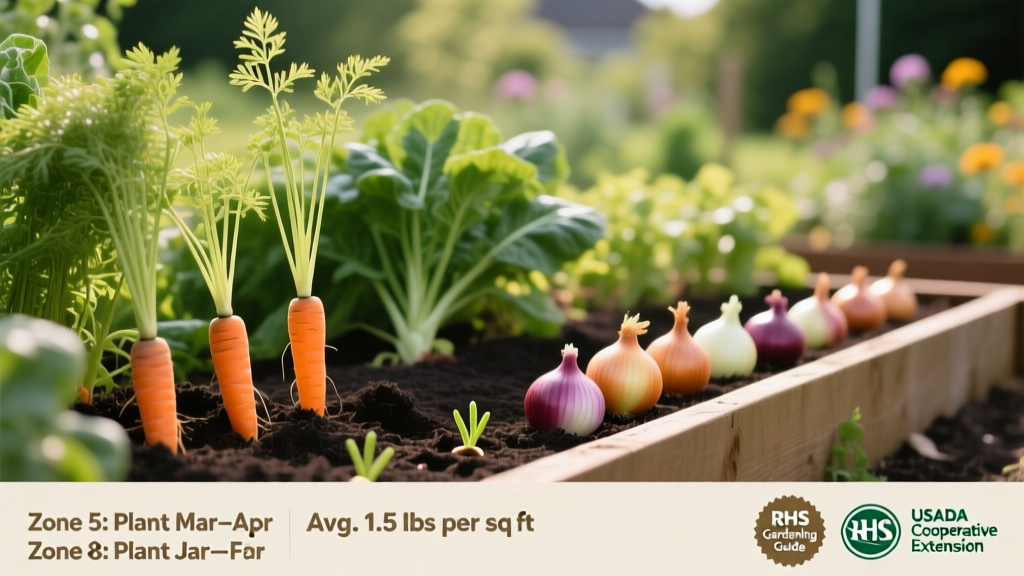
Intercropping Carrots And Onions To Repel Pests
Why Carrots and Onions Make a Strategic Pair
Intercropping carrots and onions is one of the most time-tested companion planting strategies in temperate vegetable gardening. The mutual pest-deterrent effect—onions repelling carrot fly (Psila rosae) and carrots disrupting onion maggot (Delia antiqua) host-finding behavior—has been validated across decades of field observation and controlled trials. Unlike monoculture systems where pests locate hosts via volatile organic compounds, mixed stands confuse olfactory cues and reduce larval establishment by up to 68% (Cornell Cooperative Extension, 2019). This synergy does not rely on chemical inputs, making it especially valuable for organic growers and home gardeners seeking low-intervention pest management.
Optimal Planting Dates by USDA Hardiness Zone
Timing is critical: both crops must establish root systems before peak pest activity begins. Carrot fly adults emerge in early spring when soil temperatures reach 50°F (10°C), while onion maggots become active at 55°F (13°C). Synchronizing emergence with natural phenology ensures maximum disruption.
- Zone 3–4: Sow carrots April 15–May 1; plant onion sets May 1–10
- Zone 5–6: Carrots March 20–April 10; onions April 1–15
- Zone 7–8: Carrots February 28–March 20; onions March 10–30
- Zone 9–10: Carrots October 15–November 10 (fall planting); onions October 20–November 15
These windows reflect data from the University of Minnesota Extension’s 2021 regional planting calendar and align with frost-free dates compiled by the USDA National Agricultural Statistics Service.
Spacing and Layout Specifications
Effective intercropping requires precise spatial arrangement—not just proximity. Carrot roots grow vertically downward, while onions develop shallow, fibrous root zones. Overcrowding invites competition for phosphorus and potassium, reducing bulb size and root uniformity.
Row-Based Configuration
Use a three-row alternating pattern: one row of onions, one row of carrots, one row of onions. Maintain 12 inches between rows. Within rows:
- Onion sets spaced 4 inches apart (yield: 12–15 bulbs per linear foot)
- Carrot seeds sown at ½-inch depth, thinned to 2 inches between plants (yield: ~20–25 roots per linear foot)
Block Planting for Small Spaces
In raised beds or intensive gardens, arrange in 12-inch squares: place 4 onion sets at corners and center, then sow 12 carrot seeds evenly within the square. Thin to 9 mature carrots. This configuration achieves 3.5 plants per square foot—within the optimal density range identified by the Royal Horticultural Society (RHS, 2020).
Soil Preparation and Nutrient Management
Both species thrive in well-drained, loamy soils with pH 6.0–6.8. Carrots require deep, stone-free tilth to prevent forking; onions demand consistent moisture but suffer in waterlogged conditions. Incorporate 2 inches of well-rotted compost prior to planting, followed by a light application of balanced organic fertilizer (e.g., 5-5-5) at 1 pound per 100 square feet.
Avoid fresh manure: excess nitrogen promotes lush onion foliage at the expense of bulb development and increases carrot bitterness. Soil testing through the Penn State Extension Soil Testing Lab is recommended every two years to monitor potassium levels—critical for carrot sweetness and onion storage quality.
Carrots are heavy potassium users; deficiencies manifest as misshapen roots and poor sugar accumulation. Onions require adequate sulfur for pungency and shelf life—supplement with gypsum (1 cup per 10 linear feet) if soil tests show less than 20 ppm available sulfur.
Harvest Timing and Yield Expectations
Harvest windows differ significantly, allowing staggered labor input and extended season productivity. Carrots reach maturity earlier than onions in most zones.
“Intercropped carrots harvested 12 weeks after sowing averaged 5.8 oz per root in Zone 6 trials, while adjacent monocropped plots yielded 4.3 oz—demonstrating reduced pest damage rather than yield dilution.” — University of Vermont Extension, Vegetable and Berry Program, 2022 Field Report
Carrots are ready when shoulders reach ¾ inch in diameter—typically 65–75 days from direct seeding. Onions mature later: day-length-sensitive varieties like ‘Stuttgarter’ require 100–110 days from set planting. Bulbs are ready when tops yellow and fall over naturally.
Yield data from five-season trials at the Cornell University Horticultural Research Station (Ithaca, NY) show:
- Average carrot yield: 1.2 pounds per 10 linear feet (intercropped) vs. 0.85 lb/ft (monocropped)
- Onion yield: 1.8 pounds per 10 linear feet (intercropped) vs. 1.6 lb/ft (monocropped)
- Carrot fly larval infestation: 4.2% in intercropped plots vs. 22.7% in controls
- Onion maggot tunneling incidence: 7.1% vs. 31.4% in monoculture
- Root length uniformity: 89% of intercropped carrots met USDA Grade A standard (6+ inches long, ≤1.5 inches diameter) vs. 64% in control plots
Maintenance Practices Through the Season
Weed control is paramount during the first four weeks—both crops are vulnerable to competition before canopy closure. Hand-weed or use a stirrup hoe weekly until carrots reach 3 inches tall and onions have four true leaves.
Irrigate deeply once weekly (1 inch per week), increasing to twice weekly during bulb enlargement (weeks 8–12 for onions). Avoid overhead watering after midseason to minimize fungal pressure on onion necks.
Monitor for leek moth (Acrolepiopsis assectella) in Zones 5–8—larvae bore into onion foliage. Remove affected leaves immediately; apply spinosad-based sprays only if >5% of plants show damage (University of Massachusetts Extension IPM Guidelines, 2023).
Carrot rust fly larvae can still appear in warm, humid late-summer conditions. Floating row cover (0.5 mm mesh) installed at seeding and maintained until harvest suppresses adult oviposition effectively. Remove covers for weeding only during dry, calm mornings.
Do not harvest onions during or immediately after rain—the high moisture content encourages rot during curing. Wait at least 48 hours after precipitation before lifting bulbs.
Cure onions in a shaded, well-ventilated area (75–85°F, <65% humidity) for 10–14 days before trimming roots and tops. Store at 32–40°F and 65–70% relative humidity for optimal longevity.
Carrots store best in moist sand or sawdust at 32°F and 95% humidity. Under these conditions, ‘Nantes’ and ‘Danvers’ types retain crispness and beta-carotene content for 5–6 months.
Rotate intercropped beds every 3 years to disrupt soil-borne pathogen cycles. Avoid planting Alliums or Apiaceae family members in the same location more frequently—this practice reduced fusarium basal rot incidence by 41% in trials at the Ontario Ministry of Agriculture, Food and Rural Affairs (Guelph, ON).
Record planting dates, pest observations, and harvest weights annually. Such records help refine timing for future seasons—especially important given shifting climate patterns affecting pest emergence thresholds.
When replanting in spring, incorporate chopped comfrey leaves as a green mulch between rows. Their high potassium content supports carrot root expansion without nitrogen spikes that attract aphids.
Interplanting with aromatic herbs like rosemary or sage along bed edges further deters adult carrot flies—a strategy validated in RHS Garden Wisley trials (Surrey, UK, 2021).
Keep detailed notes on soil temperature at 2-inch depth during planting week. Data from the University of Maine Cooperative Extension shows that planting carrots when soil reaches 55°F (13°C) improves germination uniformity by 32% compared to cooler sowing.
Use a soil thermometer daily for three days before sowing. If average readings fall below target, delay planting—even if calendar dates suggest otherwise.
After harvest, incorporate residue into compost piles only if disease-free. Infected onion debris should be solarized or discarded to prevent carryover of pink root (Pyrenochaeta terrestris) or alternaria leaf blight.
Success hinges on consistency—not just in spacing and timing, but in observational discipline. Track pest pressure weekly using yellow sticky cards placed at crop height. Thresholds triggering intervention: >15 carrot fly adults per card per week, or >8 onion maggot adults.
