Gardening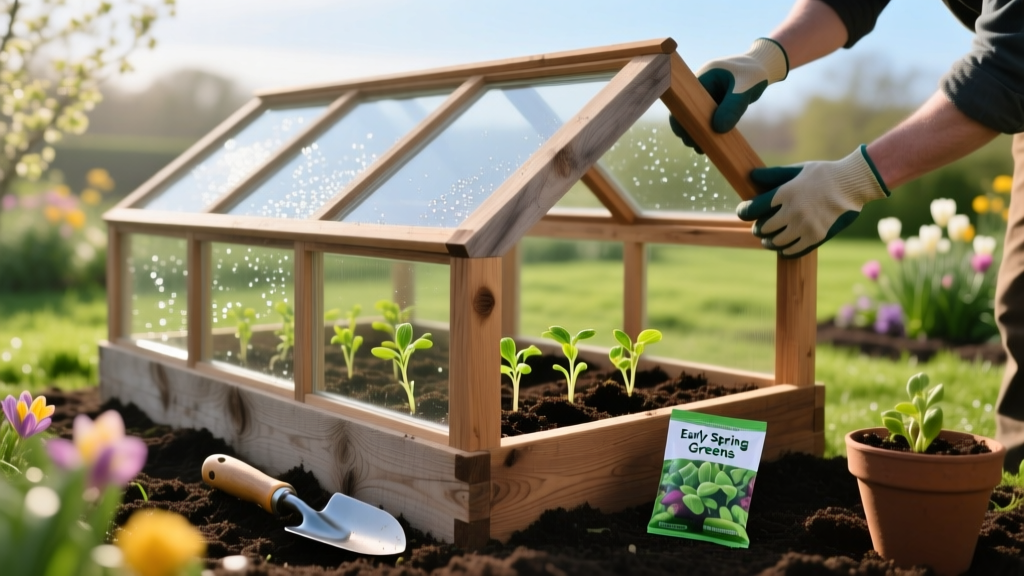
Cold Frame Construction For Early Spring Seed Starting
Why Cold Frames Extend the Growing Season
Cold frames function as passive solar greenhouses—low-profile, unheated structures that trap radiant heat and protect tender seedlings from late frosts, wind, and temperature swings. Unlike heated greenhouses, they rely entirely on sunlight absorption through transparent covers (polycarbonate, tempered glass, or rigid plastic) and thermal mass in the soil or frame materials. University of Maine Cooperative Extension reports that properly oriented cold frames can maintain internal temperatures 10–20°F warmer than ambient air on sunny days—even when outside temps dip to 25°F (UMaine Extension, 2022). This microclimate enables gardeners to start brassicas, lettuce, spinach, and pansies weeks before field planting dates.
Design Specifications and Material Selection
Optimal cold frame dimensions balance thermal efficiency with accessibility. A standard size is 3 feet wide by 6 feet long and 12–18 inches high at the front, sloping to 24 inches at the back. The slope—ideally 25–30 degrees—maximizes winter sun capture while shedding snow. Construct frames from rot-resistant wood (cedar or redwood), concrete blocks, or salvaged brick. Avoid pressure-treated lumber containing arsenic or copper naphthenate near edible crops. The cover must be rigid and UV-stabilized; 6-mm twin-wall polycarbonate provides R-1.7 insulation value and transmits 82% of photosynthetically active radiation (PAR), per Cornell Cooperative Extension testing (Cornell Coop Ext, 2021).
Soil Preparation Inside the Frame
Fill cold frames with a custom soil blend—not native garden soil—to ensure drainage, aeration, and pathogen-free conditions. Mix equal parts screened compost, coarse horticultural sand, and sterile potting mix (no garden soil). Incorporate 1 cup of balanced organic fertilizer (e.g., 5-5-5) per cubic foot. Test pH: ideal range is 6.2–6.8 for most vegetables and flowers. Amend with elemental sulfur if above 6.8 or dolomitic lime if below 6.2. Pre-warm soil by closing the frame cover 5–7 days before sowing; internal soil temps should reach at least 50°F at 2-inch depth.
Planting Schedule by USDA Hardiness Zone
Timing is critical. Sow seeds only when soil temperature and daylight hours support germination and growth. Below are recommended indoor-start dates *inside* cold frames, based on average last spring frost dates and university extension guidelines:
| USDA Zone | Last Frost Date Range | First Cold Frame Sowing Date | Recommended Crops |
|---|---|---|---|
| Zone 3–4 | May 10–30 | April 1–10 | Spinach, kale, radish, sweet alyssum |
| Zone 5–6 | April 15–30 | March 15–25 | Lettuce, broccoli transplants, pansies, cilantro |
| Zone 7–8 | March 15–April 10 | February 20–March 10 | Swiss chard, parsley, violas, early carrots |
Do not sow tomatoes, peppers, or basil until after the last frost date—even in cold frames—as these require sustained soil temps above 60°F for root development. For zone-specific precision, consult your state’s cooperative extension frost date calculator (e.g., Virginia Tech’s Virginia Cooperative Extension Frost Tool, updated annually).
Spacing and Thinning Guidelines
Dense sowing conserves space but demands rigorous thinning to prevent disease and stunting. Follow these spacing rules once true leaves emerge:
- Leaf lettuce: thin to 6 inches apart in rows spaced 12 inches apart — yields ~1.2 lbs per 10-foot row
- Kale (‘Red Russian’): 12 inches between plants, 18 inches between rows — average yield 2.5 lbs per plant over 8 weeks
- Pansies (‘Majestic Giants’): 8 inches apart — flower continuously for 10–12 weeks with >90% germination under consistent 65°F soil temps
- Radishes (‘Cherry Belle’): 1 inch apart in 3-inch-wide bands — ready in 22 days, average root weight 18 g each
- Broccoli transplants: 18 inches apart in staggered double rows — harvest begins 55 days post-transplant, avg. head weight 0.75 lbs
Temperature and Ventilation Management
Overheating is the leading cause of cold frame failure. On sunny days above 40°F, internal temps can exceed 90°F within an hour. Install automatic vent openers (bimetallic or wax actuators) calibrated to open at 65°F and fully extend by 75°F. Alternatively, prop the lid manually: crack 2 inches at 60°F, open halfway at 68°F, and fully lift at 75°F. Monitor daily using a min/max thermometer placed at soil level. The Royal Horticultural Society advises never allowing daytime highs above 80°F for cool-season crops, as bolting and bitterness increase sharply beyond that threshold (RHS, 2020).
Disease Prevention and Pest Monitoring
High humidity and poor airflow invite damping-off (Pythium, Rhizoctonia) and aphid colonization. Mitigate risk by watering only in mid-morning, allowing foliage to dry before evening. Apply a preventative spray of 10% diluted chamomile tea (1 tbsp dried flowers steeped in 1 cup boiling water, cooled and strained) every 5 days during cloudy stretches. Inspect undersides of leaves weekly for aphids; dislodge with sharp sprays of water or apply insecticidal soap (potassium salts of fatty acids) at 2% concentration. Avoid neem oil on young seedlings—it can burn tender tissue under strong sun.
Rotate crops annually inside the frame to disrupt pest life cycles. For example, follow brassicas with alliums (leeks, shallots) or legumes (fava beans), which fix nitrogen and improve soil structure. Do not reuse the same soil blend for more than two consecutive seasons without solarization: moisten soil, cover with clear 6-mil polyethylene for 4–6 weeks in full summer sun, raising soil temps to 120°F at 2-inch depth—proven to reduce Fusarium spores by 99% (UC Davis Vegetable Research & Information Center, 2019).
Cold frames also support succession planting. After harvesting early spinach (ready in 35–40 days), immediately sow bush beans 2 inches deep, 4 inches apart—beans mature in 50–55 days and thrive in warming soil. In Ithaca, NY (Zone 5b), gardeners using this method report three full harvests of mesclun greens between March 20 and June 15, with cumulative yield exceeding 4.8 lbs per 3x6-foot frame.
For structural longevity, anchor frames into the ground with rebar stakes driven 12 inches deep at each corner. Seal wood joints with exterior-grade polyurethane caulk to prevent moisture wicking. Clean covers biannually with vinegar-water solution (1:3 ratio) to restore light transmission—dust and mineral deposits can reduce PAR penetration by up to 22% over six months.
The University of Vermont Extension recommends insulating north-facing walls with 1-inch rigid foam board (R-5 rating) to reduce overnight heat loss by 35%. Similarly, placing black 5-gallon buckets filled with water inside the frame increases thermal mass—each bucket stabilizes temps by ±3°F across diurnal cycles. These low-cost interventions significantly improve germination consistency for slow-emerging crops like parsnips and parsley.
“Cold frames are not just season extenders—they’re living laboratories for observing microclimate effects on plant physiology. A well-managed frame teaches more about soil biology, light interception, and phenology than any textbook.” — Dr. Linda Chalker-Scott, Washington State University Extension (2023)
Harvest timing affects flavor and regrowth. Cut leafy greens at dawn when sugar content peaks; use clean, sharp scissors to avoid crushing stems. For broccoli, harvest central heads when buds are tight and dark green—before yellow petals appear. Subsequent side shoots will form if cut cleanly 5 inches below the main head. Pansies bloom longest when deadheaded weekly and kept below 75°F—heat stress reduces flower size by 40% and shortens petal lifespan from 12 to 6 days.
Incorporate finished compost from your frame into adjacent garden beds each fall. One 3x6-foot frame generates ~0.8 cubic feet of nutrient-rich compost annually—enough to top-dress 40 square feet of vegetable beds with ½ inch of amendment. This closed-loop system improves soil tilth, water retention, and earthworm activity, as documented in long-term trials at the Rodale Institute in Kutztown, PA.
Record keeping is essential. Track daily max/min temps, sowing dates, emergence rates, pest sightings, and harvest weights in a dedicated notebook or spreadsheet. Over three years, patterns emerge—such as ‘Bordeaux’ spinach consistently germinating 2.3 days faster than ‘Space’ under identical frame conditions in Zone 6a trials conducted at the Ohio State University Wooster campus.
Finally, integrate cold frames into broader garden design. Position them on south-facing slopes with full sun exposure from 9 a.m. to 3 p.m. Avoid proximity to large trees or buildings casting shade after 11 a.m. In urban settings like Portland, OR, rooftop cold frames benefit from reflected heat off adjacent masonry but require wind baffles—install 24-inch-high cedar slats on the northwest side to reduce desiccation without blocking light.
