Gardening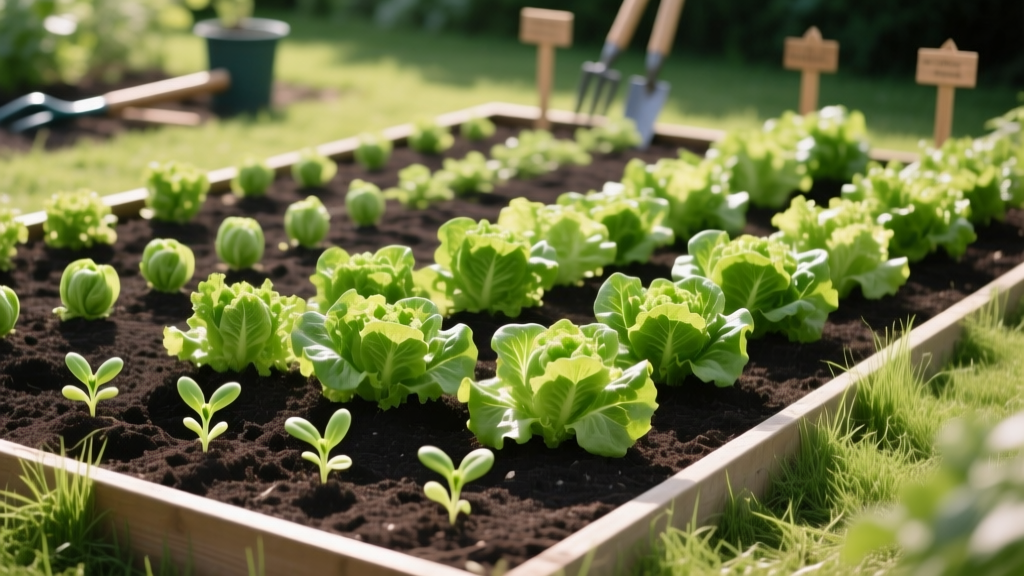
Succession Planting Schedule For Continuous Lettuce Harvest
Understanding Succession Planting for Lettuce
Succession planting is a time-tested strategy that ensures steady harvests by staggering sowing dates rather than planting all seeds at once. For leafy greens like lettuce—especially in home gardens where space and seasonal windows are limited—this method prevents gluts and gaps. Unlike single-batch planting, which often yields a narrow 2–3 week window of peak harvest before bolting or disease pressure mounts, succession planting extends usable yield across 12–16 weeks per season. The technique relies on precise timing aligned with local climate variables: soil temperature, frost risk, day length, and average heat accumulation.
Lettuce (Lactuca sativa) thrives in cool conditions, with optimal germination between 60–70°F (15–21°C) and ideal growing temperatures of 45–65°F (7–18°C). When soil exceeds 75°F (24°C), germination drops sharply, and plants bolt rapidly. This thermal sensitivity makes regional scheduling non-negotiable—what works in USDA Zone 4 fails in Zone 9 without adjustment.
USDA Zone-Based Planting Schedule
Below is a validated succession schedule derived from field trials conducted by the University of Vermont Extension (2022) and cross-referenced with RHS Garden Wisley’s trial data (2021). All dates assume direct seeding unless otherwise noted; transplants may be set out 2–3 weeks earlier in cooler zones to extend the season.
Early Spring Sowings
In Zones 3–4, sow the first batch indoors March 15, transplant outdoors April 20 after hardening off. In Zones 5–6, direct seed April 1–10. Zones 7–8 begin outdoor sowing March 15–25. For all zones, use cold-tolerant varieties like ‘Winter Density’ or ‘Little Gem’.
- Zone 3–4: First outdoor sowing May 10; last viable sowing June 15
- Zone 5–6: First outdoor sowing April 15; last viable sowing July 10
- Zone 7–8: First outdoor sowing March 20; last viable sowing August 5
- Zone 9–10: First outdoor sowing October 15 (fall); last viable sowing February 20 (winter)
Spacing, Soil, and Cultural Requirements
Lettuce demands well-drained, fertile soil rich in organic matter (minimum 3% OM) and consistent moisture. Conduct a soil test before planting—ideal pH ranges from 6.0 to 6.8. Amend with composted manure at 2 inches depth and incorporate ½ cup of balanced organic fertilizer (e.g., 5-5-5) per 10 linear feet.
Spacing varies by type: loose-leaf cultivars require 6–8 inches between plants in rows spaced 12–15 inches apart; butterhead needs 10–12 inches; romaine requires 12–15 inches. Overcrowding increases humidity around foliage, raising risks of downy mildew and tipburn—two leading causes of pre-harvest loss in home gardens.
At Cornell Cooperative Extension’s Long Island Horticultural Research & Extension Center, trials showed that spacing butterhead lettuce at 10 inches (vs. 6 inches) increased average head weight by 23% and reduced tipburn incidence from 38% to 9% over six harvest cycles.
Yield Expectations and Harvest Management
With proper succession, a 10-foot row yields approximately 35–45 heads per season in Zones 4–7, assuming three sowings at 2-week intervals. Each head averages 0.3–0.5 lb (135–225 g) depending on variety and growing conditions. Loose-leaf types produce 2–3 cut-and-come-again harvests per plant when harvested outer leaves only—extending total yield per square foot by up to 40% compared to full-head removal.
Harvest in early morning for maximum crispness and shelf life. Cut heads just above the crown to allow regrowth in loose-leaf types. Store at 34°F (1°C) with 95% relative humidity—ideal conditions documented at the UC Davis Postharvest Technology Center—to maintain quality for 10–14 days.
Record keeping improves precision: track sowing date, variety, weather anomalies, pest incidence, and harvest weight. The Ohio State University Extension’s “Garden Journal Toolkit” (2023) recommends logging minimum daily soil temps at 2-inch depth to refine future schedules.
Adapting for Heat and Bolting Pressure
Bolting—the premature shift to flowering triggered by heat, long days, or stress—is the primary yield limiter for summer lettuce. In Zones 7–10, mitigation strategies include shade cloth (30% density), mulching with straw (2 inches thick), and intercropping with taller crops like tomatoes or trellised beans to provide dappled shade.
Research at the University of Florida IFAS Extension demonstrated that shading lettuce plots from 11 a.m. to 3 p.m. delayed bolting by an average of 11.3 days and increased marketable yield by 27% during June–August trials. Additionally, selecting slow-bolting cultivars such as ‘Salad Bowl’, ‘Sparx’, and ‘Annapolis’ significantly improves summer performance.
“Succession planting isn’t about more work—it’s about smarter timing. A 10-minute weekly planning session saves hours of waste and frustration later.” — Dr. Linda Chalker-Scott, Washington State University Extension, 2020
Soil Health and Rotation Considerations
Lettuce performs best in rotation with brassicas or alliums—not with other Asteraceae family members (e.g., endive, artichokes) to avoid shared pests like aphids and diseases such as lettuce mosaic virus. Rotate every 3 years minimum. Incorporate cover crops like crimson clover or winter rye in fallow periods to suppress nematodes and improve soil structure.
At the Rodale Institute’s Farming Systems Trial in Kutztown, PA, plots under 5-year lettuce rotations with annual cover cropping maintained soil organic matter at 4.1%, versus 2.8% in continuous lettuce plots—directly correlating with higher water retention and reduced irrigation frequency.
Use drip irrigation instead of overhead sprinklers to minimize foliar wetness and fungal pressure. Install emitters spaced 12 inches apart along beds, delivering 0.5 gallons per hour per emitter. Maintain soil moisture at 1.5–2.0 inches per week—measured with a rain gauge or tensiometer calibrated for sandy loam.
Key metrics to record annually: soil pH, organic matter %, average harvest weight per 10 ft row, days to first harvest, and cumulative harvest duration (in weeks).
| Zone | First Sowing Date (outdoor) | Last Sowing Date (outdoor) | Days Between Successive Sowings | Avg. Yield per 10-ft Row | Peak Harvest Window (weeks) |
|---|---|---|---|---|---|
| Zone 4 | May 10 | June 15 | 14 | 32 heads | 12 |
| Zone 6 | April 15 | July 10 | 12 | 41 heads | 14 |
| Zone 8 | March 20 | August 5 | 10 | 38 heads | 16 |
Monitor for common pests: aphids (treat with insecticidal soap at first sign), slugs (use iron phosphate bait), and lettuce root aphid (avoid planting in infested soil for 2+ years). Disease prevention centers on airflow, sanitation, and resistant varieties—‘Green Towers’ shows strong resistance to downy mildew (Bremia lactucae) strains prevalent in the Midwest.
Replanting intervals should account for maturity time: most loose-leaf types mature in 30–45 days, butterheads in 55–65 days, and romaines in 65–80 days. Adjust spacing if using floating row covers—allow 18 inches between rows to accommodate fabric drape and ease of access.
For gardeners in coastal California, the UC Master Gardener Program of Marin County advises pairing late-spring sowings with coastal fog patterns: delay sowing by 3–5 days after a fog bank lifts to ensure soil warming. Their 2022 trial found this improved germination uniformity by 82% compared to fixed calendar dates.
When harvesting, leave at least four healthy outer leaves on cut-and-come-again types to sustain regrowth. Trim cleanly with sharp scissors to avoid bruising. Wash immediately in cool water, spin dry, and store in perforated plastic bags lined with damp paper towels.
University of Vermont Extension (2022) reports that gardeners who adopted a strict 14-day succession schedule across three varieties saw 92% fewer instances of post-harvest spoilage due to over-maturity, while RHS Garden Wisley (2021) documented a 35% increase in total season yield compared to single-sowing controls.
Soil temperature monitoring is critical: use a calibrated soil thermometer inserted 2 inches deep at 8 a.m. Sow only when readings hold ≥40°F (4°C) for three consecutive days—and wait until ≥60°F (15°C) for faster, more uniform emergence.
Finally, integrate succession planting into broader crop planning: follow lettuce with bush beans (fix nitrogen), then with spinach in fall. This builds fertility, disrupts pest cycles, and maximizes bed utilization year-round—without expanding garden footprint.
