Home & Garden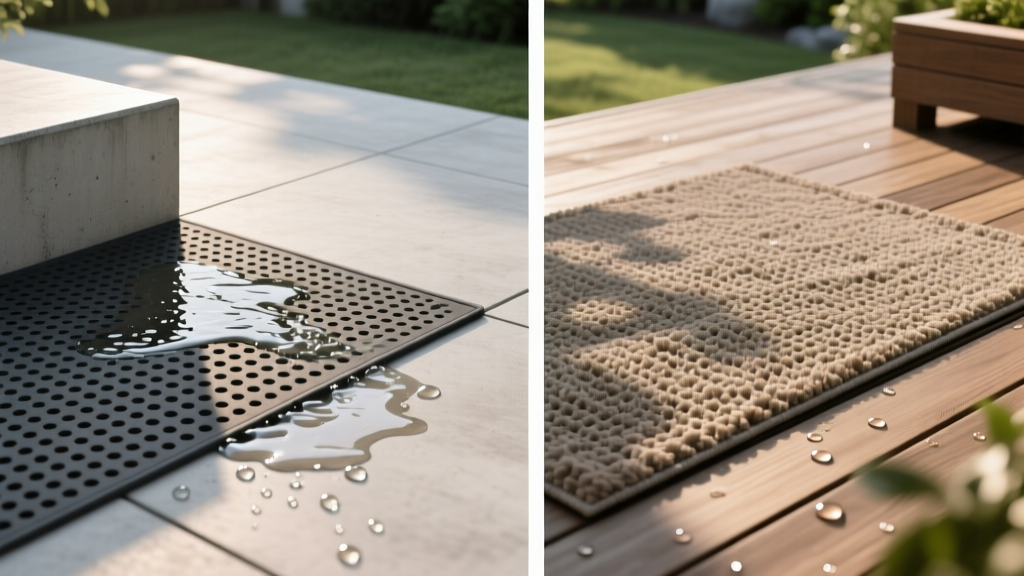
Outdoor Rug Drainage Pads: Concrete Vs Deck Photo Guide 2026
Emily WatsonPublished
The Intersection of Hardscape Drainage and Garden Photography
As garden photography and architectural documentation evolve in 2026, the line between indoor luxury and outdoor living continues to blur. Landscape architects, exterior designers, and outdoor living influencers demand pristine, high-fidelity documentation of their patio installations. A beautifully staged outdoor rug can anchor a hardscape photoshoot, adding warmth, texture, and color to an otherwise sterile environment. However, the hidden hero of any successful outdoor staging is the rug pad—specifically, its ability to manage water drainage.
Trapped moisture is the enemy of both hardscape longevity and visual aesthetics. Puddles trapped beneath a rug create unsightly dark watermarks that bleed through to the surface, while stagnant water breeds mold and mildew. According to the Environmental Protection Agency (EPA), mold can begin to grow on damp organic materials and dust within 24 to 48 hours, which can quickly stain the underside of your rug and the surface of your deck. For a garden photographer, these dark, damp patches ruin the clean lines and vibrant colors required for a professional portfolio. Understanding the distinct drainage needs of concrete versus wood or composite decks is essential for staging a flawless, camera-ready outdoor space in 2026.
Concrete Patios: Managing the Slab for Crisp Visuals
Concrete is a dense, largely non-porous hardscape material. When it rains, or when morning dew settles, water has nowhere to go but across the surface or into intentional expansion joints. If you place an outdoor rug directly on concrete without a proper drainage pad, the rug acts like a sponge, holding moisture against the slab. This results in a perpetually damp sub-surface that eventually causes efflorescence (white, powdery salt deposits) and dark mold stains.
From a photography standpoint, efflorescence and mold create chaotic, distracting textures in the background of your wide-angle architectural shots. To prevent this, concrete surfaces require a low-profile, high-lateral-flow PVC-coated polyester mesh pad. In 2026, the industry standard for concrete is a 1/8-inch thick open-weave mesh. This specific thickness allows water to flow laterally across the concrete slab, following the patio's natural grading, while keeping the rug elevated just enough to dry out rapidly.
Photography Tip: Managing Concrete Glare
When documenting a rug staged on concrete, micro-puddles often form in the slab's natural depressions. Even with a mesh pad, morning condensation can create a high-gloss sheen on the concrete visible at the rug's edges. Use a high-quality Circular Polarizer (CPL) filter on your lens. By rotating the CPL, you can cut the harsh glare from the damp concrete, revealing the true color and texture of the hardscape and the rug's binding without the distracting white hotspots that plague unfiltered outdoor shoots.
Wood and Composite Decks: Protecting the Grain and the Shot
Unlike concrete, wood and composite decks are designed with intentional gaps between the boards to allow vertical water drainage. However, the boards themselves are highly susceptible to moisture damage if a rug sits flush against them. Trapped water leads to black algae streaks, wood rot, and warping. For composite decking, the Trex Composite Decking Care Guide emphasizes that while the material is moisture-resistant, prolonged trapping of water and debris under outdoor furnishings can still lead to surface staining and mildew growth.
For deck surfaces, you must use an elevated grid pad or a thick felt-and-rubber hybrid pad (at least 1/4-inch thick). The elevated grid design is particularly crucial for 2026 composite decking installations, as it creates a substantial air gap that promotes vertical airflow and allows water to drop straight through the deck gaps rather than pooling on the board surfaces.
Photography Tip: Capturing Texture and Depth
When photographing a deck installation, the contrast between the organic grain of the wood (or the brushed texture of composite) and the woven fibers of the rug is a primary focal point. Because deck pads are thicker, they add a luxurious "plushness" to the rug. To capture this depth, shoot from a low angle (knee-level or lower) using a 35mm or 50mm prime lens. This perspective compresses the background slightly while emphasizing the thick, elevated profile of the rug, visually communicating the premium quality of the staging to your clients.
2026 Comparison Chart: Concrete vs. Deck Rug Pads
When planning your outdoor photoshoot and staging materials, use this quick-reference guide to select the correct pad for the hardscape surface.
| Surface Type | Recommended Pad Material | Optimal Thickness | Drainage Mechanism | Photo Aesthetic Benefit | 2026 Avg. Cost (per sq ft) |
|---|---|---|---|---|---|
| Concrete / Pavers | PVC-Coated Polyester Mesh | 1/8 inch | Lateral flow across slab | Prevents dark mold bleed-through; keeps rug edges flat for clean lines. | $1.20 - $1.60 |
| Wood Decking | Elevated Rubber Grid | 1/4 to 3/8 inch | Vertical drop through board gaps | Adds plush visual weight; prevents algae stains on wood grain backgrounds. | $2.10 - $2.80 |
| Composite Decking | Felt / Natural Rubber Hybrid | 1/4 inch | Vertical airflow and evaporation | Provides a matte, non-slip base that keeps rugs perfectly squared in frames. | $1.80 - $2.40 |
Staging and Lighting Techniques for Rug Documentation
Documenting outdoor textiles requires a nuanced approach to lighting. The goal is to showcase the rug's pattern and the pad's functional elevation without introducing harsh shadows that obscure the details.
The Overcast Advantage
While many garden photographers chase the "golden hour" for its warm, directional light, overcast days are actually superior for documenting outdoor rugs and hardscapes. A thick cloud layer acts as a giant softbox, providing even, diffused illumination. This eliminates the harsh, high-contrast shadows that can make a rug's texture look muddy or hide the crucial drainage gap between the rug and the deck. If you must shoot in direct sunlight, use a large 5-in-1 reflector to bounce fill light into the shadowed areas of the rug's weave.
Color Accuracy and White Balance
Outdoor rugs in 2026 feature complex, multi-tonal dyes inspired by biophilic design. To ensure your documentation accurately represents the manufacturer's colors, always shoot with a custom white balance calibrated to a gray card placed directly on the rug surface. Auto white balance often skews too warm or too cool when surrounded by green foliage or reflective concrete, leading to inaccurate portfolio representations.
Camera Gear and Settings for Hardscape Documentation
To properly document both the macro details of the rug pad's drainage grid and the wide architectural context of the patio, a versatile gear setup is required.
- Tilt-Shift Lenses (e.g., 24mm or 50mm T/S): Essential for architectural documentation. Tilt-shift lenses allow you to correct the converging vertical lines of patio furniture and house exteriors, keeping the staging looking professional and structurally sound.
- Macro Lens (e.g., 90mm or 100mm): Use this to capture close-up "detail shots" of the rug pad's mesh or grid. Showing the physical gap that allows for drainage is a powerful visual tool for B2B landscape portfolios, proving that the installation is both beautiful and functional.
- Aperture Settings: Shoot wide-angle staging shots at f/8 to f/11 to ensure the entire rug, from the foreground edge to the background furniture, is in sharp focus. For macro drainage details, open up to f/4 or f/5.6 to blur the background deck boards and isolate the pad's engineering.
Post-Processing Ethics in 2026
In the realm of architectural and garden documentation, authenticity is paramount. While AI-assisted editing tools in 2026 make it incredibly easy to clone out puddles, efflorescence, or mold stains, doing so misrepresents the hardscape's condition. As highlighted by professionals featured on ArchDaily Architectural Photography, the integrity of the built environment must be preserved in the final image. Instead of digitally erasing moisture damage, use your photography to highlight the success of proper drainage staging. Document the dry, clean undersides of the rugs and the pristine condition of the deck boards to tell a complete, honest story of superior outdoor living design.
Maintaining the Set: Seasonal Upkeep for Year-Round Portfolios
A photoshoot is only as good as the maintenance that precedes it. Before any major documentation session, lift the outdoor rug and inspect the pad. For PVC mesh pads on concrete, a simple rinse with a garden hose and a stiff-bristle brush will remove accumulated dust and pollen that can trap moisture. For rubber grid pads on decks, ensure that no leaves or debris are clogging the vertical drainage channels. By treating the rug pad as a critical piece of staging equipment rather than an afterthought, you guarantee that your 2026 garden photography will be as technically flawless as it is visually stunning.
