Home & Garden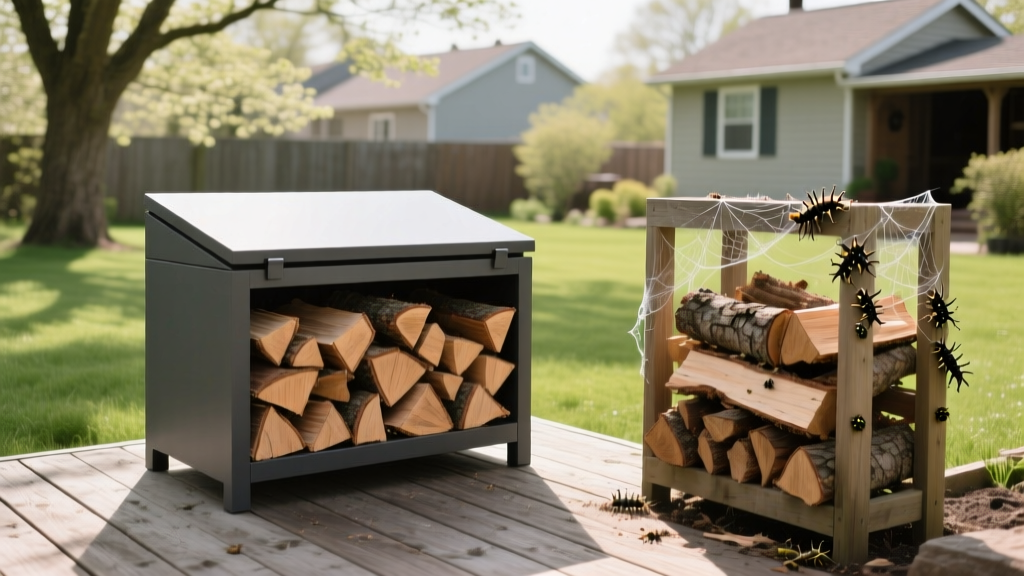
Covered vs Open Firewood Racks 2026: Web Worm Control
Sarah ChenPublished
The Intersection of Firewood Seasoning and Tree Pest Management
As homeowners increasingly embrace garden-to-table living and outdoor entertainment spaces in 2026, the backyard woodpile has evolved from a messy utility corner into a focal point of seasonal home maintenance. Whether you are fueling a modern smokeless fire pit or a traditional masonry hearth, properly seasoning your firewood is essential. However, an often-overlooked aspect of firewood management is its profound impact on local pest ecosystems—specifically, the proliferation of tree web worms. When evaluating the firewood storage rack covered vs open-air seasoning method, most guides focus solely on moisture content. But from a comprehensive Tree Web Worm Control perspective, how you store your wood can either disrupt or accelerate the life cycle of destructive canopy pests like the Fall Webworm (Hyphantria cunea) and the Eastern Tent Caterpillar.
In 2026, integrated pest management (IPM) is the gold standard for eco-conscious landscaping. According to the EPA's guidelines on Integrated Pest Management, modifying the physical habitat to make it less hospitable to pests is a primary line of defense. Your firewood rack is a massive, temporary habitat. Let us explore how covered and open-air storage methods influence web worm populations and how to optimize your woodpile for both rapid seasoning and robust tree protection.
Understanding the Web Worm Life Cycle in Your Woodpile
To understand why your firewood rack matters, you must first understand the enemy. Fall webworms are notorious for spinning large, unsightly silken tents over the branches of pecan, walnut, oak, and fruit trees in late summer. While the caterpillars are active in the canopy, they eventually drop to the ground to overwinter. They spin cocoons and pupate in protected, dry microclimates—frequently hiding under the loose, peeling bark of dead or felled trees.
When you harvest or purchase firewood, you are often bringing these overwintering pupae directly into your yard. If your storage method provides a stable, insulated environment, you are essentially running a bed-and-breakfast for web worms, ensuring a massive emergence right next to your prized host trees the following spring. The University of Minnesota Extension notes that disrupting the overwintering sites of these pests is a critical, non-chemical step in reducing local infestation rates.
Covered Firewood Storage Racks: The Greenhouse Effect
Covered firewood racks—whether utilizing heavy-duty canvas, polycarbonate roofing, or traditional tarps—are incredibly popular for keeping precipitation off the wood. In humid climates, a cover is almost mandatory to achieve the sub-20% moisture content required for clean-burning firewood.
The Pest Control Drawback
From a web worm control perspective, fully enclosed or tightly covered racks can be problematic. A covered rack traps ambient heat and blocks the harsh, freezing winds of winter. If web worm pupae are resting beneath the bark of your oak or ash firewood, the insulated microclimate of a covered rack may allow them to survive the winter in high numbers. Furthermore, covered racks prevent the natural shedding and blowing away of loose bark, keeping the exact material that pupae use for camouflage piled up at the base of your woodpile.
Best Practices for Covered Racks
If you must use a covered rack due to local weather conditions, opt for a breathable cover or a slatted wooden roof that blocks direct rain but allows lateral airflow. In 2026, many premium metal firewood racks feature adjustable, ventilated canopies designed specifically to balance moisture protection with temperature fluctuation, preventing the 'greenhouse effect' that shelters overwintering pests.
Open-Air Firewood Racks: Nature's Deep Freeze
Open-air seasoning relies entirely on sun and wind to dry the wood. In arid climates or regions with distinct, freezing winters, open-air storage is highly effective and offers distinct advantages for tree web worm control.
The Pest Control Advantage
Exposing your firewood to the elements means exposing any hitchhiking pests to extreme temperature fluctuations. Web worm pupae require a stable diapause to survive the winter. The repeated freezing and thawing, combined with the desiccating effect of winter winds in an open-air rack, significantly increases the mortality rate of overwintering caterpillars and pupae hiding in the wood crevices. Furthermore, as the wood rapidly dries and shrinks in the sun and wind, the bark naturally detaches and falls away, stripping the pupae of their protective cover and exposing them to predatory birds and ground beetles.
The Drawbacks of Open-Air Storage
The primary disadvantage is the slower seasoning time in wet climates and the accumulation of bark debris on the ground. If left unmanaged, this bark debris can become a secondary habitat for other pests, negating your web worm control efforts. Therefore, open-air racks require a strict perimeter maintenance routine.
2026 Comparison Chart: Covered vs. Open-Air Seasoning
Below is a structured comparison to help you decide which method aligns best with your local climate and pest pressure.
| Feature | Covered Firewood Rack | Open-Air Firewood Rack |
|---|---|---|
| Moisture Protection | Excellent; keeps snow and rain off. | Poor to Fair; dependent on climate. |
| Seasoning Speed | Moderate to Fast (if ventilated). | Slow in humid areas, Fast in arid zones. |
| Web Worm Pupae Survival | High (insulated from hard freezes). | Low (exposed to freezing & desiccation). |
| Bark Debris Management | Bark remains trapped in the pile. | Bark sheds and blows away naturally. |
| Ideal Climate | Pacific Northwest, Southeast, heavy snow regions. | Southwest, High Plains, freezing Northern winters. |
Strategic Placement: The 30-Foot Rule for Host Trees
Regardless of whether you choose a covered or open-air rack, placement is the most critical factor in tree web worm control. Web worms are weak fliers as adults (moths), and emerging caterpillars rely on proximity to host trees. Arborists and entomologists strongly recommend the 30-Foot Rule: never place your firewood storage rack within 30 feet of known host trees such as pecan, hickory, walnut, oak, or fruit trees.
Additionally, the Don't Move Firewood campaign continually warns against transporting wood from infested areas. In 2026, with shifting climate zones expanding the range of many forestry pests, sourcing local firewood and storing it away from your primary canopy is a non-negotiable aspect of landscape hygiene.
Smart Home Integration for Woodpile Monitoring
The modern 2026 smart home ecosystem extends well beyond indoor thermostats. Homeowners are now utilizing outdoor technology to monitor their firewood stations and landscape perimeters for pest activity.
- Smart Bluetooth Moisture Meters: Devices that remain embedded in your woodpile and sync to your smartphone allow you to track seasoning progress without disturbing the wood, minimizing the release of hidden pests during inspection.
- AI-Enabled Outdoor Cameras: By positioning a smart outdoor camera with macro-tracking capabilities near the woodpile, you can receive alerts for unusual insect swarms in early spring, giving you a head start on deploying targeted biological controls like Bacillus thuringiensis (Bt) before the web worms reach your trees.
- Smart Irrigation Integration: Ensuring your smart sprinkler system does not overspray onto an open-air woodpile is vital. Excess moisture from irrigation not only ruins the seasoning process but creates the damp, moldy environment that harbors secondary wood-boring insects, which in turn weaken nearby trees and make them more susceptible to web worm attacks.
Step-by-Step Web Worm Prevention for Firewood Users
To bridge the gap between optimal firewood seasoning and aggressive tree web worm control, follow this actionable 2026 protocol:
- Debark Before Stacking: If you are processing your own wood, use a drawknife or bark spud to remove the bark before stacking it in your rack. This immediately eliminates the primary overwintering habitat for web worm pupae.
- Elevate the Rack: Always use a rack with legs that elevate the bottom log at least 6 inches off the soil. This prevents ground-dwelling pests from migrating up into the wood and stops soil moisture from wicking into the pile.
- Implement a Perimeter Clean-Up: If using an open-air rack, sweep or rake away fallen bark and wood dust every two weeks. Do not allow debris to accumulate against fence lines or garden beds.
- Practice FIFO (First In, First Out): Burn the oldest wood first. Allowing wood to sit for multiple years guarantees that any surviving pests will have ample time to breed and spread to your landscape.
- Deploy Biological Controls Early: If you notice web worm tents forming on nearby trees in late summer, prune them out immediately or apply a targeted Bt spray. Do not rely on your firewood rack to 'draw them away'—the goal is to eliminate the food source entirely.
Conclusion
The debate between a firewood storage rack covered vs open-air seasoning method is not just about achieving the perfect burn; it is a foundational element of your yard's ecological balance. In 2026, treating your woodpile as a potential vector for tree web worms allows you to take proactive, chemical-free steps to protect your landscape. By understanding the microclimates created by your storage choices, elevating your wood, managing bark debris, and leveraging smart outdoor technology, you can enjoy a warm, smoke-free fire all winter while keeping your spring and summer canopy lush, green, and entirely web-free.
