Home & Garden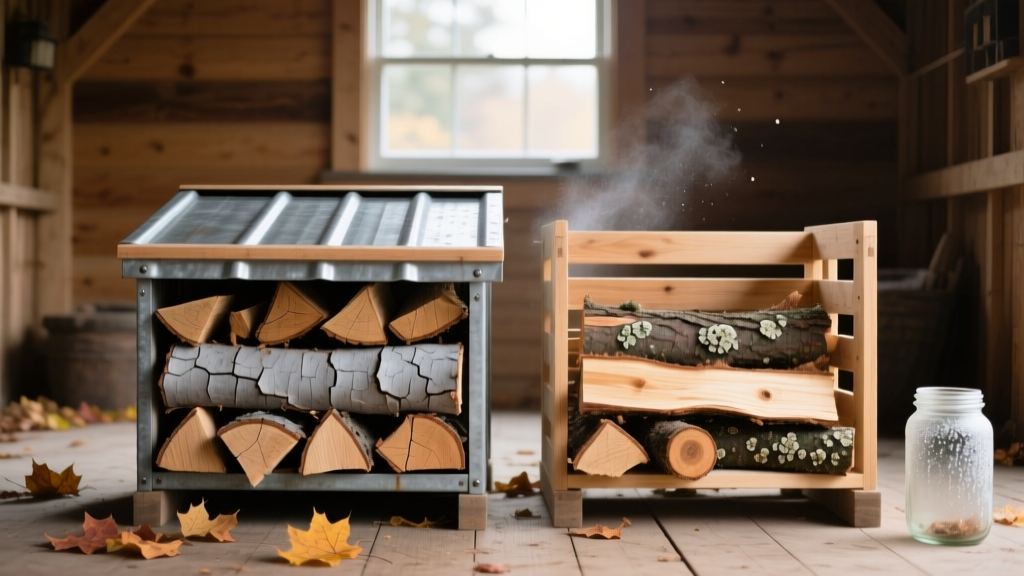
2026 Firewood Storage: Covered vs Open-Air Seasoning Guide
Anna KowalskiPublished
Designing Your Woodlot: Why Tree Selection Dictates Storage
When you plant a tree for future harvest, you are making a decision that will impact your homestead's infrastructure decades later. Selecting a White Oak versus a Paper Birch isn't just about the BTU output or the shade the canopy provides; it fundamentally dictates whether you need an open-air seasoning setup or a fully covered firewood storage rack. As we navigate the shifting climate patterns of 2026, with heavier spring rains and unpredictable autumn humidity in many hardiness zones, the way we cure our harvest is more critical than ever. The debate between covered and open-air firewood storage racks is deeply tied to the specific tree species you selected for your woodlot.
The Science of Green Moisture Content (GMC) by Tree Species
Before deciding on a storage method, you must understand the Green Moisture Content (GMC) of the trees you are planting and harvesting. GMC refers to the amount of water present in the wood immediately after felling. According to the EPA Burnwise program, firewood must be seasoned to a moisture content of 20% or less to burn efficiently and minimize harmful particulate emissions. However, the starting point varies wildly by species:
- Green Ash: Naturally low GMC (around 30-40%). Ash is unique because it can almost be burned green, but it seasons exceptionally fast.
- White Oak: High GMC (70-80%). Dense cellular structure means water is trapped deep within the heartwood, requiring extensive drying time.
- Paper Birch: Moderate GMC, but the waterproof bark traps moisture inside the log, making it highly susceptible to rot if not properly managed.
- Loblolly Pine: Very high GMC and sap content. Softwoods dry faster than hardwoods but are prone to blue-stain fungi if left exposed to damp conditions.
Open-Air Firewood Seasoning: The Sun and Wind Method
Open-air seasoning relies entirely on natural sunlight and wind circulation to draw moisture out of the split wood. This method involves stacking wood on a raised rack without any overhead canopy or tarp. In 2026, with advanced weather tracking allowing us to time our splits perfectly with dry spells, open-air seasoning remains a highly effective, low-cost method—but only for the right tree species.
Best Tree Species for Open-Air Racks
Open-air racks are best suited for rot-resistant woods and species with naturally low GMC. Green Ash and Cedar are prime candidates. Because Ash dries so quickly, it often reaches the 20% moisture threshold before autumn rains begin, even when left completely exposed. Furthermore, woods with natural rot-resistant properties, like Black Locust or Red Cedar, can withstand months of open-air exposure without degrading or developing fungal rot.
Pros and Cons of Open-Air Seasoning
The primary advantage of open-air seasoning is maximum airflow. Without a cover, the sun hits the wood directly, and wind passes through the stack unimpeded, accelerating the evaporation process. It is also significantly cheaper, requiring only a basic steel rack. However, the downside is vulnerability. A sudden, unseasonal week of rain in late summer can re-wet the outer layers of your stack, setting your seasoning timeline back by months.
Covered Firewood Storage Racks: The Climate-Controlled Approach
Covered firewood racks feature a roof—either a built-in metal canopy, a heavy-duty tarp, or a permanent wooden shed structure. The sides remain open to allow lateral airflow, but the top is shielded from precipitation. In 2026, as regional weather models show increased late-summer humidity in the Northeast and Midwest, covered racks have become the gold standard for homesteaders growing high-moisture hardwoods.
Best Tree Species for Covered Racks
If your woodlot consists of Paper Birch, Sugar Maple, or White Oak, a covered rack is practically mandatory. Birch bark acts like a raincoat; if water gets into the stack and the bark traps it, the wood will rot from the inside out within a single season. Oak takes up to two years to fully season, meaning the stack will inevitably sit through multiple rainy seasons and snowfalls. A cover ensures that only the drying power of the wind is acting on the wood, without the constant re-wetting from above.
Pros and Cons of Covered Storage
The main benefit is predictability. Once the wood is under a cover, you are insulated from rain, snow, and ice, ensuring a steady, uninterrupted drying curve. It also keeps the wood cleaner and ready to burn straight from the rack. The drawback is cost and airflow restriction. A well-engineered covered rack with a powder-coated steel roof costs significantly more than a basic open-air cradle. Additionally, if the cover overhangs too far, it can restrict vertical airflow, slowing down the seasoning process.
2026 Comparison Chart: Covered vs. Open-Air Seasoning
| Feature | Open-Air Rack | Covered Rack |
|---|---|---|
| Best Tree Species | Ash, Black Locust, Cedar | Oak, Birch, Maple, Pine |
| Average Cost (8ft Rack) | $60 - $120 | $180 - $350+ |
| Moisture Reduction Rate | Fast (if dry climate) | Steady and predictable |
| Rain/Snow Protection | None | Excellent |
| Airflow Dynamics | 360-degree exposure | Lateral only (requires spacing) |
| Ideal Climate Zones | Arid, Mediterranean, Dry-Summer | Humid, Continental, Marine |
Best 2026 Firewood Rack Materials for Longevity
When investing in a firewood rack, the material you choose must withstand the elements and the heavy, shifting weight of drying timber. In 2026, the market has shifted away from cheap, tubular steel that rusts after two winters. Look for hot-dipped galvanized steel or powder-coated structural steel with a minimum gauge thickness of 12-gauge. For covered racks, polycarbonate roofing panels have replaced heavy canvas tarps, offering UV resistance and structural integrity against heavy snow loads without blocking the aesthetic of your garden or outdoor living space.
Pest Management and the 'Don't Move Firewood' Rule
Tree selection and storage also intersect with vital ecological responsibilities. As noted by the experts at Don't Move Firewood, transporting unseasoned firewood is one of the primary vectors for invasive forest pests like the Emerald Ash Borer and the Asian Longhorned Beetle. When you harvest trees from your own property, you must store them locally. Covered racks offer a slight advantage in pest management; by keeping the wood dry and elevated, you discourage the damp, decaying environments that attract carpenter ants and wood-boring beetles. Always elevate your rack at least six inches off the ground using composite lumber or steel feet to prevent ground-dwelling pests from migrating into your stack.
Monitoring Moisture with 2026 Smart Meters
Regardless of whether you choose a covered or open-air rack, you cannot rely on visual cues alone to determine if your wood is ready for the stove. The outer layers of a split log may feel bone dry while the core remains saturated. In 2026, Bluetooth-enabled smart moisture meters allow you to track the internal moisture content of your woodpile directly from your smartphone. By inserting the dual probes deep into a freshly split piece of Oak or Birch, you can log the drying curve over time, ensuring you only burn wood that has achieved the critical 20% moisture threshold.
Conclusion
Ultimately, the choice between a covered and open-air firewood storage rack is not a matter of personal preference, but a direct extension of your tree selection and planting strategy. If you have planted a woodlot of fast-drying Ash and rot-resistant Locust, an open-air rack will serve you beautifully, saving you money and maximizing solar exposure. However, if your homestead relies on the high-BTU, slow-drying hardwoods like Oak and Birch, investing in a high-quality covered rack is essential to protect your harvest from the elements and ensure a clean, efficient burn for years to come.
