Lawn Care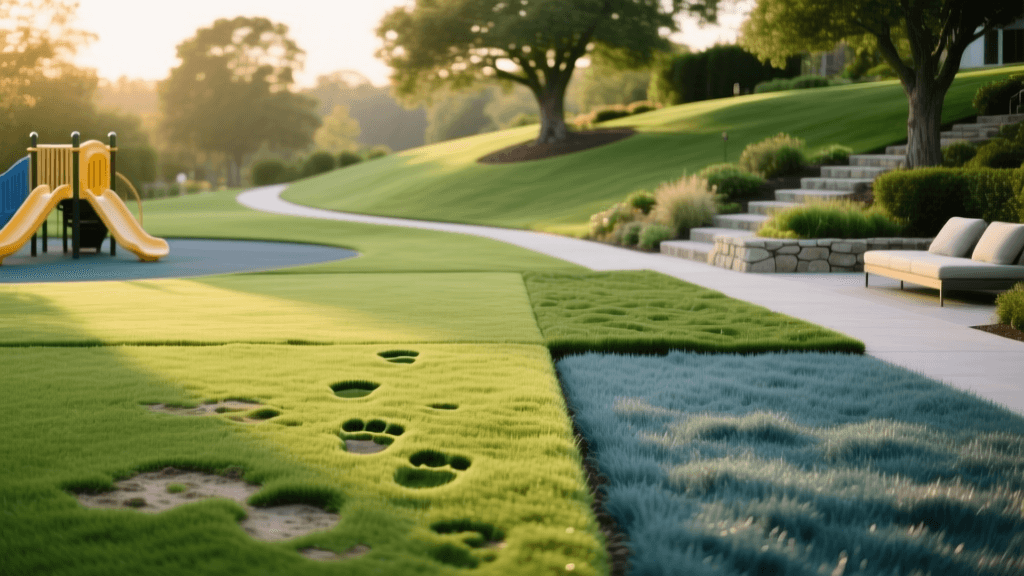
Designing Functional Lawn Zones: Planning and Grass Selection
The Philosophy of Functional Lawn Zoning
When approaching landscape design, homeowners often focus heavily on garden beds, patios, and ornamental trees, treating the lawn as a mere afterthought or a blank canvas to be filled later. However, from a professional design and planning perspective, your turfgrass is the foundational element of your outdoor living space. A well-planned lawn dictates how people move through your property, where children and pets play, and how much weekend maintenance you will endure. Designing functional lawn zones is the strategic process of dividing your yard into specific areas based on their intended use, sunlight exposure, and foot traffic, then matching those zones with the most appropriate grass species and hardscaping materials.
According to the University of Minnesota Extension, successful landscape planning begins with a thorough site inventory and an understanding of how your family interacts with the outdoor space. By mapping out these functional zones before you purchase a single bag of seed or lay a single pallet of sod, you can save thousands of dollars in future renovations and drastically reduce your long-term water and fertilizer inputs.
Step 1: Site Analysis and Microclimate Mapping
Before drawing a single line on your landscape plan, you must understand your site's unique microclimates. A functional design relies on working with your environment, not against it. Spend a weekend observing your yard and noting the following critical data points:
- Sunlight Tracking: Most turfgrasses require a minimum of six to eight hours of direct sunlight to thrive. Map out areas that receive full sun, partial shade (four to six hours), and heavy shade (less than four hours). Heavy shade zones under mature oak or maple trees are often better suited for groundcovers or mulch beds rather than struggling turf.
- Drainage and Topography: Observe your yard during a heavy rainstorm. Identify low spots where water pools and slopes where runoff accelerates. Poor drainage zones will require grading, the installation of French drains, or the selection of moisture-tolerant grass varieties.
- Soil Testing: Never plan a lawn renovation without a comprehensive soil test. Send samples to a laboratory like Waypoint Analytical or your local university extension (typically costing between $20 and $30). The results will dictate your baseline amendments, such as applying pelletized lime to raise pH or elemental sulfur to lower it.
Step 2: The Three-Zone Landscape Design Model
Landscape architects frequently utilize the 'Three-Zone Model' to organize outdoor spaces efficiently. Applying this model to your lawn care plan ensures that you are not over-investing time and money into areas that do not require premium turf.
1. The Public Zone (Front Yard and Entrances)
This is the face of your home, visible to neighbors and passersby. The primary function here is curb appeal and aesthetic framing. Traffic is generally low, meaning you can prioritize fine-textured, visually striking grasses over extreme durability. This zone is also where you might invest in premium sod for instant gratification rather than waiting for seed to establish.
2. The Private Zone (Backyard and Recreation Areas)
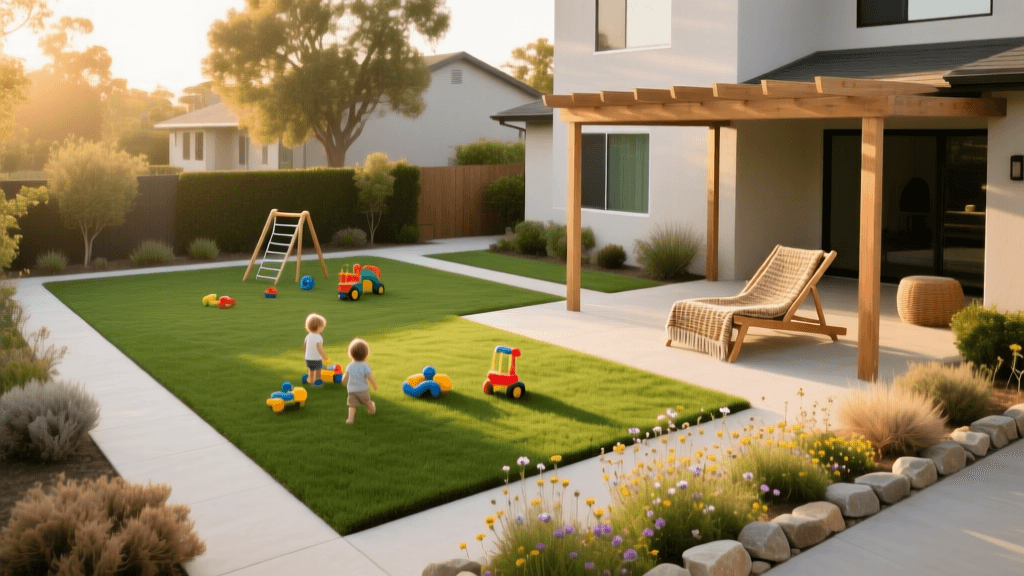
The private zone is your outdoor living room. It experiences the highest foot traffic from children, pets, and outdoor entertaining. This zone requires aggressive, wear-tolerant grass species that can recover quickly from damage. It is also the ideal location for integrating functional hardscaping, such as a stone fire pit patio or a dining area, which reduces the total square footage of high-maintenance turf.
3. The Service Zone (Utility and Perimeter Areas)
Often located on the side yards or far back corners, the service zone houses air conditioning units, compost bins, and tool sheds. These areas are frequently shaded and experience very little foot traffic. From a design perspective, this is the perfect place to implement low-maintenance groundcovers, native wildflower meadows, or shade-tolerant, slow-growing fescues that require minimal mowing and fertilization.
Step 3: Matching Grass Species to Functional Zones
Selecting the right grass is the most critical decision in your landscape plan. The Penn State Extension emphasizes that turfgrass species selection must align with the specific environmental conditions and intended use of the site. Below is a comparison chart to help you match grass types to your designated lawn zones.
| Grass Type | Best Functional Zone | Traffic Tolerance | Maintenance Level | Est. Seed Cost (per lb) |
|---|---|---|---|---|
| Kentucky Bluegrass | Public / Private | High (Spreads via rhizomes) | High (Requires frequent water/fertilizer) | $8.00 - $12.00 |
| Tall Fescue | Private / Transition | High (Deep root system) | Medium (Drought tolerant) | $4.00 - $6.00 |
| Fine Fescue | Service / Shade Zones | Low (Thin blades) | Low (Requires less mowing) | $6.00 - $9.00 |
| Bermudagrass | Private / Sports Areas | Very High (Aggressive recovery) | High (Needs full sun and frequent mowing) | $10.00 - $15.00 |
| Zoysiagrass | Public / Private | Medium-High (Dense mat) | Medium (Slow growing, low water needs) | $15.00 - $25.00 |
For a blended approach in the Private Zone, consider a mix like Jonathan Green Black Beauty Ultra, which combines Kentucky Bluegrass for spreading and healing with Tall Fescue for deep drought resistance. In the Service Zone, a creeping red fescue blend will thrive in the shade and require mowing only a few times a season.
Step 4: Designing Circulation Paths and Hardscape Transitions
A functional lawn design must account for human behavior. People naturally take the shortest path between two points, creating unsightly 'desire lines' of compacted, dead soil. To prevent this, plan intentional circulation paths during the design phase.
Instead of forcing a 90-degree angle around a garden bed, use sweeping, organic curves that mimic natural movement. For high-traffic shortcuts, install hardscaping materials that complement the turf. Flagstone or bluestone stepping stones set directly into the turf (costing roughly $15 to $25 per square foot installed) allow for easy mowing while protecting the grass from compaction. Alternatively, decomposed granite or cedar mulch paths (costing $2 to $4 per square foot) provide excellent drainage and a natural aesthetic that transitions beautifully into the service zone.
When transitioning from turf to garden beds, install steel or poly landscape edging. This creates a crisp, professional boundary that prevents aggressive grasses like Bermudagrass from invading your ornamental beds, while also reducing the time spent string-trimming.
Step 5: Budgeting Your Lawn Design Project
Proper planning allows you to allocate your budget where it matters most. Here is a general cost breakdown to help you plan your financial investment:
- Premium Sod (Public Zone): $0.50 to $1.50 per square foot. Best for front yards where immediate curb appeal and erosion control are necessary.
- High-Quality Seed (Private Zone): $0.05 to $0.15 per square foot. Ideal for large backyards. Remember to budget an additional $0.10 per square foot for starter fertilizer (like Scotts Turf Builder Starter Food) and straw mulch.
- Soil Amendments: Budget $50 to $100 per 1,000 square feet for organic matter like compost or specialized organic fertilizers like Milorganite to build long-term soil biology.
- Irrigation Planning: If your design includes large sun-drenched zones, factor in the cost of an automated smart irrigation system (approx. $3,000 to $5,000 for a standard suburban lot) to ensure uniform watering without waste.
Sustainable Planning and Water Efficiency
Modern landscape design heavily emphasizes sustainability and resource conservation. The EPA WaterSense program recommends 'hydrozoning'—grouping plants and turf areas with similar water needs together. By confining your high-water-demand Kentucky Bluegrass to the highly visible Public Zone, and utilizing drought-tolerant Tall Fescue or native landscaping in the periphery, you can reduce your outdoor water usage by up to 50%.
'A well-designed landscape not only makes your home look beautiful but can also save water, time, and money when maintained properly.' - EPA WaterSense Landscape Design Guidelines
Ultimately, designing functional lawn zones transforms your yard from a high-maintenance chore into a structured, usable, and ecologically balanced environment. By taking the time to analyze your site, divide your space into purposeful zones, and select the correct turfgrass and hardscaping materials, you are setting the stage for a lawn that looks spectacular and performs flawlessly for decades to come.