Lawn Care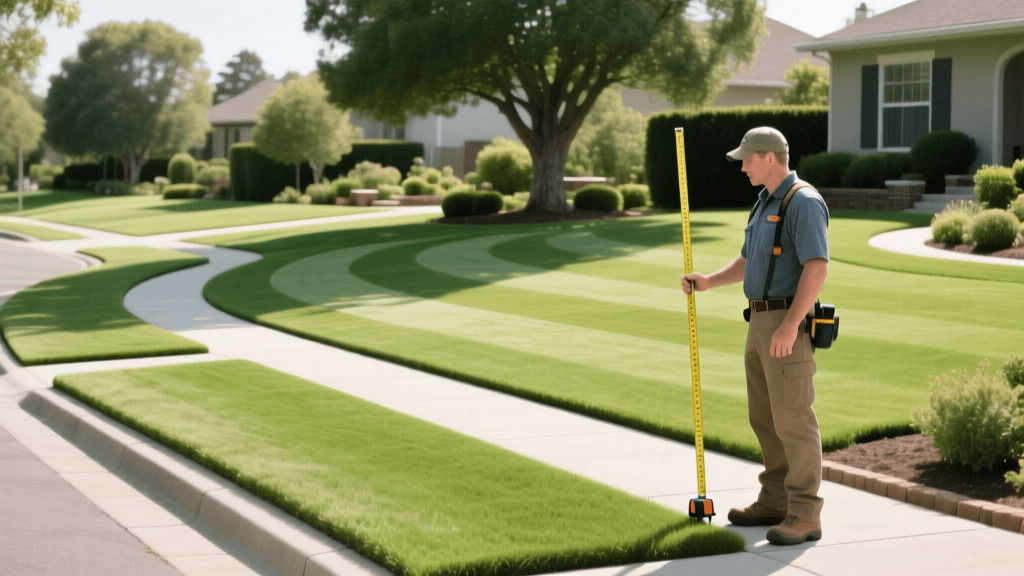
Designing Lawn Shapes and Borders for Efficient Mowing
The Intersection of Landscape Design and Lawn Care
Most homeowners view lawn care and landscape design as two entirely separate disciplines. You hire a designer to install the garden, and then you spend your weekends maintaining it. However, the most successful landscapes are born from a deep understanding of how design choices directly impact long-term maintenance. If you are spending more time with a string trimmer than behind the wheel of your mower, or if your turf is constantly damaged along the edges of your flower beds, the problem likely isn't your lawn care routine—it is your landscape design.
By strategically planning your lawn shapes, curves, and borders, you can drastically reduce the time and physical effort required for weekly maintenance. According to the Clemson University Home & Garden Information Center, designing for low maintenance begins with simplifying lawn areas and creating clear, manageable boundaries between turf and planting beds. This guide will walk you through the principles of designing a lawn that is not only visually stunning but also engineered for maximum mowing efficiency.
The Hidden Cost of Poor Lawn Shapes
Every time your mower cannot reach the edge of your turf, you are forced to deploy a string trimmer or manual edger. While a standard push mower boasts a cutting deck of about 21 to 22 inches, a string trimmer only cuts a 14-inch swath. This means trimming takes significantly longer per linear foot than mowing. Furthermore, improper lawn shapes force you to make multi-point turns, back up, and maneuver around tight obstacles, which leads to soil compaction and turf tearing.
Narrow grass corridors—often found between a house foundation and a fence, or winding through fragmented garden beds—are notorious time-wasters. If a grassy area is less than 3 feet wide, a standard mower cannot navigate it without the wheels dropping into the adjacent mulch bed or crushing bordering plants. Eliminating these narrow strips and consolidating your turf into sweeping, unified zones is the first step in an efficient lawn redesign.
Designing the 'Zero-Trim' Perimeter
The ultimate goal of functional lawn design is the 'zero-trim' perimeter. This concept involves installing hardscape or softscape borders that allow the wheels of your mower to hang slightly off the edge of the grass, cutting the turf flush against the boundary without the blade striking the soil or the barrier. Here are the most effective methods to achieve this:
1. Concrete Mowing Strips and Paver Borders
Installing a flush mowing strip is the gold standard for landscape edging. Using 6x6 inch or 8x8 inch concrete pavers (such as Belgard Holland Stones) laid flush with the soil grade creates a permanent, durable track for your mower wheels.
- Measurements: The strip should be at least 12 inches wide to accommodate the full width of a mower wheel track, or a minimum of 6 inches if you only need to hang one wheel off the edge.
- Installation Depth: Excavate 4 to 5 inches of soil, lay a 2-inch base of compacted crushed gravel, and set the pavers so their top surface is exactly 0.5 inches below the soil grade. This 'reveal' allows the grass to grow over the edge slightly, hiding the hardscape while the mower blade cuts cleanly above it.
- Cost Estimate: $3.00 to $5.50 per linear foot, depending on local material costs.
2. Heavy-Duty Steel Landscape Edging
If curves prevent the use of rigid pavers, commercial-grade steel edging (like Col-Met or Dimex EasyFlex) is an excellent alternative. Unlike cheap plastic edging that heaves and cracks after a single freeze-thaw cycle, steel edging provides a rigid, invisible barrier.
- Measurements: Use 5-inch tall steel edging. Drive it into the ground so that 4 inches are buried and 1 inch remains above the soil line.
- Cost Estimate: $4.00 to $7.00 per linear foot.
3. The Mulch Buffer Zone
For areas around trees or deep garden beds, create a 3-foot-wide mulch buffer. Trees with grass growing right up to their trunks suffer from 'mower blight'—bark damage caused by string trimmers. A wide mulch ring eliminates the need to trim around the tree entirely and protects the root zone.
Rethinking Lawn Curves and Angles
The geometry of your lawn dictates your mowing pattern. Sharp, acute angles (less than 90 degrees) and erratic S-curves are the enemies of efficiency. When a mower enters an acute corner, the deck cannot reach the tip of the grass, leaving a tuft that must be manually trimmed. Furthermore, turning a riding mower or zero-turn in a tight corner tears the turf roots, leading to brown, dead spots by mid-summer.
According to research from the University of Minnesota Turfgrass Science program, maintaining healthy turf requires minimizing mechanical stress and compaction. To achieve this, apply the Mower Deck Rule: every curve in your landscape bed must have an inside radius that is at least 6 inches wider than your mower deck. If you use a 42-inch riding mower, your curves should have a minimum radius of 48 inches. This allows you to drive smoothly along the edge in a single, continuous motion without executing jarring multi-point turns.
To fix existing acute corners, use the 'bite' technique. Instead of forcing the lawn into a sharp 45-degree point where two fences meet, carve out a gentle, sweeping curve that rounds off the corner, and fill the resulting void with low-maintenance ground cover, river rock, or a structural shrub.
Strategic Hydrozoning and Turf Placement
Designing an efficient lawn also means knowing where not to plant grass. The EPA WaterSense program heavily advocates for hydrozoning—grouping plants with similar water and sunlight needs together. Planting high-maintenance turfgrass in deep shade or heavy traffic corridors guarantees failure and endless reseeding.
When planning your lawn zones, match the turf species to the functional demands and microclimates of your yard. Below is a planning chart to help you assign the right grass to the right design zone:
| Grass Type | Traffic Tolerance | Ideal Design Placement | Optimal Mowing Height |
|---|---|---|---|
| Kentucky Bluegrass | High | Front yards, open play areas, full sun zones | 2.0 - 3.0 inches |
| Tall Fescue | Moderate to High | Transition zones, areas with partial shade | 3.0 - 4.0 inches |
| Bermudagrass | Very High | High-traffic paths, sports areas, full sun | 1.0 - 2.0 inches |
| Fine Fescue | Low | Shaded borders, ornamental low-traffic zones | 3.0 - 4.0 inches |
Step-by-Step Lawn Redesign Plan
Ready to transform your high-maintenance yard into an efficient, beautifully structured landscape? Follow this actionable redesign plan:
Step 1: The Hose Test (Visualization)
Before digging a single trench, use 100-foot lengths of flexible garden hose to lay out your new lawn boundaries. Avoid S-curves; aim for long, sweeping arcs. Walk the path with your mower (engine off) to ensure the turns feel natural and that the mower deck doesn't overlap into the future garden beds.
Step 2: Marking and Trenching
Once you are satisfied with the hose layout, use marking paint to trace the line. Remove the hose and use a sharp half-moon edger to cut through the turf. For new planting beds, excavate the turf to a depth of 3 inches. For mowing strips, dig a trench 5 inches deep and 12 inches wide.
Step 3: Installing the Hardscape Barrier
Install your chosen edging material. If using steel edging, overlap the joints by 6 inches and secure them with heavy-duty steel stakes driven flush with the top of the edging. If using pavers, ensure a consistent 0.5-inch drop below the soil grade using a string line and a line level.
Step 4: Soil Amendment and Grading
Backfill the edges with topsoil, ensuring the soil slopes gently away from the hardscape border to prevent water from pooling against your home's foundation or washing out your mulch beds. Seed or sod the newly shaped lawn area during the optimal season—early fall for cool-season grasses, and late spring for warm-season varieties.
Conclusion
Designing your lawn with maintenance in mind is one of the highest-return investments you can make in your property. By eliminating acute angles, installing flush mowing strips, and strategically hydrozoning your turf, you reclaim hours of your weekend. A well-planned lawn doesn't just look more professional and intentional; it fosters healthier grass by reducing mechanical stress and soil compaction. Take the time to plan your shapes and borders today, and enjoy a flawless, low-effort landscape for years to come.