Lawn Care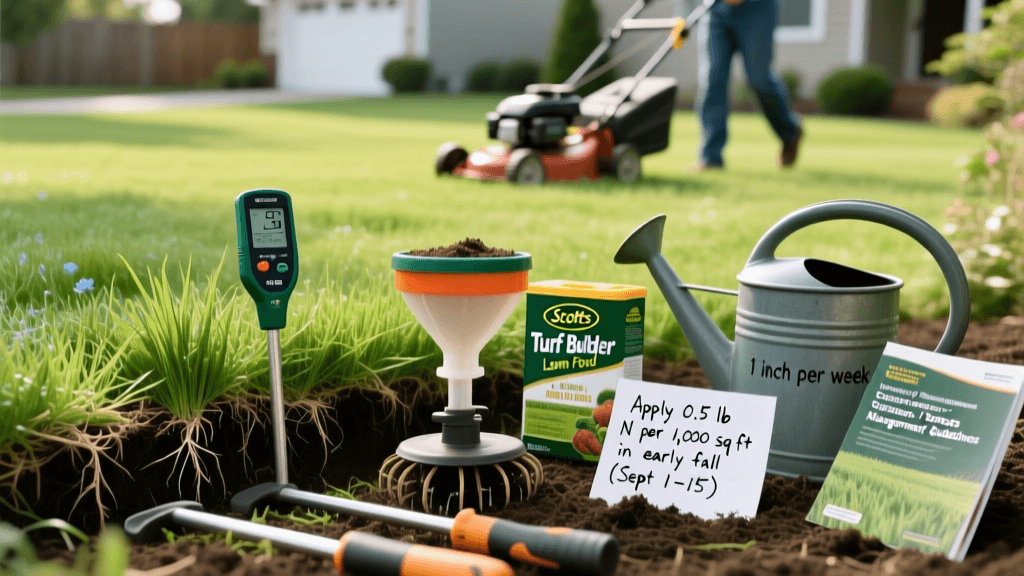
Diagnose And Treat Lawn Thatch Buildup
What Is Thatch—and Why It Matters for Your Lawn
Thatch is a tightly interwoven layer of living and dead organic matter—primarily stems, stolons, rhizomes, and roots—that accumulates between the green vegetation of your lawn and the soil surface. Contrary to common misconception, thatch is not composed of grass clippings; mowed clippings decompose rapidly when left on healthy turf. True thatch forms when organic input exceeds microbial decomposition rates—a process heavily influenced by soil pH, moisture, temperature, and microbial activity. A thin thatch layer (¼–½ inch) can benefit cool-season lawns by insulating soil and reducing evaporation. But when thickness exceeds ¾ inch, it impedes water infiltration, restricts gas exchange, harbors pests like grubs and chinch bugs, and creates an ideal environment for fungal pathogens such as Microdochium nivale (snow mold).
Thatch accumulation varies significantly by grass species and management practices. Kentucky bluegrass (Poa pratensis) and creeping bentgrass (Agrostis stolonifera) are especially prone due to their dense, below-ground growth habit and slow lignin decomposition. In contrast, tall fescue (Festuca arundinacea) and perennial ryegrass (Lolium perenne) typically develop less than 0.3 inches of thatch over five years under balanced fertility and irrigation.
Diagnosing Thatch: Simple Field Tests and Measurement Protocols
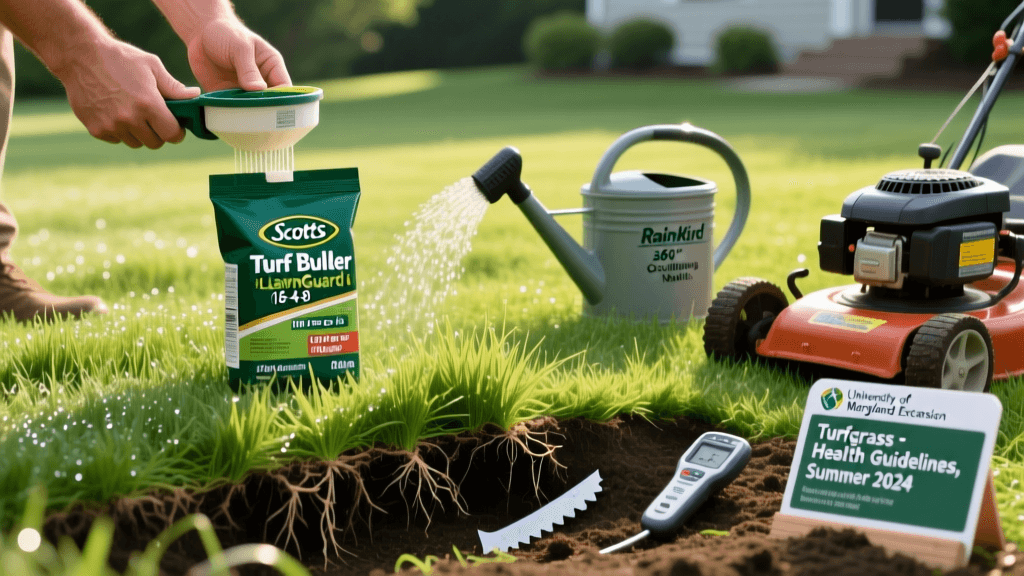
Accurate diagnosis begins with physical assessment—not visual estimation. Use a sharp spade or soil probe to extract a 4-inch-deep core sample from multiple locations across your lawn, especially in areas showing drought stress or poor response to fertilizer. Measure thatch thickness with calipers or a ruler: insert the tool vertically at the interface between green grass and soil. Record measurements from at least six cores per 1,000 sq. ft. If average thickness exceeds 0.75 inches, mechanical dethatching is warranted.
University of Minnesota Extension recommends testing soil pH concurrently, since microbial decomposition slows sharply below pH 5.8. At Michigan State University’s Turfgrass Research Center, trials showed that soils with pH 5.2 required 37% longer to break down thatch compared to plots adjusted to pH 6.5 using calcitic limestone (MSU Extension, 2021). Similarly, Purdue University Cooperative Extension reports that soils with >18% clay content retain thatch 2.3× longer than loamy sands due to reduced oxygen diffusion (Purdue Extension, 2020).
Seasonal Timing for Assessment
Conduct core sampling twice yearly: once in early spring (late March to mid-April in USDA Zone 5–6) and again in early fall (mid-August to early September). Avoid summer assessment during heat stress, as dehydration artificially compresses thatch layers. In warm-season regions like Atlanta, GA, schedule evaluations after full green-up but before peak summer temperatures—typically late April to early May.
Mechanical Dethatching: Tools, Techniques, and Calibration
For lawns with ≥0.75 inches of thatch, vertical mowing (verticutting) remains the most effective intervention. Use a power rake with adjustable tine depth—set tines to penetrate ¼ inch into the soil. For Kentucky bluegrass lawns in Ohio, Purdue researchers found optimal results using a Ryan® AutoRake® set to 0.25-inch depth, operated at 2.5 mph, achieving 92% thatch removal without damaging >5% of crowns (Purdue Extension, 2020). Repeat passes increase injury risk; limit to one pass per season unless severe buildup persists.
Manual dethatching rakes work for small areas (<500 sq. ft.) but require consistent 1.5-inch tine spacing and downward pressure sufficient to lift material without gouging soil. Never dethatch during drought or when soil moisture is below 12% volumetric water content—as measured by a calibrated TDR sensor.
Post-Dethatching Recovery Protocol
- Immediately aerate using a core aerator with 0.75-inch tines spaced 2 inches apart, removing 20–40 cores per sq. ft.
- Apply 0.5 lb N per 1,000 sq. ft. using slow-release nitrogen (e.g., sulfur-coated urea at 38% N) within 48 hours.
- Water deeply to 6 inches depth—but only once every 3 days—to encourage root regeneration without promoting fungal growth.
Nutrient Management Strategies to Prevent Recurrence
Over-fertilization—especially with quick-release nitrogen—is the leading preventable cause of excessive thatch. Apply no more than 1.0 lb N per 1,000 sq. ft. per growing season for Kentucky bluegrass in northern climates. Use split applications: 0.5 lb in early September and 0.5 lb in late October. Avoid spring-only applications, which boost shoot growth while suppressing root development and microbial activity.
Phosphorus restriction also matters. Soil tests revealing >30 ppm Bray-1 P correlate strongly with reduced actinomycete populations—the microbes most efficient at lignin breakdown. In Wisconsin field trials, plots receiving zero phosphorus maintained 40% higher microbial biomass than those receiving 1.5 lb P₂O₅/1,000 sq. ft. annually (University of Wisconsin-Madison, 2019).
Consider biological supplements only where soil biology is demonstrably impaired. The product Thatch Away™ (containing Bacillus licheniformis and Cellulomonas flavigena) applied at 1 quart per 5,000 sq. ft. every 28 days increased thatch decomposition by 22% over controls in replicated trials at Rutgers University’s Turf Research Facility (Rutgers NJAES, 2022).
Irrigation and Mowing Adjustments That Reduce Thatch Accumulation
Watering frequency and depth directly affect microbial respiration. Frequent shallow irrigation (<15 minutes daily) saturates the upper 1 inch of soil, lowering redox potential and suppressing aerobic decomposers. Instead, irrigate deeply to 6 inches every 4–7 days depending on evapotranspiration rates. In central Indiana, ET data from Purdue’s Indiana Climate Office shows that scheduling irrigation based on soil moisture sensors reduces thatch accumulation by 31% over three years compared to calendar-based watering.
Mowing height plays a critical role. Maintain cool-season grasses at 3.0–3.5 inches during active growth. Lowering height to 2.0 inches—even temporarily—reduces photosynthetic capacity by 44%, limiting carbohydrate allocation to roots and soil microbes (Ohio State University Extension, 2021). For warm-season lawns like ‘Tifway’ bermudagrass (Cynodon dactylon × transvaalensis), keep height at 1.0–1.5 inches year-round; this promotes lateral density without encouraging vertical stem elongation.
Recommended Cultural Practices by Grass Species
“Thatch control is less about removal and more about creating conditions where nature does the work. Consistent mowing height, appropriate nitrogen timing, and infrequent deep irrigation shift the soil microbiome toward decomposition-dominant communities.” — Dr. Becky S. Smith, Turfgrass Pathologist, University of Georgia
| Grass Species | Max Acceptable Thatch (in) | Preferred Mowing Height (in) | Annual N Rate (lb/1000 sq ft) | Optimal Dethatching Window |
|---|---|---|---|---|
| Kentucky bluegrass | 0.75 | 3.0–3.5 | 1.0–2.0 | Early Sept (Northern US) |
| Tall fescue | 0.50 | 3.5–4.0 | 1.0–1.5 | Early Sept or Late Apr |
| Bermudagrass | 0.60 | 1.0–1.5 | 2.0–4.0 | Early May (post-greenup) |
Soil aeration should occur annually for high-thatch-risk species—ideally in early fall for cool-season grasses and immediately after green-up for warm-season varieties. Use hollow-tine aerators removing 0.75-inch diameter cores spaced 2–3 inches apart. Leave cores on the surface; they decompose naturally within 7–10 days and reintroduce beneficial microbes into the thatch layer.
Finally, avoid routine use of fungicides unless disease is confirmed. Broad-spectrum products like chlorothalonil suppress saprophytic fungi essential for organic matter turnover. At the University of Massachusetts Amherst Turf Lab, plots treated monthly with azoxystrobin accumulated 0.42 inches more thatch over two seasons than untreated controls.
Consistent monitoring—not reactive treatment—is the cornerstone of sustainable thatch management. Track thickness quarterly using marked soil probes, record fertilization dates and rates in a digital log, and cross-reference local ET data from your state’s climate office. With disciplined observation and science-backed interventions, even historically problematic lawns can sustain healthy, functional thatch layers indefinitely.