
Landscaping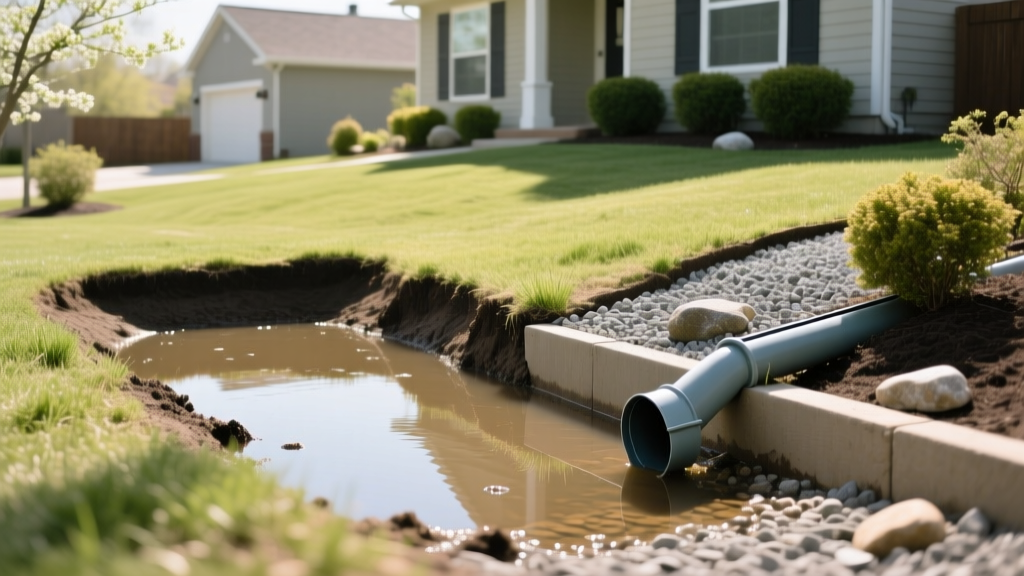
How to Diagnose and Fix Common Yard Drainage Issues
James MillerPublished
Identifying the Root Cause of Standing Water
Water is the lifeblood of your landscape, but when it pools, stagnates, or flows toward your foundation, it becomes a highly destructive force. Diagnosing yard drainage issues requires a systematic approach to identify whether the problem stems from surface grading, soil composition, or failing subsurface infrastructure. In this comprehensive troubleshooting guide, we will explore how to pinpoint the exact cause of your landscape drainage failures and implement targeted, cost-effective solutions to protect your property.
Before grabbing a shovel or purchasing materials, observe your yard during or immediately after a heavy rainstorm. Note where water enters the property, how it moves across the lawn, and where it ultimately pools. According to the Environmental Protection Agency (EPA), improper stormwater management not only damages residential foundations but also contributes to localized flooding and waterway pollution. Look for telltale signs such as mosquito breeding grounds, yellowing turfgrass (a sign of root rot from waterlogging), and efflorescence (white, chalky mineral deposits) on retaining walls or foundation concrete.
Performing a DIY Soil Percolation Test
If water stands in your yard for more than 24 hours after a rainfall, your soil may have a drainage problem. Clay-heavy soils or compacted hardpan layers prevent water from infiltrating the ground. To diagnose this, perform a simple percolation test:
- Dig a hole approximately 12 inches wide and 12 inches deep in the problem area.
- Fill the hole with water and let it drain completely. This pre-soaks the soil.
- Refill the hole with water and place a ruler in the center.
- Measure the water level drop every hour for three hours.
Ideally, water should drop between 1 and 6 inches per hour. If it drops less than 1 inch per hour, you have poorly draining soil that will require mechanical aeration, deep tilling with expanded shale, or the installation of subsurface drainage systems to bypass the impermeable layer.
Troubleshooting Surface Grading and Runoff
The most common cause of foundation water intrusion and landscape erosion is negative grading. Building codes and landscape architects universally recommend that the ground should slope away from your home at a minimum gradient of 5 percent. This translates to a 6-inch drop over the first 10 feet of horizontal distance from the foundation.
Fixing Negative Grading
If your lawn slopes toward the house, water will pool against the foundation, leading to hydrostatic pressure, basement leaks, and structural settling. To troubleshoot and fix this, you must regrade the soil. Do not simply dump loose topsoil against the foundation, as it will wash away and trap moisture against the siding. Instead, use a compactable fill dirt to establish the proper slope, cap it with 2 to 3 inches of quality topsoil, and immediately seed or lay sod to anchor the earth with root systems.
Managing Downspout Dumping
A standard 1,000-square-foot roof sheds over 600 gallons of water during a 1-inch rainstorm. If your gutter downspouts discharge directly at the foundation, no amount of grading will save your landscape. Extend downspouts at least 10 feet away from the house using solid PVC pipe or corrugated ADS tubing, terminating at a pop-up emitter or a dry well. For a cleaner look, install NDS Pro Series catch basins at the base of downspouts and run underground piping to a daylighted discharge point.
Diagnosing Subsurface Drainage Failures
If you already have a French drain or curtain drain installed but are still experiencing standing water, the system has likely failed. Subsurface drains fail for three primary reasons: clogged filter fabric, collapsed pipes, or improper slope.
A standard French drain relies on a perforated pipe surrounded by washed gravel, all wrapped in a non-woven geotextile fabric to prevent soil infiltration. Over time, if the fabric was omitted or if a cheap woven weed barrier was used instead of professional-grade drainage fabric, fine silt and clay particles will wash into the gravel and clog the pipe perforations. To troubleshoot, locate the drain's exit point (daylight). If water is not flowing during a rain event, use a plumbing snake or a high-pressure garden hose to flush the pipe. If the pipe is crushed under the weight of heavy landscaping equipment or tree roots, you will need to excavate and replace the damaged section using rigid Schedule 40 PVC or heavy-duty corrugated pipe.
Furthermore, a French drain must maintain a consistent downward slope of at least 1/8 inch per linear foot. If the trench was dug unevenly, water will pool inside the pipe and eventually back up into the yard.
Landscape Drainage Solutions Comparison Chart
Choosing the right intervention depends on your specific diagnosis. The table below compares the most effective landscape drainage solutions based on application, cost, and installation difficulty.
| Solution | Best Used For | Estimated Cost | DIY Difficulty |
|---|---|---|---|
| Surface Regrading | Foundation puddling, negative slope | $1 - $3 per sq. ft. | Moderate |
| French Drain | Subsurface water, high water tables | $20 - $35 per linear ft. | High |
| Dry Well | Downspout runoff, localized pooling | $200 - $600 per unit | Moderate |
| Rain Garden | Eco-friendly runoff management | $5 - $15 per sq. ft. | Low to Moderate |
| Channel Drain | Driveway runoff, hardscape edges | $30 - $50 per linear ft. | High |
Fixing Compacted Soil and Hardpan Layers
Sometimes the drainage issue is not about where the water goes, but how it interacts with the soil profile. In new construction, heavy machinery often compresses the subsoil, creating a hardpan layer that acts like concrete. Water pools on top of this layer, drowning turf roots.
To troubleshoot compacted soil, perform a core aeration across the entire lawn, pulling 3-inch plugs of soil. Follow this by top-dressing the lawn with a 1/4-inch layer of compost and expanded shale. Expanded shale is a lightweight, porous aggregate that permanently improves soil structure and increases water infiltration rates without altering the soil pH. According to research published by the University of Florida IFAS Extension, integrating organic matter and coarse aggregates into compacted urban soils significantly restores natural hydrological function and reduces surface runoff.
Implementing Sustainable Rain Gardens
If your yard suffers from widespread sheet flow and you have a low-lying area that naturally collects water, consider converting the problem zone into a rain garden. A rain garden is a shallow, planted depression designed to capture, filter, and slowly absorb stormwater. To build one, excavate a basin 6 to 8 inches deep and amend the native soil with a mix of 60 percent coarse sand, 20 percent compost, and 20 percent native topsoil. Plant deep-rooted, moisture-tolerant native species such as swamp milkweed, cardinal flower, or blue flag iris. The Federal Emergency Management Agency (FEMA) notes that integrating sustainable landscaping features like rain gardens and bioswales reduces the burden on municipal storm sewers and mitigates residential flood risks.
When to Call a Landscape Professional
While many drainage issues can be resolved with a weekend of hard work and a trip to the hardware store, some scenarios require professional intervention. You should hire a licensed landscape architect or a civil engineer if:
- Water is actively seeping into your basement or crawlspace despite surface grading corrections.
- Your property is located at the bottom of a steep hill or adjacent to a municipal drainage easement.
- You need to tie your private drainage system into a complex municipal storm sewer network, which often requires permits and engineered blueprints.
- You have large, mature trees in the yard, and trenching for a French drain risks severing critical structural roots.
By methodically diagnosing the source of your yard's water issues—whether it is a failing percolation rate, negative grading, or a clogged subsurface pipe—you can implement the exact right solution. Proper landscape drainage not only protects your home's structural integrity but also creates a healthier, more resilient environment for your turf, garden beds, and hardscaping investments.

