Lawn Care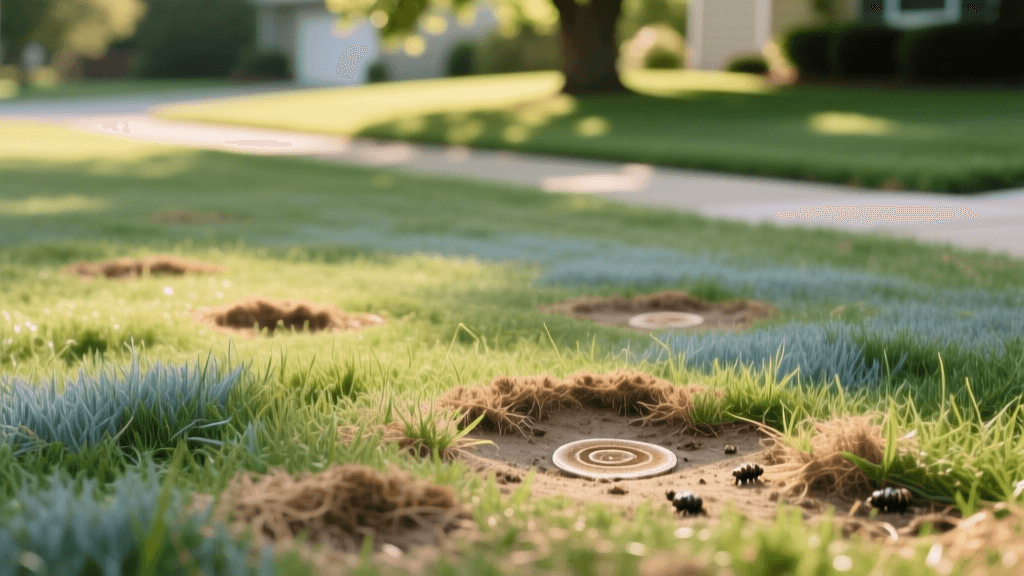
How to Diagnose and Treat Brown Patches in Cool-Season Lawns
The Frustration of Unexplained Brown Patches
Homeowners who invest significant time, money, and sweat equity into cultivating lush, cool-season lawns—such as Kentucky Bluegrass, Tall Fescue, and Perennial Ryegrass—often face a common and frustrating adversary: the sudden appearance of brown patches. While a uniform golden-brown lawn in the dead of winter is a natural dormancy response, erratic, circular, or irregular brown spots during the spring, summer, or early fall signal an underlying problem. Misdiagnosing the issue can lead to wasted money on the wrong treatments, exacerbating the damage and leaving your turf vulnerable to invasive weeds.
To effectively troubleshoot brown patches, you must play the role of a turfgrass detective. The three most common culprits behind localized brown spots in cool-season lawns are drought stress, subterranean grub damage, and fungal diseases like Brown Patch (Rhizoctonia solani). This comprehensive guide will walk you through the exact diagnostic steps, provide a comparison chart, and outline actionable treatment plans complete with product recommendations, application rates, and cost estimates.
Step 1: The 'Tug Test' and Visual Inspection
Before purchasing any chemicals or adjusting your irrigation system, you must perform a physical inspection of the affected turf. The most reliable field test for diagnosing root-zone issues is the 'Tug Test'.
- How to perform it: Walk to the edge of a brown patch where the dying grass meets the healthy green grass. Grab a handful of the brown turf at the base and pull upward with moderate, steady pressure.
- If the grass pulls up easily like a loose carpet: The root system has been severed or consumed. This is a massive red flag for grub damage or severe animal foraging.
- If the grass resists and breaks at the blade or crown: The roots are firmly anchored in the soil. This points toward drought stress, dormancy, or a foliar fungal disease.
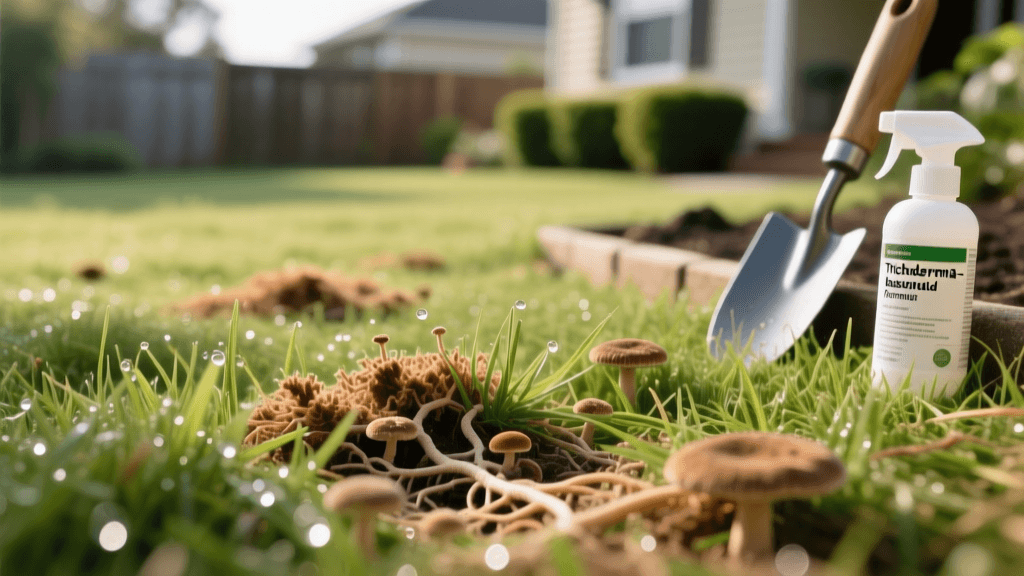
Next, inspect the individual leaf blades. Look for distinct lesions, dark borders, or a cobweb-like mycelium in the early morning dew, which are hallmark signs of fungal pathogens.
Step 2: Drought Stress vs. Natural Dormancy
Cool-season grasses thrive in temperatures between 60°F and 75°F. When summer temperatures consistently exceed 85°F and rainfall is scarce, these grasses will naturally enter a state of dormancy to protect their crowns. However, localized drought stress can occur due to poor soil compaction, hydrophobic thatch layers, or uneven sprinkler coverage.
According to Wisconsin Horticulture, allowing a lawn to enter dormancy is a valid survival strategy, but foot traffic on dormant grass can cause severe crown damage, leading to permanent dead zones. Drought-stressed grass will often exhibit a bluish-gray tint before turning brown, and your footprints will remain visible on the turf long after you step off it because the leaves lack the turgor pressure to bounce back.
Step 3: Grub Damage: The Root Eaters
White grubs are the larval stage of various scarab beetles, including Japanese Beetles, June Bugs, and European Chafers. These C-shaped, cream-colored larvae live just beneath the soil surface and feed aggressively on the fibrous roots of cool-season grasses.
The University of Minnesota Extension notes that a healthy lawn can typically tolerate a few grubs, but populations exceeding 5 to 10 grubs per square foot will cause visible brown patches. A secondary, yet highly reliable, diagnostic sign of grubs is the presence of secondary predators. If you notice that skunks, raccoons, or flocks of crows and starlings have been digging up and peeling back your lawn like a rug to feast on the larvae, you almost certainly have a grub infestation.
Step 4: Fungal Diseases: Brown Patch and Dollar Spot
Fungal diseases thrive in specific microclimates, typically characterized by high humidity, poor air circulation, and prolonged leaf wetness. Brown Patch is the most notorious summer disease for Tall Fescue and Perennial Ryegrass. According to Penn State Extension, Brown Patch becomes highly active when nighttime temperatures remain above 65°F and the grass stays wet for 10 to 12 hours.
Visually, Brown Patch appears as circular patches ranging from 6 inches to several feet in diameter. In the early morning, you may observe a dark, smoke-colored ring (the 'smoke ring') at the perimeter of the patch. Upon closer inspection of the individual grass blades, you will see tan-colored lesions with dark brown borders. Dollar Spot presents similarly but forms much smaller patches (about the size of a silver dollar) and features distinct hourglass-shaped lesions on the leaf blades.
Comparison Chart: Identifying the Culprit
Use this diagnostic table to quickly cross-reference your lawn's symptoms and narrow down the cause of the brown patches.
| Diagnostic Feature | Drought Stress / Dormancy | Grub Damage | Brown Patch (Fungal) |
|---|---|---|---|
| The Tug Test | Grass resists; roots hold firm | Grass pulls up easily; no roots | Grass resists; roots hold firm |
| Leaf Blade Appearance | Folded, bluish-gray, then crispy | Normal, until plant dies completely | Tan lesions with dark brown margins |
| Root Condition | Dry, brittle, shallow | Missing or chewed off completely | Healthy and intact |
| Secondary Signs | Footprints remain on turf | Dug-up soil from skunks/birds | Smoke rings in morning dew; mycelium |
| Peak Season | Mid-to-Late Summer | Late Summer to Early Fall | Early to Mid-Summer (High Humidity) |
Actionable Treatment Plans
Once you have accurately diagnosed the issue, it is time to implement a targeted treatment plan. Below are the specific protocols, product types, and costs associated with each problem.
Fixing Drought and Dormancy Issues
If your lawn is suffering from drought stress, the goal is to provide deep, infrequent watering to encourage deep root growth. Lawns require approximately 1 to 1.5 inches of water per week, including rainfall.
- The Tuna Can Test: Place empty tuna cans (which are roughly 1 inch deep) across your lawn zones. Run your sprinklers and time how long it takes to fill the cans. This gives you a precise irrigation schedule tailored to your water pressure.
- Timing: Always water between 4:00 AM and 8:00 AM. Watering in the evening leaves the grass wet overnight, inviting fungal diseases, while midday watering results in massive evaporation losses.
- Cost: Aside from your municipal water bill, investing in a smart Wi-Fi irrigation controller (like the Rachio 3, approx. $200-$250) can save up to 50% on outdoor water usage by automatically adjusting to local weather forecasts.
Eradicating Lawn Grubs
Grub control is divided into two categories: preventative and curative. Timing is everything when dealing with scarab beetle larvae.
- Preventative Control (May to June): Apply products containing Chlorantraniliprole (e.g., Scotts GrubEx). This active ingredient takes weeks to move into the soil and is designed to kill young grubs as they hatch in mid-summer. Cost: $20 to $30 per 5,000 sq. ft. bag.
- Curative Control (August to September): If you missed the preventative window and are seeing active damage and pulling up turf in late summer, you need a fast-acting contact killer. Look for products containing Trichlorfon (e.g., Dylox). This must be watered in immediately with at least 0.5 inches of water to reach the root zone. Cost: $25 to $45 per 5,000 sq. ft. bag.
Fungicide Applications for Turf Disease
Treating Brown Patch and Dollar Spot requires systemic fungicides that are absorbed by the plant tissue. Contact fungicides will wash away and fail to protect new growth.
- Active Ingredients: Look for Azoxystrobin (e.g., Syngenta Heritage SC or Scotts DiseaseEx) or Propiconazole (e.g., Bayer Advanced Fungus Control).
- Application Rate: For liquid commercial concentrates like Heritage SC, the standard curative rate is typically 0.4 oz per 1,000 sq. ft., mixed with 1 to 2 gallons of water to ensure adequate leaf coverage. For granular consumer products like DiseaseEx, apply at the rate of 2 lbs per 5,000 sq. ft.
- Rotation: Fungi can develop resistance to specific chemical classes. If you need to apply a second treatment 14 to 21 days later, rotate to a fungicide with a different FRAC code (e.g., switch from a strobilurin to a DMI fungicide like Propiconazole).
- Cost: Granular consumer fungicides cost $25 to $35 per bag. Professional liquid concentrates cost $60 to $90 per pint, but will treat over 20,000 sq. ft., making them highly cost-effective for larger properties.
Preventative Lawn Care Routines
Troubleshooting brown patches is only half the battle; preventing them from returning requires a shift in your cultural lawn care practices. First, raise your mower deck. Cool-season grasses should be mowed at a height of 3 to 4 inches during the heat of summer. Taller grass shades the soil, retaining moisture and keeping root-zone temperatures cooler, which reduces drought stress and inhibits the germination of weed seeds.
Second, manage your thatch layer and soil compaction. A thatch layer thicker than 0.5 inches acts as a hydrophobic sponge, preventing water and grub-control chemicals from reaching the soil. Schedule core aeration in the early fall to relieve compaction, improve water infiltration, and create an ideal seedbed for overseeding bare spots left behind by grubs or fungus. Finally, conduct a soil test every two to three years to ensure your fertilization program is balanced; excessive nitrogen applications in late spring can create a flush of lush, weak growth that is highly susceptible to Brown Patch and Dollar Spot.