Lawn Care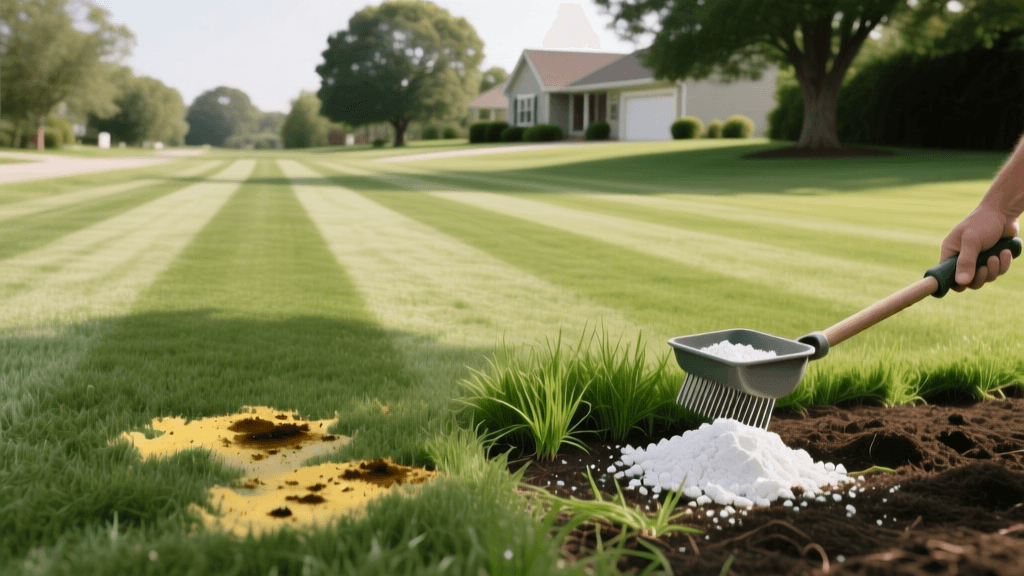
Repair Dog Urine Spots With Gypsum For 2026 Lawn Stripes
The Intersection of Canine Chaos and Lawn Striping
Lawn striping is the ultimate expression of turfgrass mastery and landscape aesthetics. By bending the grass blades in alternating directions, you manipulate light reflection to create stunning checkerboards, diamonds, and waves across your property. However, in 2026, the most persistent enemy of this aesthetic perfection isn't drought, fungus, or insect pressure—it is the family dog. Dog urine spots create chaotic, yellow-brown craters that completely shatter the optical illusion of a beautifully striped lawn. To maintain a pristine, professional-grade landscape, you must address these spots not just as agricultural blemishes, but as severe aesthetic disruptions. This comprehensive guide explores the highly effective method of using gypsum and targeted reseeding to repair dog urine damage, ensuring your lawn's stripe pattern remains flawless, uniform, and visually uninterrupted.
The Science: Why Urine Spots Destroy Aesthetic Patterns
Understanding the interaction between canine waste and turfgrass optics is essential for any lawn care enthusiast focused on aesthetics. The visual magic of lawn striping relies entirely on the health, uniformity, and cellular flexibility of the grass blade. When a dog urinates on the lawn, the high concentration of urea (nitrogen) and soluble salts essentially burns the turf down to the crown. The resulting dead patch lacks the cellular turgor pressure required to bend smoothly under the weight of a striping roller or mower attachment.
Instead of reflecting sunlight uniformly, the dead, brittle spot absorbs light, creating a jarring visual void that draws the eye and ruins the geometric flow of your pattern. Furthermore, the salt accumulation alters the soil's osmotic potential, making it nearly impossible for new grass seed to germinate and establish the deep, robust roots necessary to support the heavy bending required for deep, dark stripes. Without intervention, these spots expand, creating a mottled, chaotic appearance that is the exact opposite of the manicured aesthetic you are striving to achieve.
Why Gypsum is the 2026 Gold Standard for Spot Repair
Enter gypsum (calcium sulfate dihydrate), the undisputed champion of 2026 turf rehabilitation for pet owners. Many homeowners mistakenly reach for agricultural lime, assuming they need to neutralize acidic urine. However, according to soil scientists and turf researchers, dog urine damage is rarely a pH issue; it is primarily a salt and nitrogen toxicity issue. Applying lime can actually exacerbate the problem by altering the soil pH unnecessarily, which can lock up vital micronutrients like iron, leading to chlorosis (yellowing) that further ruins your stripe contrast.
Gypsum, on the other hand, is pH-neutral. Its primary function in this scenario is cation exchange. The calcium in gypsum displaces the toxic sodium ions left behind by the urine, pushing them deeper into the soil profile where they can be safely flushed away by irrigation. This process, known as flocculation, also improves soil aeration and water infiltration, breaking up compacted soil and creating the perfect, loose seedbed required for rapid seed germination and deep root establishment.
Choosing the Right Gypsum Product in 2026
When selecting a gypsum product for spot repairs on a striped lawn, form matters immensely. Powdered gypsum (traditional agricultural grades) is messy and easily blows away in the wind, landing on your carefully striped grass and leaving a white, chalky residue that ruins the visual contrast of the stripes. Pelletized gypsum is vastly superior for aesthetic lawns. Products like Espoma Organic Land and Water Gypsum or Jonathan Green Love Your Soil (which combines gypsum with humic acids for enhanced microbial activity) are easy to apply precisely to small spots using a handheld shaker cup. In 2026, expect to pay between $22 and $32 for a 40-pound bag of premium pelletized gypsum. Always store it in a sealed, weatherproof bin to prevent the pellets from breaking down into dust before application.
Step-by-Step: Repairing Spots for Seamless Stripes
To seamlessly reintegrate a damaged spot into your striped pattern, follow this precise rehabilitation protocol:
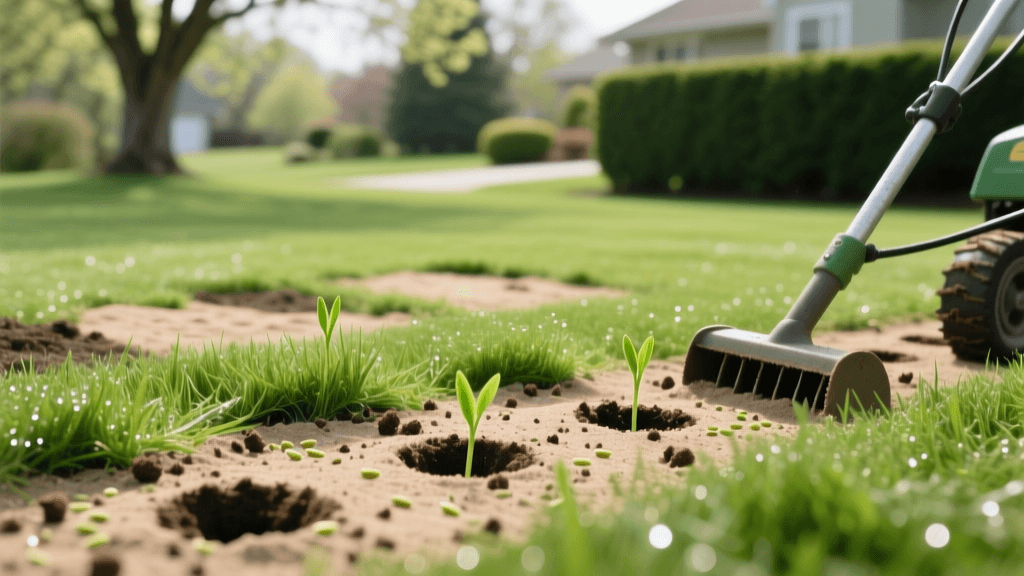
- Excavation and Raking: Use a steel thatch rake to aggressively remove all dead, yellowed grass blades and matted thatch down to the bare soil. You must expose the soil to ensure the gypsum makes direct contact and to remove the physical barrier blocking light from reaching the soil surface.
- Gypsum Application: Apply approximately 1/2 cup of pelletized gypsum directly to the excised spot. Spread it evenly across the 6-to-12-inch diameter of the damaged area.
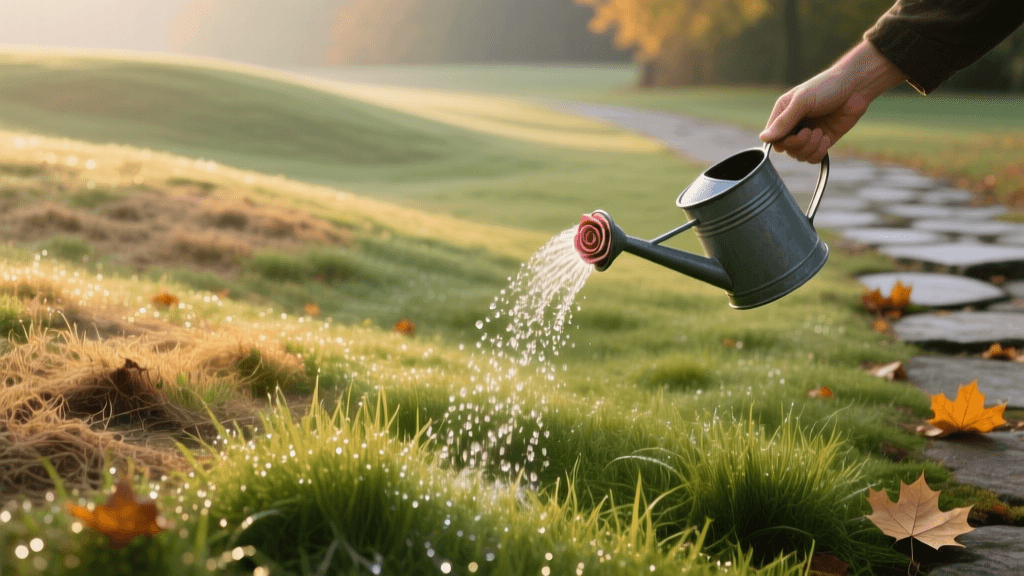
- Deep Flushing: Water the spot heavily. You need to apply at least 1 inch of water to dissolve the gypsum pellets and drive the displaced sodium salts below the active root zone. This step is non-negotiable for preventing future seed burn.
- Seedbed Preparation: Once the soil dries slightly (usually 24 to 48 hours), lightly scratch the top 1/4 inch of soil with a hand cultivator or the edge of a garden trowel to create micro-furrows for optimal seed-to-soil contact.
Product Comparison: Soil Amendments for Urine Repair
Not all soil amendments are created equal when it comes to preserving the delicate balance required for lawn striping. Below is a comparison of common products used by homeowners, highlighting why gypsum remains the superior choice for aesthetic turf repair.
| Amendment | Primary Active Ingredient | Effect on Soil pH | Mechanism of Action | Suitability for Stripe Repair |
|---|---|---|---|---|
| Pelletized Gypsum | Calcium Sulfate | Neutral (No Change) | Displaces sodium, improves soil structure | Excellent. Prepares seedbed without altering pH or causing chlorosis. |
| Agricultural Lime | Calcium Carbonate | Raises pH (Alkaline) | Neutralizes acidity | Poor. Can cause iron deficiency, leading to yellowing that ruins stripe contrast. |
| Commercial Salt Neutralizers | Varies (Often Humates) | Varies | Binds salts, masks symptoms | Fair. Good for flushing, but lacks the calcium needed to rebuild soil structure for deep roots. |
| Baking Soda | Sodium Bicarbonate | Raises pH | Attempts to neutralize acid | Terrible. Adds more sodium to the soil, worsening the osmotic stress and killing new seed. |
Reseeding for Uniform Light Reflection
To maintain a seamless stripe pattern, the new grass must perfectly match the existing turf in blade width, color, and growth habit. If you are striping a Kentucky Bluegrass lawn, use a premium, single-cultivar Bluegrass seed rather than a generic "sun and shade" mix. Generic mixes often contain Perennial Ryegrass or Fine Fescue, which have distinct, glossy undersides or different blade widths that will reflect light differently. This creates a "ghost stripe" or visual mismatch within your pattern, making the repair obvious even when the grass is healthy.
Sow the seed at a rate of 2 to 3 seeds per square inch. Topdress with a thin layer (1/8 inch) of weed-free straw or a specialized seed accelerator mulch to retain moisture. According to the Royal Horticultural Society, maintaining consistent surface moisture is the single most critical factor in successful patch reseeding. Water the spot lightly 3 to 4 times a day for the first 14 days to ensure the seed never dries out, which is vital for establishing the dense canopy needed to catch the light during mowing.
Re-establishing the Stripe Pattern in 2026
Once the new grass reaches 3 inches in height, it is time to reintegrate it into your striping routine. Do not attempt to stripe the patch while it is still establishing, as the shallow, juvenile roots will tear out of the ground, undoing all your hard work. When you do mow, ensure your mower deck is set to the optimal height for your grass type (typically 3 to 3.5 inches for cool-season turf in 2026 to maximize blade surface area for light reflection).
Use a weighted striping kit or a heavy roller attachment on your mower. The newly repaired spot might initially resist bending due to the tender, upright nature of the new blades. Make multiple passes in alternating directions over the first few weeks to physically train the new grass to lay down uniformly with the rest of the lawn. The cellular structure of the grass will adapt to the mechanical pressure, eventually blending perfectly into your checkerboard or diamond design.
Preventative Aesthetics: Protecting Your Masterpiece
The best way to protect your 2026 striping masterpiece is through proactive landscape design and behavioral training. Train your dog to use a specific, mulched "potty zone" hidden behind ornamental grasses, privacy hedges, or decorative boulders. If your dog must use the main lawn, keep a dedicated watering can near the back door. Immediately flushing the spot with a gallon of plain water dilutes the urea before it can burn the crown, entirely preventing the need for gypsum repair and preserving the unbroken visual flow of your patterns.
Conclusion
Achieving a professional-grade striped lawn requires more than just a mower and a roller; it demands meticulous attention to soil health, turf uniformity, and light manipulation. By utilizing pH-neutral gypsum to neutralize toxic salts and carefully reseeding with matching cultivars, you can erase the chaotic blemishes left by pets and restore the optical illusions that make lawn striping so captivating. In 2026, embrace the science of soil amendment and the art of light reflection to maintain a landscape that is as resilient as it is breathtaking. For further reading on advanced turf management and soil science, consult the extensive resources provided by the University of Minnesota Turfgrass Science program.