Lawn Care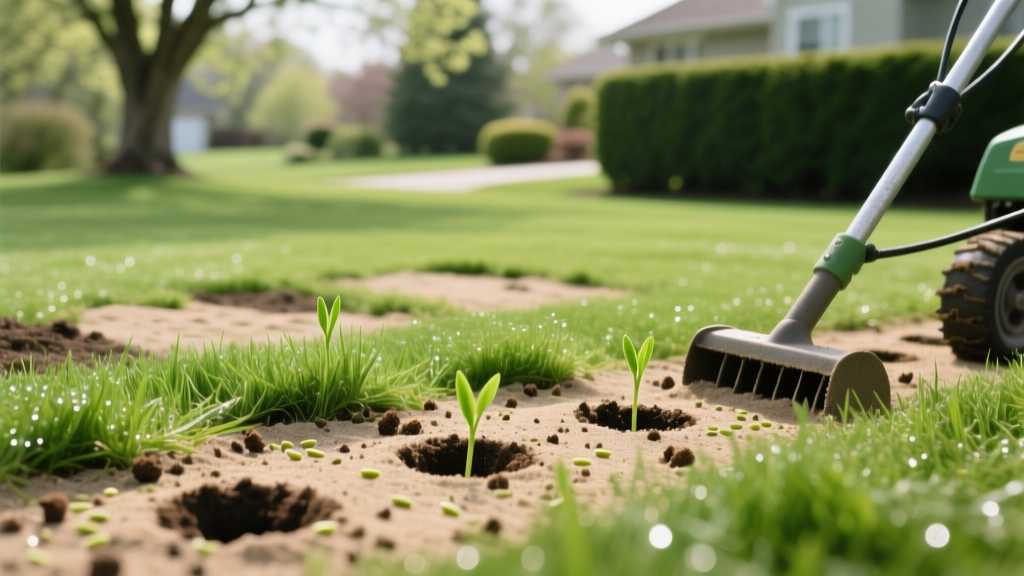
Scalped Lawn Recovery 2026: Aeration, Topdressing & Reseeding Guide
Mike RodriguezPublished
The Nightmare of a Scalped Lawn: Understanding the Damage
There are few sights more frustrating for a dedicated homeowner than stepping outside to admire your weekend mowing work, only to realize you have accidentally scalped your lawn. Scalping occurs when the mower deck is set too low, or when the mower drops into an uneven depression in the yard, cutting the grass down to the stems and exposing the soil. In 2026, with increasingly erratic spring heat waves and intense UV indexes, a scalped lawn is not just an aesthetic issue; it is a turf emergency.
When you scalp a lawn, you remove the vast majority of the photosynthetic leaf blade. This instantly halts the plant's ability to produce energy, forcing it to dip into its stored carbohydrate reserves in the crown and root system. Furthermore, the exposed soil rapidly loses moisture, creating a hostile environment for the remaining grass crowns and inviting aggressive weed seeds to germinate in the newly sunlit soil bed. To rescue a severely scalped lawn, you must intervene with a comprehensive recovery protocol. The most effective, scientifically backed method relies on a triad approach: core aeration, strategic reseeding, and targeted topdressing.
Why Core Aeration is the Foundation of Scalped Lawn Recovery
While your first instinct might be to simply throw down some seed and turn on the sprinklers, this approach rarely works on a scalped, compacted lawn. The heavy traffic of the mower, combined with the exposed, baked soil, creates a hard crust that water and delicate new roots cannot penetrate. This is where core aeration becomes the absolute engine of your recovery effort.
Core aeration involves using a machine with hollow tines to physically extract 2-to-3-inch plugs of soil and thatch from the ground. According to turfgrass researchers at the University of Minnesota Extension, core aeration is critical for alleviating soil compaction, improving water infiltration, and creating direct pathways for oxygen to reach struggling root systems. For a scalped lawn, these aeration holes serve a secondary, vital purpose: they act as protected micro-environments for new grass seed. Seeds that fall into these aeration holes are shielded from the harsh sun, protected from being washed away by irrigation, and are guaranteed the seed-to-soil contact necessary for germination.
When renting or purchasing an aerator in 2026, opt for a walk-behind core aerator with dual counter-rotating tines. These modern machines pull deeper, more consistent plugs without requiring you to make multiple passes over the same fragile, scalped turf, which could cause further crown damage.
Phase 1: Strategic Reseeding with Modern Cultivars
Once the lawn is thoroughly aerated (aim for 20 to 40 holes per square foot), it is time to reseed. Because the existing grass has been severely stressed and stripped of its canopy, you are essentially performing an aggressive overseeding operation. The goal is to introduce new, resilient grass plants that will fill in the bare patches and outcompete weeds.
Choosing the right seed is paramount. In 2026, turfgrass breeding has produced incredible drought-tolerant and disease-resistant cultivars. If you are managing a cool-season lawn, look for Turf-Type Tall Fescue (TTTF) blends that include Rhizomatous Tall Fescue (RTF) or modern endophyte-enhanced varieties. These grasses develop deep root systems and contain natural fungi that deter surface-feeding insects. For warm-season lawns, consider improved Bermuda or Zoysia seeds that boast rapid germination rates.
Apply the seed using a broadcast spreader at the rate recommended on the bag for "new lawn establishment" rather than standard overseeding, as the scalped areas are essentially bare dirt. The University of Minnesota Extension emphasizes that uniform distribution and immediate seed-to-soil contact are the primary drivers of successful germination.
Phase 2: The Topdressing Method
Topdressing is the secret weapon in the scalped lawn recovery arsenal. Topdressing involves spreading a thin, even layer of organic material over the lawn surface. For a recovery scenario, a blend of 70% finely screened organic compost and 30% masonry sand (or biochar, a highly porous carbon material gaining massive popularity in 2026 soil science) is ideal.
The compost provides an immediate, gentle influx of micronutrients and beneficial soil biology to the damaged grass crowns, while the sand or biochar improves drainage and keeps the soil structure loose. More importantly, a topdressing layer of about 1/4 to 1/2 inch thick covers the newly sown grass seed, locking in moisture and protecting it from birds and wind.
To apply, dump small piles of your compost-sand mix across the lawn and use a specialized lawn leveling drag mat or a peat moss spreader (such as the Landzie metal mesh spreader) to distribute the material evenly. You want to fill the aeration holes completely and lightly cover the seed, but be careful not to bury the existing, struggling grass crowns so deeply that they suffocate. Sweep the material gently so that the tips of any remaining living grass blades are still poking through the topdressing layer.
Phase 3: Smart Irrigation and Germination Management
Watering a newly seeded, topdressed, and aerated lawn requires precision. The topdressing material must remain consistently moist, but not waterlogged, for the first 14 to 21 days. In 2026, utilizing a smart irrigation controller equipped with local weather tracking and soil moisture sensors is highly recommended to manage this delicate balance. Set your controller to run short, frequent cycles—typically 5 to 10 minutes, three to four times a day during the early morning and late afternoon. This prevents the topdressing from drying out and forming a hydrophobic crust, while also preventing runoff that could wash your expensive seed into the storm drain.
Pro-Tip for 2026: Apply a liquid kelp or humic acid soil conditioner immediately after topdressing and watering. These organic biostimulants reduce transplant and environmental stress on the damaged grass crowns and drastically improve the germination vigor of your new seed.
2026 Scalped Lawn Recovery Timeline
Patience and strict adherence to a schedule are required to bring a scalped lawn back from the brink. Use the following table to guide your recovery efforts over the critical first month.
| Timeline | Action Item | Watering Schedule | Mowing Rule |
|---|---|---|---|
| Week 1 | Core Aerate, Reseed, Topdress, apply Biostimulant | 3-4x daily (5-10 mins) to keep topdressing moist | Absolute No-Mow Zone |
| Week 2 | Monitor germination, check for dry spots | 2-3x daily, gradually increasing duration | Absolute No-Mow Zone |
| Week 3 | Apply starter fertilizer (high phosphorus) if soil test dictates | 1x daily, deep watering (20-30 mins) | Mow only if existing grass exceeds 4 inches |
| Week 4 | Transition to standard deep/infrequent watering | 2-3x per week, 45+ mins to encourage deep roots | Mow at highest deck setting (3.5 - 4 inches) |
Preventing Future Scalping: The 2026 Mowing Standard
Once your lawn has recovered and you are back to a regular mowing routine, you must adjust your practices to ensure you never scalp your turf again. The University of Minnesota Extension advises that proper mowing height is the single most important cultural practice for lawn health. For most cool-season grasses, the minimum cutting height should be 3 inches, with 3.5 to 4 inches being optimal for summer stress tolerance. Warm-season grasses like Zoysia and Bermuda can be cut lower, but reel mowers are often required to prevent tearing and scalping on uneven terrain.
Furthermore, never remove more than the top one-third of the grass blade in a single mowing session. If your lawn has grown too tall due to heavy spring rains, raise your mower deck to take off the top third, wait two days, and then lower it slightly for the second pass. Keep your mower blades razor-sharp; a dull blade will tear the remaining grass tips, causing them to turn white and fraying the edges, which mimics the stress of scalping and invites fungal pathogens.
Conclusion
A scalped lawn is a severe shock to your turf's ecosystem, but it is rarely a death sentence if addressed promptly and correctly. By leveraging the mechanical benefits of core aeration, the genetic advantages of 2026 turfgrass cultivars, and the biological protection of organic topdressing, you can rebuild your soil structure and restore a thick, vibrant carpet of grass. Stick to the recovery timeline, manage your irrigation with precision, and adjust your mowing habits to protect your hard work for years to come.