Lawn Care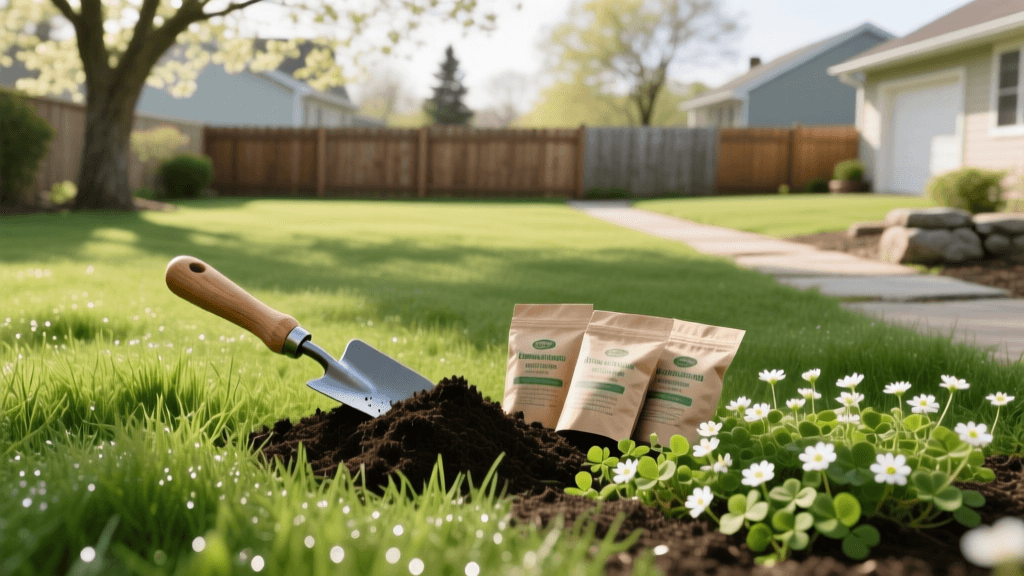
Eco-Friendly Lawn Fertilization: A Sustainable Guide
The Shift Toward Sustainable Lawn Care
For decades, the pursuit of the perfect, golf-course-green lawn has relied heavily on synthetic, petrochemical-based fertilizers. While these products deliver a rapid flush of vibrant green growth, they often come at a significant environmental cost. Eco-friendly lawn fertilization is no longer just a niche gardening trend; it is a vital, sustainable approach to landscape management that prioritizes long-term soil health, water conservation, and ecological balance. By transitioning to organic and sustainable methods, homeowners can cultivate a dense, resilient turf that naturally resists drought, disease, and weed pressure without contributing to chemical runoff.
According to the University of Maryland Extension, organic lawn care focuses on feeding the soil microbiome rather than directly force-feeding the grass plant. When you nurture the complex web of fungi, bacteria, and earthworms beneath the surface, those organisms break down organic matter and deliver nutrients directly to the grass roots in a slow, steady, and highly efficient manner. This comprehensive guide will walk you through the most effective, actionable, and eco-friendly fertilization strategies available today, complete with product recommendations, application measurements, and cost expectations.
The Hidden Cost of Synthetic Fertilizers
Before diving into sustainable alternatives, it is crucial to understand why transitioning away from synthetic fertilizers benefits your local ecosystem. Synthetic fertilizers are typically composed of highly soluble salts. When applied, they provide an immediate burst of nitrogen, phosphorus, and potassium. However, because they are so water-soluble, a significant percentage of these nutrients leach past the root zone during heavy rains or improper irrigation.
This runoff enters local watersheds, contributing to a process known as eutrophication. Excess nitrogen and phosphorus in lakes, rivers, and coastal waters trigger massive algae blooms that deplete oxygen levels, devastating aquatic life. Furthermore, the continuous use of synthetic salts degrades soil structure over time, reducing the soil's natural organic matter and killing off beneficial microorganisms. An eco-friendly approach reverses this damage, building a sponge-like soil structure that retains water and sequesters carbon.
Step 1: The Foundation of Soil Testing
You cannot sustainably manage what you do not measure. Before applying any eco-friendly amendments, you must conduct a comprehensive soil test. Guessing your lawn's nutrient needs often leads to over-application, which is both wasteful and environmentally harmful. A professional soil test will reveal your soil's pH, cation exchange capacity (CEC), and baseline levels of phosphorus and potassium.
- Optimal pH Range: Most turfgrasses thrive in a pH range of 6.2 to 6.8. If your soil is too acidic (below 6.0), apply organic calcitic lime. If it is too alkaline (above 7.2), elemental sulfur is the preferred eco-friendly amendment.
- Organic Matter (OM): A sustainable lawn should have an OM percentage between 3% and 5%. If your test results show OM below 2%, your primary focus must be on adding compost and organic amendments.
- Testing Frequency: Test your soil every two to three years. The cost is minimal (typically $15 to $30 through a university extension office) and provides a precise roadmap for your fertilization schedule.
Step 2: Compost Topdressing for Soil Biology
Compost is the undisputed king of eco-friendly lawn care. It is not just a fertilizer; it is a complete soil conditioner that introduces billions of beneficial microbes, improves drainage in clay soils, and increases water retention in sandy soils. The Environmental Protection Agency (EPA) heavily advocates for the use of compost in landscaping to reduce the need for chemical fertilizers and divert organic waste from landfills.
How to Apply Compost Topdressing
Topdressing involves spreading a thin layer of finely screened compost over your existing turf. The goal is to feed the soil without smothering the grass blades.
- Timing: The best time to topdress is during your grass's peak growing season. For cool-season grasses (Kentucky Bluegrass, Fescue), apply in early fall. For warm-season grasses (Bermuda, Zoysia), apply in late spring.
- Measurements: Apply a layer exactly 1/4 to 1/2 inch thick. To achieve this, you will need approximately 0.8 cubic yards of compost per 1,000 square feet of lawn.
- Application Method: Mow the lawn short and perform core aeration beforehand. Shovel the compost into small piles across the lawn, then use a heavy landscaping rake or a specialized compost spreader to drag and level the material into the aeration holes and thatch layer.
- Cost Expectations: Bulk screened compost typically costs between $30 and $50 per cubic yard. For an average 5,000-square-foot lawn, expect to spend around $150 to $250 on materials every two years.
Step 3: Selecting Organic Granular Fertilizers
While compost builds soil structure, your turf may still require targeted macronutrients, particularly nitrogen, to maintain vigorous growth and deep color. Organic granular fertilizers are derived from natural plant, animal, or mineral sources. Unlike synthetics, these nutrients are bound in complex organic molecules that must be broken down by soil microbes before the grass can absorb them. This natural slow-release mechanism ensures a steady supply of nutrients over 8 to 12 weeks, eliminating the dangerous 'flush and crash' growth cycle.
Top Eco-Friendly Product Recommendations
- Espoma Organic Lawn Food (15-0-5): Derived from feather meal, pasteurized poultry manure, and sulfate of potash. It is an excellent all-around organic fertilizer that provides slow-release nitrogen and essential potassium for root and drought stress resistance. A 30-pound bag covers roughly 5,000 square feet and costs around $40.
- Jonathan Green Organic Lawn Fertilizer (13-0-2): This formula relies on plant-derived proteins and amino acids. It is highly effective for promoting deep, dark green color without the risk of burning the lawn, even in the heat of summer.
- Corn Gluten Meal (9-0-0): An eco-friendly dual-purpose product. Applied in early spring at a rate of 20 lbs per 1,000 sq ft, corn gluten meal provides a natural nitrogen boost while simultaneously inhibiting the germination of crabgrass and dandelion seeds. Note: It only prevents seeds from sprouting and will not kill existing weeds.
Step 4: Integrating Microclover for Natural Nitrogen Fixation
One of the most revolutionary trends in sustainable lawn care is the integration of microclover (*Trifolium repens* var. 'Pirouette' or 'Nano') into traditional turfgrass. Unlike standard white clover, which can be aggressive and form large clumps, microclover blends seamlessly with grass, stays low to the ground, and requires less mowing.
Clover is a legume, meaning it possesses a symbiotic relationship with *Rhizobium* bacteria in the soil. These bacteria colonize the clover's root nodules and pull inert nitrogen gas directly from the atmosphere, converting it into a usable, bioavailable form of nitrogen. According to research highlighted by the University of Vermont Extension, a lawn blended with just 5% microclover can naturally supply enough nitrogen to significantly reduce or entirely eliminate the need for external nitrogen fertilizers.
Overseeding with Microclover
- Seed Rate: When overseeding an existing lawn, use a rate of 1 to 2 pounds of microclover seed per 1,000 square feet. If starting a new eco-lawn from scratch, mix 5% microclover seed with 95% drought-tolerant fescue seed.
- Preparation: Mow the existing grass to 1.5 inches and rake out thatch to ensure the tiny clover seeds make direct contact with the soil.
- Watering: Clover seeds require consistent moisture to germinate. Water lightly twice a day for the first 10 to 14 days until seedlings emerge.
Comparison: Synthetic vs. Organic Fertilization
Understanding the operational differences between conventional and eco-friendly methods helps set realistic expectations for your lawn's transition period. It generally takes one to two full growing seasons for a lawn to fully recover from synthetic dependence and rebuild its microbial food web.
| Feature | Synthetic Fertilizers | Eco-Friendly / Organic Fertilizers |
|---|---|---|
| Nutrient Release | Rapid (Days to Weeks) | Slow and Steady (Months) |
| Soil Microbiome Impact | Harmful; degrades microbial life | Beneficial; feeds and expands biology |
| Runoff & Leaching Risk | High; contributes to water pollution | Extremely Low; bound in organic matter |
| Soil Structure | No improvement; can cause compaction | Improves aeration, drainage, and CEC |
| Application Frequency | 4 to 6 times per year | 1 to 2 times per year (plus compost) |
| Long-Term Cost | Moderate to High (recurring dependency) | Low (soil eventually self-regulates) |
Mowing and Watering Synergies for Eco-Friendly Lawns
Eco-friendly fertilization does not exist in a vacuum; it must be paired with sustainable mowing and irrigation practices to achieve maximum environmental benefit.
The 'Mow High' Rule
Never cut more than one-third of the grass blade at a single time. For cool-season grasses, set your mower deck to a minimum of 3 to 4 inches. Taller grass develops deeper root systems, which can access the slow-release nutrients provided by organic fertilizers and compost. Furthermore, tall grass shades the soil surface, drastically reducing water evaporation and naturally suppressing weed seed germination. Leaving the clippings on the lawn (grasscycling) returns up to 25% of the lawn's nitrogen needs back to the soil ecosystem for free.
Deep and Infrequent Irrigation
Organic fertilizers require moisture for soil microbes to break them down. However, frequent, shallow watering encourages shallow roots and fungal diseases. Aim to provide your lawn with 1 to 1.5 inches of water per week, including rainfall, applied in one or two deep sessions. This trains the roots to grow deep into the soil profile where compost and organic matter are actively decomposing and releasing nutrients.
Final Thoughts on Sustainable Lawn Care
Transitioning to an eco-friendly lawn fertilization regimen is an investment in the long-term vitality of your property and the health of your local watershed. By leveraging the power of compost topdressing, utilizing high-quality organic granular fertilizers like Espoma, and introducing nitrogen-fixing microclover, you can dramatically reduce your reliance on harsh petrochemicals. While the initial transition may require a shift in mindset and a bit of patience as the soil biology reawakens, the reward is a deeply rooted, drought-tolerant, and naturally vibrant lawn that works in harmony with nature rather than against it.