Lawn Care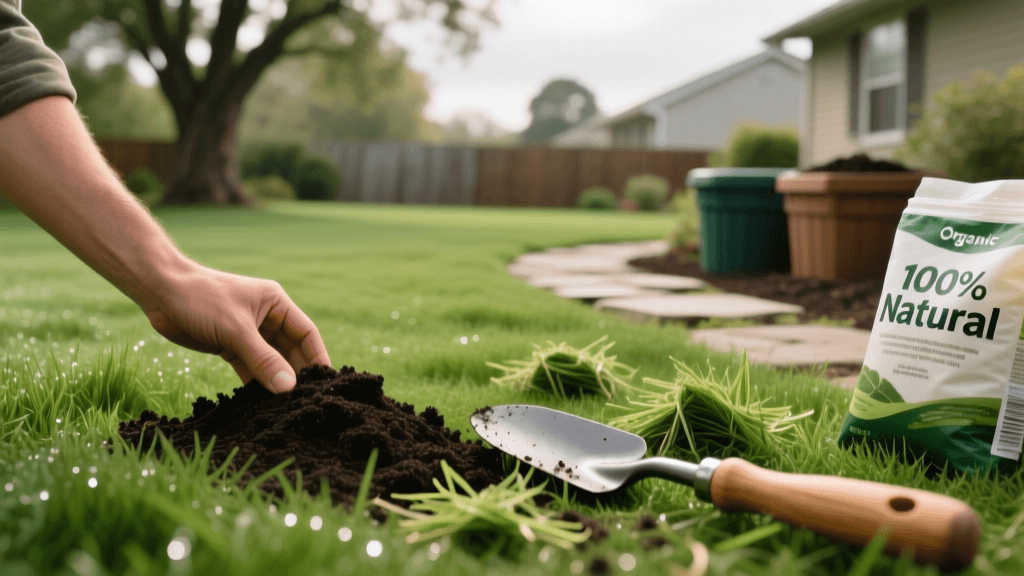
Eco-Friendly Lawn Fertilization: Organic Soil Care
The Shift Toward Sustainable Turf Management
For decades, the standard approach to lawn care has relied heavily on synthetic, petroleum-based fertilizers. While these chemical formulations provide a rapid flush of vibrant green growth, they often do so at the expense of long-term soil health and local ecosystems. Eco-friendly lawn fertilization represents a fundamental paradigm shift: instead of force-feeding the grass plant with water-soluble salts, sustainable methods focus on nurturing the complex soil food web. By building organic matter and fostering microbial life, homeowners can cultivate a resilient, drought-tolerant, and naturally disease-resistant lawn.
The environmental toll of conventional lawn care is staggering. According to the Environmental Protection Agency (EPA), nutrient runoff from synthetic fertilizers is a leading cause of water pollution, contributing to toxic algal blooms and dead zones in lakes, rivers, and coastal waters. By transitioning to organic amendments, you not only protect local watersheds but also create a safer environment for children, pets, and beneficial pollinators.
Soil Testing: The Foundation of Organic Care
Before applying any eco-friendly amendment, a comprehensive soil test is mandatory. Unlike synthetic programs that follow a rigid, calendar-based schedule, organic lawn care is prescriptive. You must understand your soil's baseline chemistry and biology. Request a soil test from your local university extension office that measures pH, Cation Exchange Capacity (CEC), and, crucially, the percentage of organic matter (OM).
- Target pH: Most turfgrasses thrive between 6.0 and 7.0. If your soil is too acidic, apply calcitic lime; if too alkaline, use elemental sulfur.
- Organic Matter: Aim for a minimum of 3% to 5% OM. Soils deficient in organic matter cannot retain nutrients or moisture effectively, rendering any fertilizer application inefficient.
- CEC: This measures your soil's ability to hold onto nutrients. Clay soils have high CEC, while sandy soils have low CEC. Organic matter acts as a sponge, dramatically increasing the CEC of sandy soils.
Grasscycling: Nature's Free Fertilizer
The simplest and most cost-effective eco-friendly fertilization method is grasscycling—the practice of leaving grass clippings on the lawn after mowing. According to experts at UMass Extension, grass clippings decompose rapidly and can supply up to 25% of your lawn's annual nitrogen requirements. Clippings are approximately 4% nitrogen, 2% potassium, and 1% phosphorus by dry weight.
To grasscycle effectively, follow the 'one-third rule': never remove more than the top third of the grass blade in a single mowing. This ensures clippings are small enough to filter down to the soil surface rather than clumping and smothering the turf. Using a mulching mower with specialized blades chops the clippings into fine particles, accelerating decomposition and preventing thatch buildup.
Top Organic Amendments for Sustainable Lawns
When soil tests indicate a need for additional macronutrients or micronutrients, organic amendments provide a slow-release, non-burning alternative to synthetics. These materials rely on soil microbes to break them down into plant-available forms, ensuring a steady supply of nutrition over weeks or months rather than days.
| Organic Amendment | N-P-K Ratio | Primary Benefit | Application Rate (per 1,000 sq ft) | Estimated Cost |
|---|---|---|---|---|
| Screened Compost | 1-1-1 | Improves soil structure, water retention, and microbial diversity | 1/4 inch topdressing layer (approx. 1 cubic yard) | $30 - $60 |
| Alfalfa Meal | 3-1-2 | Slow-release nitrogen and triacontanol (a natural growth stimulant) | 20 lbs | $25 - $40 |
| Corn Gluten Meal | 9-0-0 | Provides nitrogen and acts as an organic pre-emergent weed suppressant | 20 lbs | $40 - $60 |
| Kelp / Seaweed Extract | 1-0-2 | Delivers trace minerals, amino acids, and cytokinins for stress tolerance | 2 oz liquid per 1,000 sq ft | $15 - $25 |
Compost Topdressing and Core Aeration
Applying a thin layer of high-quality, screened compost over your lawn is arguably the most transformative practice in sustainable lawn care. Compost introduces billions of beneficial bacteria and fungi that outcompete turf pathogens. When paired with core aeration, the compost is pulled deep into the soil profile, alleviating compaction and delivering organic matter directly to the root zone.
How to Topdress:
- Mow the lawn slightly lower than usual and perform core aeration.
- Spread sifted compost evenly using a shovel and the back of a landscaping rake.
- Aim for a depth of 1/8 to 1/4 inch. Do not bury the existing grass blades.
- Water deeply to wash the compost into the aeration holes and soil cracks.
Building Soil Biology: The Role of Microbes
Synthetic fertilizers are essentially salts; over time, they can dehydrate and kill beneficial soil organisms, leading to a sterile, compacted lawn that requires constant chemical inputs. Eco-friendly fertilization relies on the 'soil food web.' As highlighted by the Rodale Institute, healthy soils are living ecosystems. Mycorrhizal fungi form symbiotic relationships with grass roots, extending their reach by hundreds of feet to mine water and phosphorus from deep within the soil matrix.
'Soil health is the foundation of a resilient landscape. When you feed the soil biology with organic matter, the biology feeds the plant. Synthetic chemicals bypass this natural system, creating an addiction to external inputs.' - Soil Health Principles, Sustainable Agriculture Networks.
To inoculate your lawn with beneficial microbes, consider applying aerated compost tea (ACT). ACT is brewed by steeping high-quality compost in dechlorinated water with a food source for microbes (like unsulfured molasses) and oxygenating the mixture for 24 to 36 hours. The resulting liquid is teeming with active biology and can be sprayed directly onto the foliage and soil surface. Ensure you use an aquarium pump or commercial brewer to maintain high dissolved oxygen levels, which favors beneficial aerobic bacteria over anaerobic pathogens.
Seasonal Eco-Friendly Fertilization Schedule
Timing your organic applications to align with the natural growth cycles of your turfgrass maximizes efficiency and minimizes waste.
Spring (Soil Warming and Root Growth)
As soil temperatures reach 55°F, apply corn gluten meal. This provides a gentle nitrogen boost to support spring green-up while simultaneously inhibiting the germination of crabgrass and broadleaf weed seeds. Avoid heavy nitrogen applications in late spring, as this promotes lush, weak growth that is susceptible to summer heat stress and fungal diseases like brown patch and dollar spot.
Summer (Stress Mitigation)
During the heat of summer, cool-season grasses enter a state of semi-dormancy. Avoid granular fertilizers during this period. Instead, apply liquid kelp extract every three to four weeks. Kelp contains natural osmoprotectants that help grass cells retain moisture and withstand extreme heat and drought conditions without forcing unnatural top growth.
Fall (Recovery and Winterization)
Early fall is the most critical time for eco-friendly lawn fertilization. The soil is still warm, but air temperatures are cooling, prompting aggressive root development. Apply alfalfa meal or a slow-release organic blend (such as feather meal and bone meal) to provide sustained nutrition. Follow this with overseeding and a light compost topdressing to repair summer damage and crowd out winter weeds. The combination of compost and seed ensures direct seed-to-soil contact, which is vital for germination.
Water Conservation and Long-Term Resilience
One of the most profound benefits of organic lawn fertilization is its impact on water conservation. Soils rich in organic matter act like a sponge. Research indicates that every 1% increase in soil organic matter allows an acre of land to hold an additional 20,000 gallons of available water. By consistently topdressing with compost and leaving clippings, you naturally elevate your soil's organic matter, drastically reducing your lawn's irrigation needs and lowering your water bills.
Conclusion
Transitioning to an eco-friendly lawn fertilization regimen is an investment in the long-term vitality of your landscape. While synthetic fertilizers offer the illusion of instant gratification, organic methods build a robust, self-sustaining ecosystem beneath your feet. By embracing grasscycling, utilizing natural amendments like compost and kelp, and fostering soil biology, you can achieve a thick, vibrant lawn that thrives in harmony with the local environment. Sustainable lawn care is not just about what you put on your grass; it is about cultivating the living soil that supports it.