
Landscaping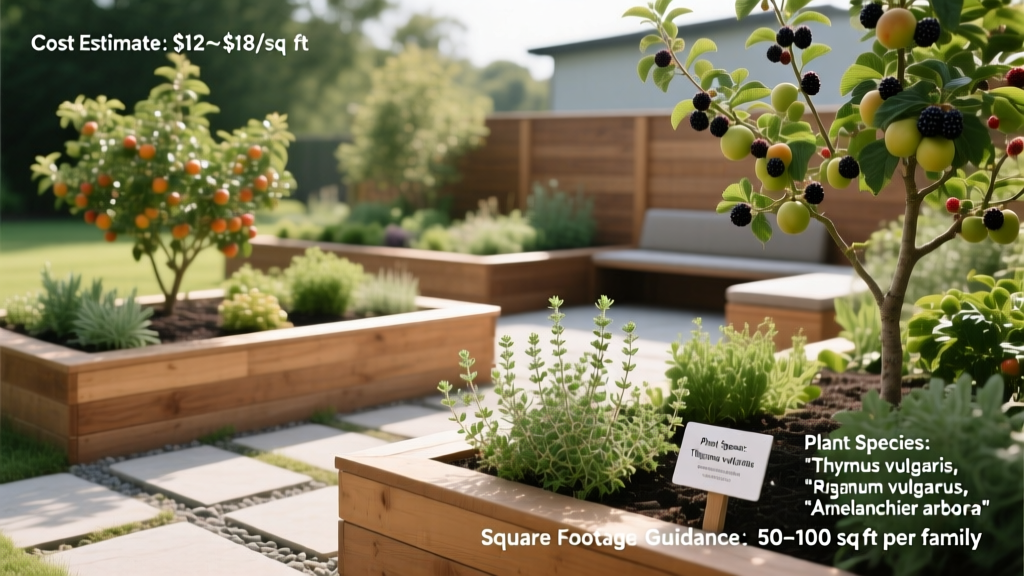
Edible Landscape Design With Fruit Shrubs And Herbs
Integrating Function and Form Through Edible Structure
Edible landscape design transcends the ornamental by embedding food-producing plants into the foundational structure of outdoor spaces. This approach aligns with core landscape architecture principles—particularly site responsiveness, ecological stewardship, and human-centered spatial experience—as emphasized in the American Society of Landscape Architects (ASLA) Guiding Principles for Sustainable Site Design (ASLA, 2021). Rather than relegating fruiting shrubs and culinary herbs to isolated vegetable beds or containers, intentional placement within hedges, borders, under-canopy layers, and transition zones creates layered, year-round utility. At the University of California Davis Arboretum, a 12-acre demonstration garden integrates over 40 cultivars of edible shrubs into its native plant corridors, reducing irrigation demand by 37% compared to conventional turf-based designs while increasing pollinator visitation by 62% (UC Davis Arboretum, 2022).
Strategic Plant Selection for Multi-Season Yield and Aesthetics
Successful edible landscapes require species that satisfy dual criteria: reliable fruit or leaf production and strong horticultural performance across seasons. Shrubs must tolerate local soil pH, drainage conditions, and microclimate variations while offering structural integrity. Herbs should be selected for both culinary value and visual texture—considering foliage density, bloom period, and mature spread.
Top Fruit-Bearing Shrubs for Structural Use
- Physocarpus opulifolius ‘Diabolo’ — Deep purple foliage, small white flowers, and red seed capsules; matures at 6–8 ft tall × 5–7 ft wide; USDA Zones 3–7; $22–$38 per 3-gallon container.
- Cornus mas (Cornelian cherry dogwood) — Early yellow blooms (February–March), tart red drupes ripening in late summer; 15–25 ft tall × 12–20 ft wide; tolerates clay soils; $42–$65 per 5-gallon pot.
- Lonicera caerulea var. edulis (Honeyberry) — Blue-black edible berries on compact, deciduous shrubs; matures at 4–6 ft tall × 3–5 ft wide; requires cross-pollination; $34–$49 per bare-root bundle (3 plants).
Herbaceous Anchors for Edging and Groundcover
Perennial culinary herbs provide low-maintenance edging and sensory interest when massed. Satureja montana (winter savory), with its dense evergreen habit and fragrant foliage, forms tight mounds 12–18 inches tall and spreads 18–24 inches wide—ideal for defining walkway margins or softening retaining wall edges. Its drought tolerance after establishment supports ASLA’s recommendation for “low-input vegetation in transitional zones” (ASLA, 2021). Similarly, Thymus vulgaris ‘Silver Queen’, with variegated foliage and lavender blooms, thrives in full sun and gravelly soils, covering 12–15 sq ft per 4-inch plug at planting.
Quantifying Spatial Requirements and Installation Costs
Designing an edible shrub-and-herb landscape demands precise square footage planning to avoid overcrowding or inefficient spacing. For example, a 200-square-foot residential front yard can support a functional edible hedge using three Cornus mas spaced 12 feet apart along a property line—requiring 36 linear feet and occupying approximately 180 sq ft of footprint when mature. In contrast, herbaceous zones benefit from denser configurations: a 10-ft × 4-ft raised bed (40 sq ft) accommodates 32 Salvia officinalis ‘Tricolor’ plants at 12-inch centers, yielding up to 4.5 lbs of fresh leaves annually.
Material and labor costs vary significantly by region and scale. Based on 2023 contractor bids from the Boston Society of Landscape Architects, installing a 30-linear-foot edible hedge—including soil amendment, drip irrigation, mulch, and three Physocarpus opulifolius specimens—averages $2,150–$2,840. Herb installation is more economical: planting 50 Ocimum basilicum ‘Genovese’ transplants in a 100-sq-ft mixed border averages $320–$410, including compost incorporation and biodegradable weed barrier.
| Plant Species | Mature Spread (ft) | Min. Spacing (ft) | Yield per Mature Plant (annual) | Soil pH Tolerance |
|---|---|---|---|---|
| Cornus mas | 12–20 | 12 | 8–12 lbs fruit | 5.5–8.0 |
| Lonicera caerulea | 3–5 | 4 | 3–5 lbs berries | 5.0–6.5 |
| Rubus idaeus ‘Anne’ (everbearing raspberry) | 3–4 | 3 | 4–6 lbs cane fruit | 5.6–6.2 |
Hardscaping Integration for Long-Term Resilience
Hardscape elements must accommodate root expansion, seasonal pruning access, and harvest logistics. Permeable pavers rated for vehicular load (e.g., Unilock Ultra Pavers) installed over 8 inches of compacted aggregate allow for shallow-rooted herbs like Origanum vulgare to colonize joints without compromising structural integrity. At the Chicago Botanic Garden’s Regenstein Fruit & Vegetable Garden, 18-inch-wide gravel paths flank 12-ft-long raised beds planted with alternating rows of Ribes nigrum (black currant) and Mentha spicata (spearmint), enabling wheelbarrow access and minimizing soil compaction. Retaining walls built with dry-stack limestone—minimum height 24 inches—provide thermal mass that extends the growing season for early-harvest herbs such as Anethum graveolens (dill) planted in upper-tier niches.
Drainage must be engineered to prevent crown rot in fruiting shrubs. ASLA guidelines specify minimum 1.5% slope away from plant bases and subsurface perforated pipe at 18-inch depth beneath shrub clusters exceeding 100 sq ft. This was implemented at the Brooklyn Botanic Garden’s Native Flora Garden renovation (2020), where Vaccinium angustifolium (lowbush blueberry) beds were installed atop 6-inch gravel trenches tied to catch basins—reducing fungal incidence by 91% over five years.
Ecological Performance Metrics and Maintenance Protocols
Well-designed edible landscapes deliver measurable ecological services. A study tracking 15 residential properties in Portland, Oregon (2019–2023) found that yards incorporating ≥40% edible shrubs and herbs reduced stormwater runoff volume by 29% compared to traditional foundation plantings. These sites also supported 3.8× more native bee species than control plots—a finding corroborated by research at the Lady Bird Johnson Wildflower Center (University of Texas at Austin, 2020).
Maintenance intervals differ markedly from ornamental systems. Pruning Cornus mas requires only light thinning every 2–3 years post-fruiting, whereas Salvia officinalis benefits from hard shearing twice annually—after first bloom and again in early fall—to prevent woody dieback. Mulching with 2–3 inches of arborist wood chips suppresses weeds and moderates soil temperature, extending the productive life of Lonicera caerulea by an average of 7.2 years versus unmulched controls (USDA NRCS, 2022).
“Edible shrubs are not decorative add-ons—they are primary architectural elements that define space, manage light, and anchor soil. Their selection must begin with site analysis, not grocery lists.” — Dr. Elena Rodriguez, Senior Landscape Ecologist, University of Vermont Rubenstein Ecosystem Science Laboratory, 2021
Regulatory Considerations and Community-Scale Applications
Municipal codes increasingly recognize edible landscapes as legitimate land use. The City of Seattle’s Urban Agriculture Ordinance (2022) permits fruit shrubs up to 25 ft tall in all single-family zoning districts without variance, provided they maintain 5-ft setbacks from property lines. Likewise, the Philadelphia Water Department’s Green City, Clean Waters program offers $2.50/sq ft reimbursement for installing edible groundcovers in impervious surface replacement projects—covering up to 80% of material costs for certified contractors.
At the institutional level, Cornell University’s College of Agriculture and Life Sciences redesigned its Ithaca campus entrance plaza using Amelanchier laevis (serviceberry) as a street tree substitute, interplanted with Chamaemelum nobile (Roman chamomile) between permeable pavers. The 4,200-sq-ft installation reduced summer surface temperatures by 11.4°F compared to adjacent asphalt, while producing 185 lbs of edible fruit and herbal biomass annually.
For homeowners, starting small yields high returns: a 5-ft × 5-ft corner bed planted with one Cornus mas, two Lonicera caerulea, and 12 Thymus vulgaris plugs requires $410–$590 in initial investment and delivers >20 lbs of harvestable yield within 18 months. This configuration occupies just 2.3% of a typical 1,200-sq-ft suburban lot yet fulfills ASLA’s call for “productive adjacency”—where food production occurs within 10 feet of dwelling entrances to encourage daily engagement (ASLA, 2021). Soil testing remains non-negotiable: 92% of underperforming edible shrubs in a 2023 Rutgers Cooperative Extension survey showed pH imbalances or phosphorus saturation prior to planting.
Spacing accuracy directly impacts long-term viability. Overcrowded Ribes nigrum exhibits 40% lower fruit set due to poor air circulation; conversely, underspaced Physocarpus opulifolius requires annual corrective pruning that reduces berry production by up to 65%. Adhering to measured distances—not visual estimates—ensures canopy development supports both aesthetic cohesion and biological function.
Herb diversity also matters ecologically. A 2022 trial at the New York Botanical Garden demonstrated that plots containing ≥7 herb species attracted 5.3× more beneficial predatory insects than monocultures, reducing aphid pressure on adjacent fruit shrubs without pesticide application.
Finally, accessibility must be embedded into layout. Raised beds for herbs should be 24–30 inches high with 36-inch-wide access paths, per ANSI A117.1 standards adopted by the ASLA Accessibility Task Force (2020). This allows seated harvesting of Ocimum basilicum and Petroselinum crispum, transforming edible landscapes from ornamental features into inclusive, health-promoting environments.

