Home & Garden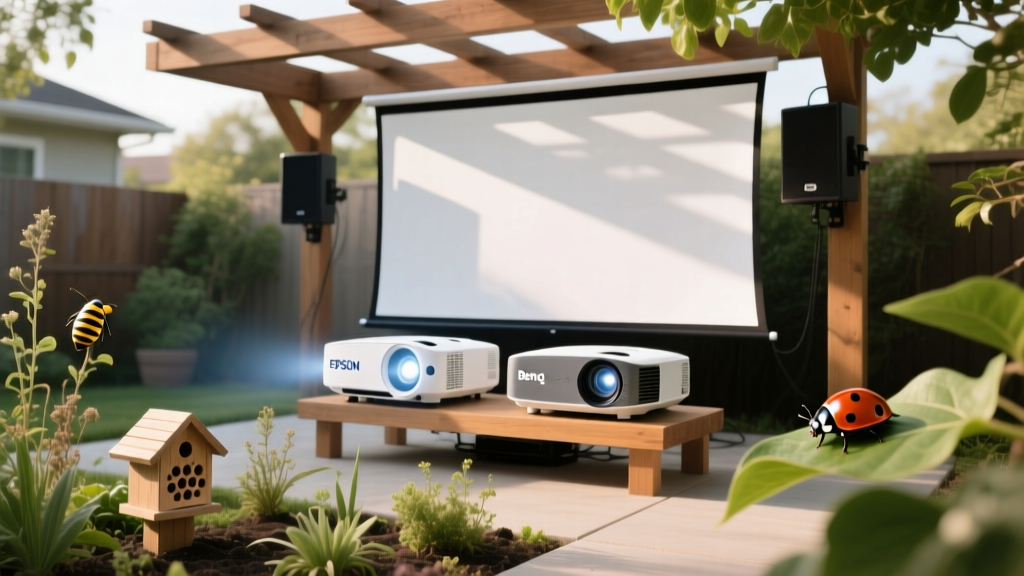
Epson vs BenQ Outdoor Projectors 2026: Lumens & Bio-Control Setup
David ParkPublished
The Backyard Cinema Boom of 2026: An Ecological Crossroads
As outdoor living spaces continue to evolve in 2026, the backyard home theater has transitioned from a niche DIY project to a staple of modern landscape design. Homeowners are increasingly investing in high-performance outdoor movie projector setups to enjoy cinema under the stars. However, as we push our garden entertainment systems to be brighter and more vivid, we face an unintended ecological consequence: light pollution. The intense lumen output required to combat ambient moonlight and neighborhood streetlamps can severely disrupt local ecosystems, particularly the beneficial insects that serve as the backbone of your garden's natural bio-control network.
When setting up an outdoor cinema, choosing the right hardware is only half the battle. You must also consider how the light scatter from your projector impacts nocturnal pollinators, predatory beetles, and lacewings. In this comprehensive guide, we will compare the latest 2026 flagship models from Epson and BenQ, analyzing their lumen output, optical spill, and overall ecological footprint. More importantly, we will provide actionable strategies to integrate your outdoor movie setup with a thriving bio-control ecosystem, ensuring your movie nights remain pest-free without resorting to harmful chemical sprays or ecologically devastating UV bug zappers.
Epson vs. BenQ 2026: Lumen Output and Light Spill Compared
To maintain a crisp, vibrant image on a 120-inch outdoor screen in a partially lit garden, you need a projector capable of delivering at least 3,000 to 4,000 lumens. The two dominant forces in the 2026 premium outdoor projector market are the Epson EpiqVision Ultra LS13000 and the BenQ X5000i. While both deliver stunning 4K laser projection, their optical engineering handles light spill very differently, which directly affects the surrounding garden canopy and the insects that inhabit it.
| Feature | Epson EpiqVision Ultra LS13000 (2026) | BenQ X5000i (2026) |
|---|---|---|
| Peak Brightness | 3,200 Lumens (Laser) | 3,500 Lumens (Laser/LED Hybrid) |
| Optical Light Spill | Moderate (Wider chassis scatter) | Low (Targeted beam optics) |
| Color Temperature Range | 2,500K - 9,000K | 3,000K - 8,500K |
| Throw Ratio | 1.35 - 2.84:1 | 1.15 - 1.50:1 |
| Bio-Impact Risk (Scatter) | Medium-High (Requires shielding) | Low-Medium (Focused light path) |
The BenQ X5000i utilizes a highly focused optical engine that minimizes peripheral light scatter. This means the lumens are directed almost exclusively at the screen, reducing the ambient glow that bleeds into nearby flower beds and shrubbery. Conversely, the Epson LS13000, while offering superior contrast and black levels for cinematic depth, features a larger chassis and lens housing that can produce a subtle 'halo' of scattered light in humid outdoor conditions. This scattered light is precisely what confuses and attracts nocturnal beneficial insects, pulling them away from their vital garden duties.
The Science of Lumens and Beneficial Insects
Why should a home theater enthusiast care about light scatter? According to DarkSky International, artificial light at night (ALAN) is one of the most disruptive forces to nocturnal wildlife. In the context of your garden, high-lumen light sources act as an ecological vacuum. Nocturnal pollinators, such as hawk moths and certain beetle species, navigate by celestial light. When a 3,500-lumen projector beam cuts through the yard, it disorients these insects, causing them to circle the light source until they die of exhaustion or become easy prey for bats and birds.
Furthermore, predatory insects like green lacewings and ground beetles—which are essential for keeping aphid, slug, and caterpillar populations in check—are highly sensitive to the blue-white spectrum emitted by modern laser projectors. When these bio-control agents are drawn to your movie screen, the dark corners of your garden are left undefended, leading to sudden pest outbreaks in your vegetable patches and ornamental beds. By understanding the lumen footprint of your Epson or BenQ projector, you can take steps to mitigate this ecological disruption.
Eco-Conscious Projector Placement and Screen Selection
To enjoy the brilliant lumens of the 2026 Epson and BenQ models while protecting your garden's bio-control network, strategic placement and screen selection are paramount. Here is how to optimize your setup:
1. Utilize Ambient Light Rejecting (ALR) Screens
Standard matte white outdoor screens scatter light in all directions, meaning a significant percentage of your projector's lumens will bounce off the screen and into the surrounding garden. In 2026, advanced ALR screens with microscopic directional louvers are widely available. These screens reflect the projector's light back toward the viewing area while absorbing or blocking ambient light from bouncing sideways. This drastically reduces the 'glow' that attracts insects to the screen area.
2. Optimize Throw Distance and Shielding
If you opt for the Epson LS13000, take advantage of its flexible throw ratio to place the projector further back, ideally housed in an enclosed, ventilated outdoor cabinet with a baffled glass window. This physical barrier eliminates 100% of the chassis light scatter, ensuring that the only light entering the garden is the tightly controlled beam hitting the ALR screen. For the short-throw BenQ X5000i, position the unit closer to the screen on a low-profile mount to keep the light beam below the primary flight paths of canopy-dwelling insects.
3. Avoid Pointing at Tree Canopies and Pollinator Hotels
Never position your screen so that the projector beam passes directly beneath or through the branches of mature trees. The intense lumens will illuminate the foliage, turning the tree into a beacon for moths and beetles. Similarly, ensure your setup is at least 30 feet away from any installed bee hotels, bat houses, or dedicated pollinator habitats to prevent disrupting their circadian rhythms.
Integrating Bio-Control for a Pest-Free Movie Night
One of the primary reasons homeowners blast their yards with light or install chemical foggers is to avoid mosquitoes and biting midges during outdoor movies. However, the Environmental Protection Agency (EPA) strongly advocates for the preservation of beneficial insects over broad-spectrum pesticide use, which devastates local food webs. Instead of fighting nature, use bio-control to create a natural perimeter defense for your outdoor theater.
Deploying Bat Houses for Aerial Pest Control
A single little brown bat can consume up to 1,000 mosquito-sized insects in a single hour. By installing a multi-chambered bat house on a pole at the far edge of your property (away from the direct glare of the projector), you establish a natural aerial defense system. Bats are not attracted to the visual spectrum of projector light, meaning they will hunt in the dark zones surrounding your cinema, intercepting pests before they reach your seating area.
Beneficial Nematodes for Ground-Dwelling Pests
Mosquitoes and biting flies often breed in damp soil and shaded garden beds near outdoor seating areas. Applying beneficial nematodes (such as Steinernema feltiae) to your lawn and garden beds in the spring of 2026 will naturally eradicate the larvae of fungus gnats, fleas, and other pests before they hatch. As noted by researchers at Cornell University's Bio-Control program, nematodes are a highly effective, non-toxic biological control agent that works entirely underground, leaving your above-ground evening entertainment completely undisturbed.
Amber Pathway Lighting
To navigate your garden safely without attracting insects to your seating area, replace all cool-white LED pathway lights with long-wavelength amber or red LEDs (under 3000K). Insects lack the photoreceptors to easily perceive these longer wavelengths, rendering the lights practically invisible to them while providing enough illumination for human guests to find their seats and avoid tripping over garden hoses or landscaping rocks.
Conclusion
The 2026 lineup of outdoor projectors from Epson and BenQ offers unprecedented brightness and clarity, making backyard cinemas more accessible and enjoyable than ever. However, with high lumens comes a high ecological responsibility. By understanding the optical differences between the Epson LS13000 and the BenQ X5000i, utilizing ALR screens, and strategically integrating bio-control agents like bats and nematodes, you can cultivate a thriving garden ecosystem. Your outdoor movie setup will not only deliver a spectacular visual experience but also coexist harmoniously with the beneficial insects that keep your landscape healthy, vibrant, and naturally pest-free all summer long.
