Home & Garden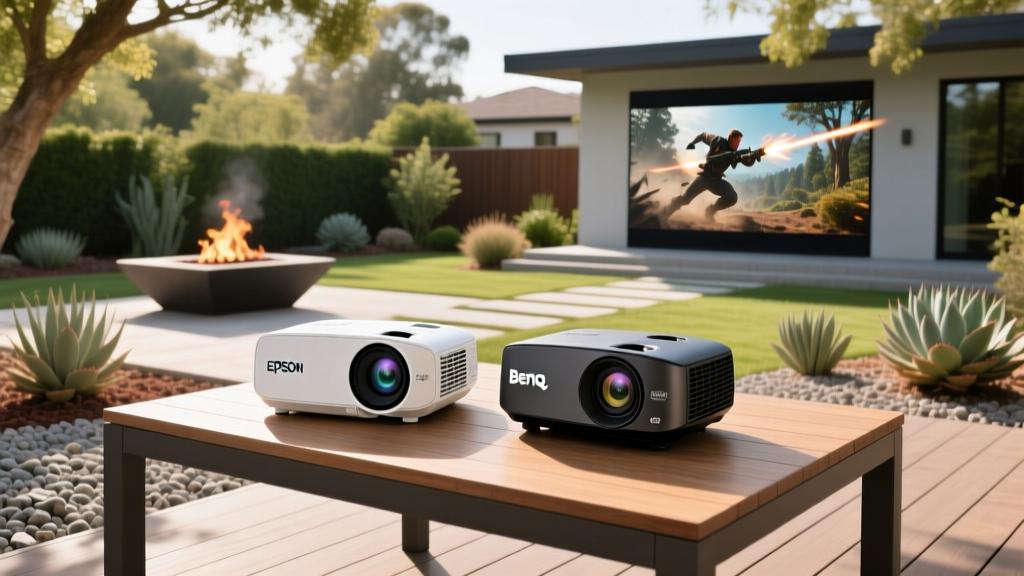
Epson vs BenQ Outdoor Projectors 2026: Lumens & Fire-Safe Setup
David ParkPublished
The 2026 Outdoor Cinema: Merging Entertainment with Defensible Space
As we navigate the outdoor living trends of 2026, the intersection of home entertainment and wildfire resilience has never been more critical. Homeowners in fire-prone regions are increasingly transforming their backyards into luxurious, multi-functional spaces that double as defensible zones. One of the most popular additions to these resilient landscapes is the outdoor movie theater. However, setting up an outdoor projector requires careful consideration of both ambient lighting and electrical safety within your fire-resistant landscaping plan.
When designing an outdoor cinema, you must balance the need for high-quality projection with the strict guidelines of defensible space. According to the Ready.gov wildfire preparedness guidelines, creating a buffer zone free of combustible materials is essential for protecting your home. This means your outdoor theater setup—complete with seating, projection surfaces, and power sources—must be integrated into hardscaped, fire-safe zones rather than nestled among dry shrubs or flammable wood decks.
Understanding Lumens in a Fire-Safe Landscape
In a traditional backyard, homeowners might rely on the flickering light of fire pits or tiki torches to set the mood for movie night. In a fire-resistant landscape, open flames are a significant hazard, especially during dry seasons. Instead, 2026 landscape designs prioritize low-voltage, warm-toned LED hardscape lighting, illuminated gravel pathways, and solar-powered accent lights. While these LED fixtures are vastly safer and more energy-efficient, they introduce ambient light pollution that your projector must cut through.
This is where the lumen battle between the two giants of projection technology—Epson and BenQ—becomes the focal point of your outdoor setup. Lumens dictate the brightness of the projector. In an outdoor environment where safe, non-combustible LED path lighting is actively illuminating the seating area to prevent trip hazards, you need a projector capable of delivering vibrant colors and crisp contrast despite the ambient glow.
Epson vs BenQ: 2026 Flagship Lumen Comparison
Epson and BenQ approach outdoor brightness and contrast differently, largely due to their underlying imaging technologies. Epson utilizes 3LCD technology, which guarantees equal Color Brightness and White Brightness. This is a massive advantage in outdoor settings where ambient LED landscape lighting can wash out colors. BenQ, on the other hand, leverages advanced DLP (Digital Light Processing) technology, which excels in delivering cinematic contrast and deep blacks, provided the viewing environment can be kept relatively dark.
Below is a comparison of the top-tier 2026 models favored for outdoor, fire-safe hardscape setups:
| Feature | Epson EpiqVision Ultra LS800 (UST) | BenQ X3100i (Standard Throw) |
|---|---|---|
| Brightness (Lumens) | 4,000 ANSI Lumens | 3,300 ANSI Lumens |
| Imaging Tech | 3LCD (Equal Color & White Brightness) | DLP (High Contrast, HDR-PRO) |
| Best Projection Surface | Class-A Fire-Rated Stucco House Wall | ALR Screen on Masonry Pillars |
| Ambient Light Rejection | Excellent (Due to high color lumens) | Moderate (Requires darker Zone 1 areas) |
| Fire-Safe Placement | Stone Console Table in Zone 0 | Pergola Mount (Composite/Fire-Retardant) |
| Approx. 2026 Price | $3,499 | $2,799 |
Why Epson Wins for Ambient Hardscape Lighting
If your fire-resistant landscaping relies on a beautifully lit decomposed granite patio with integrated LED step lights, the Epson LS800 Ultra-Short Throw (UST) is the superior choice. Its 4,000 lumens ensure that the image remains vibrant even when the surrounding hardscape is illuminated. Because it sits just inches from the wall on a heavy stone or concrete console table, it eliminates the need to run cables across the yard, drastically reducing electrical trip and fire hazards.
Why BenQ Excels in Darker, Irrigated Zones
If your outdoor theater is situated further out in Zone 2 (30 to 100 feet from the home) where you have heavily irrigated, fire-resistant groundcovers and minimal pathway lighting, the BenQ X3100i shines. Its DLP chip provides a cinematic contrast ratio that makes nighttime viewing spectacular, assuming you can control the immediate ambient light.
Designing the Fire-Resistant Theater Zone
Integrating your projector setup into a defensible space requires adherence to zoning principles. The NFPA Firewise USA program emphasizes the importance of creating non-combustible zones immediately surrounding the home and outdoor structures.
Zone 0 (0-5 Feet): The Projection Hub
Zone 0 must be entirely free of combustible materials. This is the ideal location for your projection equipment. If you are using an Ultra-Short Throw projector like the Epson, place it on a masonry, concrete, or natural stone table directly against the exterior wall of your home. Projecting directly onto a fire-rated stucco or fiber-cement siding wall eliminates the need for a vinyl screen, which can melt or become a fire hazard if exposed to extreme heat or embers.
Zone 1 (5-30 Feet): The Seating Area
Your seating area should be placed on non-combustible hardscaping, such as flagstone pavers or a poured concrete pad surrounded by a 3-inch layer of pea gravel. Avoid using wood mulch near outdoor electronics or power sources. Instead, use decorative river rock or decomposed granite to suppress weeds without introducing fuel for potential wildfires. For seating, opt for powder-coated aluminum furniture with fire-retardant outdoor cushions rather than traditional teak or cedar wood furniture.
Electrical Safety and Cable Management in Dry Zones
One of the most overlooked aspects of outdoor movie setups is electrical safety, which directly ties into fire prevention. Running standard extension cords across dry grass or wood-chip mulch is a severe fire hazard, especially if a cable becomes frayed or overheats.
- Bury Your Cables: For standard throw projectors like the BenQ mounted on a pergola or masonry pillar, always bury your power and HDMI cables. Use a rigid Schedule 40 PVC conduit buried at least 18 inches deep to protect the wiring from landscaping tools and rodents.
- Use Direct Burial Rated Wire: Ensure all outdoor cabling is rated for direct burial (UF-B) and outdoor UV exposure.
- Weatherproof Enclosures: All outdoor power receptacles must be housed in heavy-duty, weatherproof metal enclosures with in-use bubble covers to prevent moisture ingress and short circuits that could spark a fire in dry vegetation.
Projection Surfaces: Stucco Walls vs. Outdoor Screens
When designing a fire-safe yard, the materials you choose for your projection surface matter immensely. Vinyl outdoor screens are highly reflective and provide excellent image quality, but they are essentially large sheets of plastic. In the event of a wildfire ember shower, a vinyl screen can easily catch fire or melt.
The 2026 best practice for fire-resistant landscaping is to utilize the home's exterior architecture. A smooth, white or light-gray stucco wall acts as a natural, Class-A fire-rated projection surface. By pairing a stucco wall with an Epson UST projector, you eliminate combustible materials from your yard entirely. If a screen is absolutely necessary for viewing angles, mount a fixed-frame Ambient Light Rejecting (ALR) screen onto masonry pillars or a pergola constructed from fire-retardant composite lumber, keeping it well within the irrigated, safe zones of your landscape.
Ambient Lighting: Balancing Lumens and Wildfire Safety
To maintain a safe environment without compromising the movie experience, use smart-home integrated LED lighting. Install low-voltage (12V) LED path lights with warm 2700K color temperatures. These lights provide enough illumination to navigate the gravel pathways safely without washing out the projector's image. Because they operate on low voltage and generate virtually zero heat, they pose no ignition risk to surrounding drought-tolerant, fire-resistant plants like succulents, lavender, or ornamental grasses.
By linking your outdoor lighting system to your smart home hub, you can program the path lights to dim to 10% brightness the moment the projector powers on, striking the perfect balance between safety, visibility, and cinematic immersion.
Final Verdict for 2026
Choosing between Epson and BenQ for your outdoor movie setup ultimately depends on how your fire-resistant landscaping is configured. If your theater is integrated into a brightly lit, hardscaped Zone 0 patio utilizing a stucco wall, the high-lumen, 3LCD power of the Epson EpiqVision Ultra LS800 is unmatched. If your setup is nestled in a darker, heavily irrigated Zone 1 oasis with a composite pergola and an ALR screen, the cinematic contrast of the BenQ X3100i will deliver a breathtaking experience.
By prioritizing non-combustible hardscaping, underground electrical conduits, and smart LED lighting, you can enjoy the magic of outdoor cinema in 2026 while maintaining a resilient, defensible landscape that protects your home and family.
