Home & Garden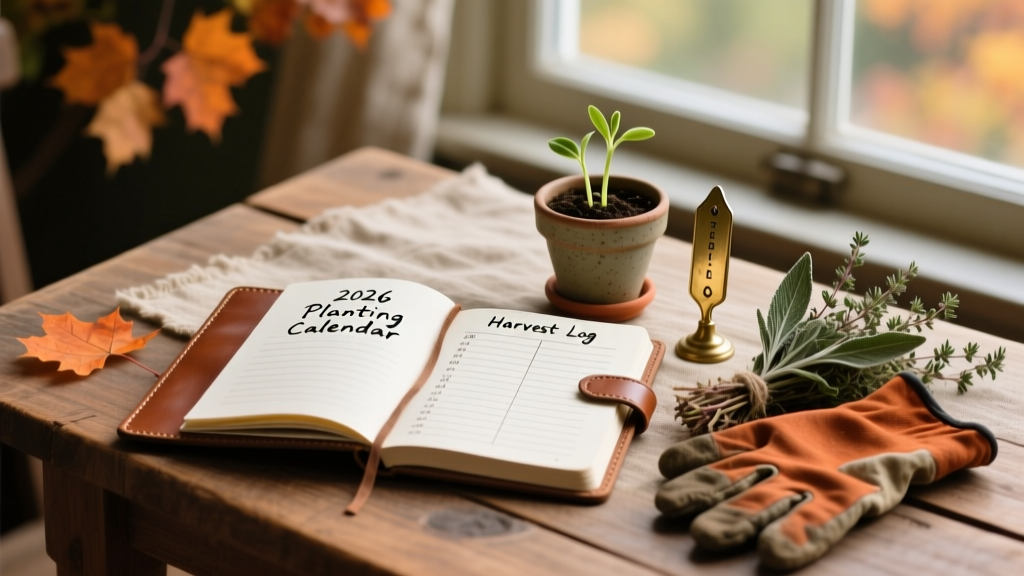
2026 Fall Garden Journal: Planting Calendar & Log Guide
Robert HayesPublished
Why Fall is the Ultimate Season for Garden Journaling
As the autumn air turns crisp and your warm-season grasses begin their transition into winter dormancy, fall lawn care shifts from active mowing to strategic preparation. Core aeration, deep root fertilization, and overseeding are standard autumn chores that keep your turf resilient. However, the most critical tool for your 2026 landscape success is not a broadcast spreader or a thatch rake—it is your garden journal. Bridging the gap between your vegetable beds, ornamental borders, and turfgrass requires meticulous planning and reflection.
Many homeowners make the mistake of waiting until the spring thaw to plan their garden beds. By then, the memory of this year's pest pressures, microclimate quirks, and soil drainage issues has faded. Utilizing the fall months to update your harvest log and design your 2026 planting calendar sets the stage for a thriving, integrated outdoor living space. According to the Old Farmer's Almanac, tracking microclimates and crop rotations annually is essential for maintaining long-term soil health and maximizing yields. When you view your yard as a single, interconnected ecosystem, your fall lawn care routine naturally evolves into a comprehensive landscape management strategy.
Building Your 2026 Harvest Log: Reflecting Before Winter
The harvest log is the retrospective heart of your garden journal. Before the first hard frost kills off your remaining summer crops, take the time to document exactly what succeeded and what failed. This data is crucial not only for next year's vegetable garden but also for understanding the nutrient and water demands placed on the soil immediately adjacent to your lawn.
When garden beds are heavily depleted by aggressive crops like tomatoes or corn, the surrounding turf often suffers from nutrient leaching and competing root systems. By logging your harvest metrics now, you can tailor your late-fall lawn fertilization and garden bed composting routines to address specific deficiencies. Below is a structured template for the essential data points you should be recording in your autumn journal.
| Log Category | Data Points to Record in Fall | Impact on 2026 Lawn & Garden Health |
|---|---|---|
| Crop Yield & Vigor | Total weight, harvest dates, plant vigor | Determines nutrient depletion levels in beds bordering your turfgrass |
| Pest & Disease Pressure | Grub sightings, fungal issues, blight maps | Helps predict fall lawn grub treatments and spring garden fungicide schedules |
| Water & Drainage Logs | Smart controller logs, pooling areas, runoff | Calibrates 2026 smart irrigation zones to prevent lawn runoff into garden beds |
| Soil Amendments Applied | Compost volume, lime, sulfur, fertilizers | Guides fall lawn soil testing and targeted garden bed pH balancing |
Designing the 2026 Planting Calendar from the Fall Perspective
While the harvest log looks backward, the planting calendar looks forward. Designing your 2026 planting calendar during the fall allows you to work backward from your region's average last frost dates, ensuring you order seeds, start indoor seedlings, and prepare garden soil at the exact right moments. More importantly, it allows you to synchronize your garden planting schedule with your spring lawn care calendar.
For example, applying pre-emergent herbicides to your lawn in early spring is a vital step to prevent crabgrass. However, if your garden journal does not clearly map out where you plan to sow direct-seeded garden crops (like carrots or radishes) near the lawn's edge, you risk chemical drift that will stunt your vegetable growth. A well-designed calendar prevents these landscape conflicts.
Key Steps for Your 2026 Calendar Setup:
- Identify Frost Dates: Pinpoint your specific 2026 average last spring frost and first fall frost dates based on updated local climate data.
- Map Crop Rotations: Use your harvest log to ensure heavy feeders (like brassicas) are not planted in the same beds they occupied in 2025, preserving soil structure and preventing localized turf-edge nutrient starvation.
- Schedule Soil Prep: Block out late-fall and early-spring dates for turning compost into garden beds, ensuring this heavy work is completed before the lawn requires its first mow of the season.
- Synchronize Irrigation: Plan the activation dates for your smart irrigation system, ensuring garden drip zones and lawn rotor zones are programmed to respect local 2026 water conservation ordinances.
Integrating Fall Lawn Care with Garden Bed Preparation
The physical work of fall lawn care and garden journaling go hand-in-hand. As you perform core aeration on your lawn to relieve soil compaction, you are also gathering valuable data about your soil's clay-to-sand ratio and thatch depth. The University of Minnesota Extension notes that fall is the optimal time to address soil compaction and nutrient deficiencies, a principle that applies equally to the turf and the adjacent garden beds.
Use a soil probe to test both your lawn and your garden beds during the autumn months. Record the pH and N-P-K (Nitrogen, Phosphorus, Potassium) levels in your journal. Often, garden beds become highly acidic over the summer due to the decomposition of organic mulches and the application of nitrogen-heavy vegetable fertilizers. Conversely, lawns may require a pH bump via lime application to thrive in the spring. By logging these soil test results in the fall, you can order the precise amendments needed over the winter, ensuring your soil is perfectly balanced by the time the 2026 growing season begins.
Smart Home Integration for Automated Journaling
For the modern, tech-savvy homeowner, the 2026 garden journal is not just a leather-bound notebook; it is a digitally integrated dashboard. Smart home technology has revolutionized how we track outdoor environments, bridging the gap between lawn maintenance and garden cultivation.
Consider integrating Wi-Fi-enabled soil moisture sensors, such as the Ecowitt WH51, into your garden beds and lawn zones. These sensors transmit real-time data to your smart hub, allowing you to log exactly how much water your landscape is retaining as temperatures drop in the fall. Furthermore, smart irrigation controllers like the Rachio 4 or B-hyve can automatically export your seasonal water usage reports directly into digital garden journal apps. This automated data collection removes the guesswork from your harvest log, providing precise metrics on how drought stress may have impacted your late-summer yields and your lawn's autumn dormancy cycle.
Choosing the Right Journal Format for 2026
Whether you prefer the tactile experience of pen and paper or the analytical power of cloud-based databases, selecting the right medium for your garden journal is a personal choice that impacts your consistency.
Physical Garden Journals
High-quality, weather-resistant notebooks like the Moleskine Passion Journal or specialized planners like the "Garden Journal" by Chronicle Books are excellent for sketching landscape layouts, taping in seed packets, and writing reflective notes while sitting in the garden. They are particularly useful for mapping out the visual flow between your ornamental garden beds and your turfgrass boundaries.
Digital Garden Planning Apps
For data-heavy gardeners, apps like Gardenize, Planter, or SmartPlant offer robust features for 2026. These platforms allow you to upload photos of pest damage, set automated push notifications for planting dates, and track crop rotations over multiple years. Many of these apps now feature API integrations that pull local weather data, automatically adjusting your planting calendar if an unseasonal frost is predicted.
Conclusion: Setting the Stage for a Seamless Landscape
Fall lawn care is about more than just preparing your grass for winter; it is about setting a foundation for the entire outdoor ecosystem. By dedicating time this autumn to meticulously update your harvest log and design your 2026 planting calendar, you transform your yard from a collection of disjointed chores into a cohesive, thriving landscape. The data you record today regarding soil health, water usage, and crop performance will dictate the success of your spring lawn treatments and your summer garden harvests. Grab your journal, step out into the crisp autumn air, and start planning your most successful outdoor living space yet.
