
Landscaping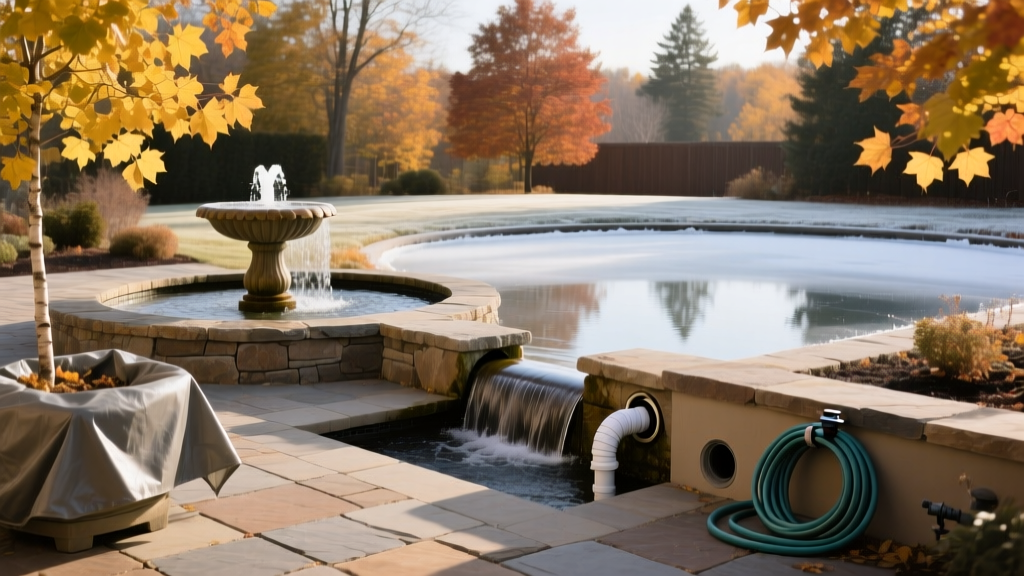
Winterizing Your Landscape: Fall Hardscape and Water Feature Care
Lisa ThompsonPublished
The Hidden Threat of the Freeze-Thaw Cycle
As autumn leaves begin to fall and daytime temperatures dip, landscape maintenance shifts from active growth management to critical winter preparation. While many homeowners focus on lawn aeration and leaf removal, the hardscaping elements and water features of your landscape are highly vulnerable to the impending winter months. The freeze-thaw cycle—where water enters microscopic pores, freezes, expands by up to 9%, and subsequently thaws—can cause catastrophic damage to patios, walkways, retaining walls, and water features if they are not properly winterized.
According to the National Association of Landscape Professionals (NALP), proactive fall maintenance is the most cost-effective way to extend the lifespan of your outdoor living spaces. Neglecting this seasonal transition can lead to heaving pavers, cracked concrete, shattered fountain basins, and ruined submersible pumps. This comprehensive guide will walk you through the essential seasonal maintenance steps required to protect your landscape investments before the first hard freeze.
Step 1: Hardscape Cleaning, Sealing, and Joint Stabilization
Interlocking concrete pavers, natural stone, and poured concrete are all porous to some degree. Before winter sets in, it is crucial to remove organic debris, stains, and existing weeds that can trap moisture against the surface.
Deep Cleaning and Sealing
Begin by power washing your hardscapes using a surface cleaner attachment set to a maximum of 3,000 PSI to avoid etching the surface. Once the pavers or stone are completely dry (which typically takes 24 to 48 hours depending on sunlight), apply a penetrating sealer. Siloxane-based sealers, such as Siloxa-Tek 8500, are highly recommended because they penetrate deep into the concrete matrix to repel water and resist chloride intrusion from winter de-icing salts, rather than just forming a superficial film that can become slippery when wet.
- Application Rate: Most penetrating sealers cover 150 to 200 square feet per gallon.
- Timing: Apply when daytime temperatures are consistently above 50°F and no rain is forecasted for 48 hours.
- Cost: Expect to spend between $0.30 and $0.60 per square foot for high-quality sealants.
Replenishing Polymeric Sand and Retaining Wall Care
The joints between pavers are the first line of defense against water infiltration and base erosion. Over the summer, joint sand can wash out or be dug out by insects. Sweep a high-quality polymeric sand (such as SureBond or Gator Dust) into the joints, compact it with a vibratory plate compactor, and mist it with a fine spray of water to activate the binding polymers. This prevents winter ice from expanding the joints and causing the pavers to shift or heave.
Retaining walls also require close attention during the fall. Ensure that the weep holes at the base of segmental retaining walls are completely clear of soil and debris. If water becomes trapped behind the wall and freezes, the resulting hydrostatic pressure can easily push the wall outward, causing severe structural failure.
Step 2: Winterizing Water Features and Ponds
Water features require meticulous seasonal care. The approach depends heavily on whether you maintain a pondless waterfall, a decorative fountain, or an ecosystem pond with fish.
Pondless Waterfalls and Fountains
For standalone fountains and pondless waterfalls, the golden rule is to remove all standing water and store the equipment properly. Submersible pumps contain internal seals that can dry out and crack if left unused or exposed to freezing air. Remove the pump, clean the impeller of any debris, and store it submerged in a bucket of water in a frost-free location like a basement or heated garage. Drain the basin completely using a wet/dry vac, and cover the feature with a heavy-duty, UV-resistant tarp to keep out falling leaves and winter precipitation.
Ecosystem Ponds, Koi Care, and Aquatic Plants
If you have an ecosystem pond with aquatic plants and fish, you cannot simply drain it. Instead, you must transition the pond into winter dormancy. According to the University of Minnesota Extension, stopping fish feeding when water temperatures drop below 50°F is critical, as their digestive systems slow down significantly. Furthermore, you must keep a portion of the pond surface ice-free to allow toxic gases (like ammonia from decaying leaves) to escape and oxygen to enter.
For marginal aquatic plants like hardy water lilies and lotus, trim back the dead foliage after the first frost and submerge the pots into the deepest part of the pond to protect the root crowns from freezing solid.
- De-icers: Use a 200-watt to 300-watt floating pond de-icer to maintain a small opening in the ice.
- Aeration: Move the aeration air stones from the bottom of the pond to just a few inches below the surface. This prevents super-cooling the water at the bottom where the fish are overwintering.
- Netting: Install a heavy-duty pond net over the water in early fall to catch leaves before they sink and decay, which drastically reduces spring maintenance and toxic gas buildup.
Step 3: Outdoor Kitchen and Fire Pit Shutdown
Outdoor kitchens represent a massive financial investment, and the plumbing within them is highly susceptible to freezing. Even if your outdoor kitchen is equipped with frost-free hose bibs, the internal supply lines to sinks, ice makers, and refrigerators must be winterized.
- Shut Off the Water: Locate the interior shut-off valve for the outdoor kitchen's water supply and turn it off.
- Drain the Lines: Open all outdoor faucets and valves to drain residual water. If your system has a drain cap or blow-out port, use an air compressor set to a maximum of 50 PSI to blow out any remaining water from the low points in the PVC or PEX piping.
- Gas Lines: Turn off the main gas supply valve to the outdoor kitchen and fire pits. For propane systems, disconnect the tanks, cap the lines, and store the tanks in a well-ventilated, outdoor storage shed (never indoors or in a basement).
- Cover and Protect: Clean granite or stainless steel countertops with a dedicated stone cleaner, apply a stone sealer, and cover the entire kitchen island with a breathable, custom-fit winter cover to prevent moisture trapping and mold growth.
Step 4: Clearing Drainage Systems
Winter precipitation, combined with snowmelt, puts immense pressure on your landscape drainage systems. A clogged French drain or catch basin in February can lead to water backing up against your home's foundation or flooding a newly installed patio. Flush all catch basins with a high-pressure hose to remove autumn mud and leaves. Inspect the exit points (daylighting) of your French drains to ensure they are not blocked by fallen branches or soil erosion. If you have dry creek beds installed as part of your sustainable landscaping design, take the time to reposition any displaced river rock and remove accumulated silt that could impede water flow during heavy winter rainstorms or rapid snowmelt events.
The Environmental Protection Agency (EPA) also strongly recommends blowing out irrigation systems with compressed air before the first freeze to prevent shattered PVC pipes and damaged sprinkler heads, which often share trench space with drainage lines.
Fall Landscape Winterization Cost and Task Guide
Budgeting for fall landscape maintenance helps homeowners avoid massive repair bills in the spring. Below is a structured comparison of common winterization tasks, their estimated costs, and the potential repair costs if neglected.
| Winterization Task | Estimated Cost (Professional) | DIY Feasibility | Potential Repair Cost if Neglected |
|---|---|---|---|
| Paver Sealing & Joint Sand | $0.50 - $1.50 / sq. ft. | Moderate | $15 - $25 / sq. ft. (Paver replacement) |
| Pond Pump Removal & Netting | $150 - $300 flat rate | High | $300 - $800 (New pump & fish loss) |
| Irrigation System Blowout | $75 - $150 per system | Low (Requires compressor) | $1,000+ (Pipe & head replacement) |
| Outdoor Kitchen Plumbing | $100 - $250 flat rate | Moderate | $500 - $2,000 (Appliance & pipe damage) |
Conclusion
Seasonal maintenance in the fall is not merely about putting your landscape to bed; it is about fortifying it against the harsh realities of winter weather. By taking the time to seal your hardscapes, properly store water feature components, shut down outdoor plumbing, and clear your drainage systems, you ensure that your outdoor living spaces will be ready to enjoy the moment spring arrives. Investing a weekend and a modest budget into these seasonal care practices will safeguard your landscape's structural integrity and aesthetic appeal for years to come.

