Lawn Care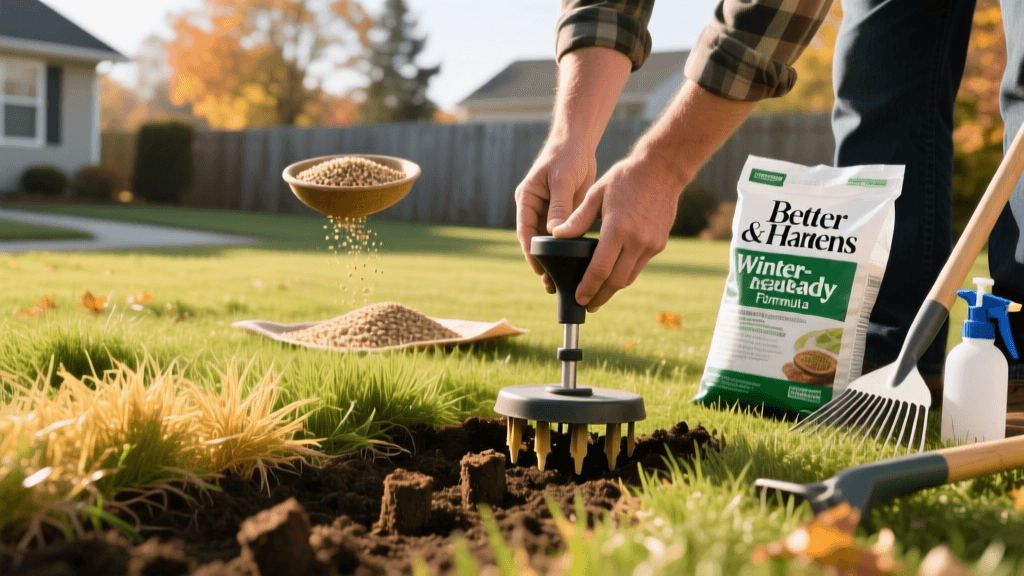
The Ultimate Fall Lawn Care Guide for Cool-Season Grass
Why Autumn is the Most Critical Season for Cool-Season Lawns
For homeowners with cool-season grasses like Kentucky Bluegrass, Tall Fescue, and Perennial Ryegrass, the crisp air of autumn signals a vital biological shift. While spring prompts rapid top-growth and lush green blades, fall is the season when turfgrass focuses its energy downward. During the cooler days and nights of autumn, grass plants develop deep, robust root systems and store essential carbohydrates to survive winter dormancy. According to the University of Minnesota Extension, the lawn care practices you perform between late August and early November dictate how your grass will survive the freezing winter months and how quickly it will green up the following spring. Neglecting your lawn in the fall means missing the primary biological window for turfgrass recovery, establishment, and long-term resilience.
The Fall Lawn Care Calendar: Timing is Everything
To maximize your efforts and avoid wasting money on products applied at the wrong time, break your autumn maintenance into three distinct phases. Here is a structured timeline to keep your seasonal tasks on track:
| Phase | Timing | Primary Tasks | Product Focus |
|---|---|---|---|
| Early Fall | Late August to Mid-September | Core aeration, overseeding, weed control | Starter fertilizer, grass seed, broadleaf herbicide |
| Mid Fall | Mid-September to Mid-October | Continued watering, leaf mulching, mowing adjustments | Organic compost, slow-release nitrogen |
| Late Fall | Late October to Early November | Final mowing, winterizer application, winter prep | High-nitrogen winterizer fertilizer |
Step 1: Core Aeration to Relieve Soil Compaction
Over the summer, foot traffic, heavy mowing equipment, and baking sun can cause soil compaction and thatch buildup. Compacted soil prevents water, oxygen, and nutrients from reaching the root zone. Core aeration involves using a machine to pull 2-to-3-inch plugs of soil and thatch from the lawn, leaving them on the surface to break down naturally.
Actionable Advice: Always rent a core aerator rather than a spike aerator. Spike aerators simply poke holes, which can actually increase compaction in heavy clay soils. Water your lawn deeply 24 hours before aerating to soften the soil, allowing the tines to penetrate deeply. Expect to pay between $70 and $100 to rent a walk-behind aerator for the day, or hire a professional landscaping service for roughly $75 to $150 per 5,000 square feet.
Step 2: Overseeding to Thicken the Turf
Aeration creates the perfect seedbed for overseeding. Thick lawns are the best natural defense against weeds and drought. When selecting seed, avoid cheap contractor mixes that are loaded with annual ryegrass or weed seeds. Invest in high-quality, certified seed blends tailored to your specific microclimate.
- Kentucky Bluegrass: Apply 1 to 2 lbs per 1,000 square feet for overseeding. This grass spreads via rhizomes and fills in bare spots beautifully over time.
- Tall Fescue: Apply 4 to 6 lbs per 1,000 square feet. Ideal for high-traffic areas and shaded zones due to its deep root structure and bunch-type growth habit.
- Perennial Ryegrass: Apply 3 to 5 lbs per 1,000 square feet. Known for rapid germination (5-7 days), making it an excellent nurse grass for slower-germinating bluegrass.
After spreading the seed, apply a high-phosphorus starter fertilizer (such as a 18-24-12 N-P-K ratio) to stimulate immediate root development. Keep the top inch of soil consistently moist by watering lightly two to three times a day for the first 14 days.
Step 3: Fall Fertilization and Soil Testing
Fall fertilization is arguably the most important nutrient application of the year. While spring feeding pushes blade growth (which requires more mowing), fall feeding pushes root growth and carbohydrate storage. Before broadcasting any granular products, it is highly recommended to conduct a soil test. The University of Minnesota Soil Testing Laboratory and similar state extension offices provide comprehensive analyses that reveal your soil pH and exact nutrient deficiencies, saving you from wasting money on unnecessary amendments.
For the late fall application, often referred to as the 'Winterizer,' use a fertilizer with a high nitrogen content and a quick-release or methylene-urea nitrogen source. According to Penn State Extension, applying nitrogen in late October or early November (after the final mowing but before the ground freezes) allows the grass roots to absorb the nutrients and store them for immediate use during the early spring green-up. Look for products labeled as 'WinterGuard' or 'Late Fall' formulas, typically featuring an N-P-K ratio around 32-0-10.
Pro Tip: Never apply fertilizer to frozen ground or snow-covered lawns. The nutrients will simply run off into local waterways, causing environmental harm and wasting your investment.
Step 4: Mowing Adjustments and Leaf Management
As the growing season winds down, your mowing habits must adapt. Throughout the summer, cool-season grasses should be kept tall (3 to 4 inches) to shade the soil and deter crabgrass. However, entering the winter with tall grass is a recipe for disaster. Long grass blades will mat down under the weight of snow, creating a humid, stagnant environment that breeds destructive fungal diseases like Snow Mold and Typhula Blight.
Gradually lower your mower deck over the last three mows of the season, ending at a height of 2 to 2.5 inches for the final cut.
When it comes to autumn leaves, ditch the rake and the bags. Instead, use your mower's mulching attachment to chop leaves into dime-sized pieces. These tiny leaf fragments will filter down into the turf canopy, acting as a free, organic compost that feeds soil microbes and improves moisture retention. If the leaf layer is so thick that you cannot see the grass blades after mulching, you may need to bag the excess or rake it into garden beds.
Step 5: Strategic Broadleaf Weed Control
Many homeowners assume spring is the time to fight weeds, but fall is actually the most effective season to eradicate perennial broadleaf weeds like dandelions, clover, and plantain. In the autumn, weeds are actively translocating nutrients from their leaves down into their deep taproots to prepare for winter survival.
When you apply a liquid post-emergent herbicide (containing active ingredients like 2,4-D, Dicamba, or Triclopyr) in early to mid-fall, the weed absorbs the chemical through its leaves and pulls it directly down into the root system, ensuring a complete kill rather than just a temporary top-burn. Apply herbicides on a calm, clear day when temperatures are consistently between 55°F and 75°F, and ensure no rain is in the forecast for at least 24 hours to allow the product to dry on the foliage.
Conclusion: Setting the Stage for Spring
Winterizing your cool-season lawn is not about keeping it green through the snow; it is about fortifying the plant's internal biology to endure the freeze and explode with vitality when the thaw arrives. By following a disciplined schedule of core aeration, strategic overseeding, precise late-fall fertilization, and proper mowing height adjustments, you are investing directly in the health of your soil and turf. The time and budget you allocate to your lawn this autumn will pay massive dividends next April, leaving you with a thick, resilient, and deeply rooted carpet of grass that your neighbors will envy.