
Landscaping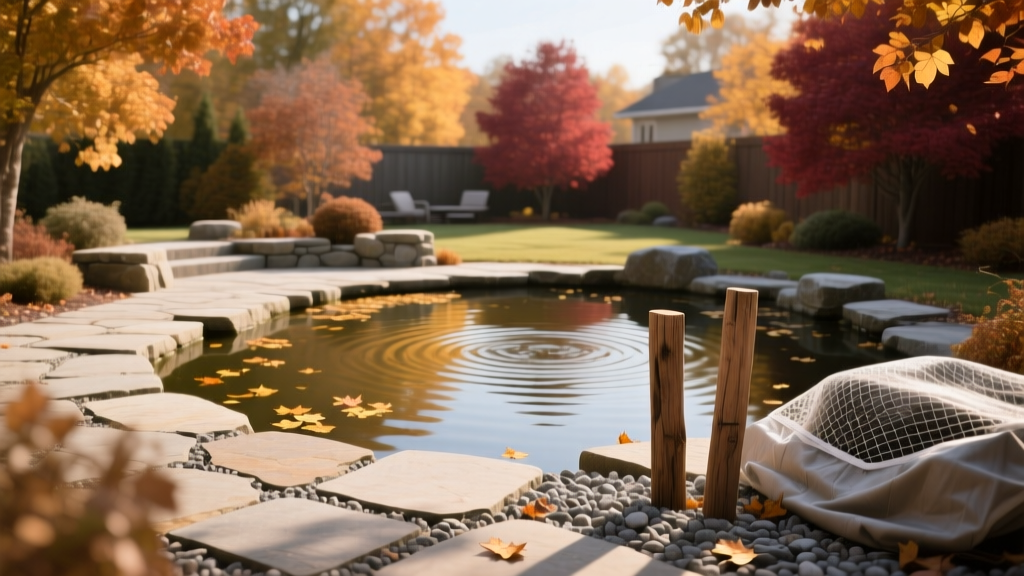
Essential Fall Winterizing for Hardscapes and Ponds
Sarah ChenPublished
The Hidden Costs of Ignoring Fall Landscape Maintenance
As autumn leaves begin to fall, homeowners often focus entirely on lawn care, leaf removal, and garden bed mulching. However, your landscape's hardscapes and water features require equal attention. Patios, retaining walls, walkways, and backyard ponds represent a significant financial investment, often costing tens of thousands of dollars to install. Without proper seasonal maintenance and care, the harsh realities of winter weather can cause irreversible damage, leading to expensive repairs come spring.
Fall is the critical window for winterizing your outdoor living spaces. By taking proactive steps before the first hard freeze, you can protect your pavers from heaving, prevent concrete spalling, and ensure your water feature's plumbing and aquatic life survive the freezing temperatures. This comprehensive guide will walk you through the exact measurements, products, and timelines required for professional-grade fall landscaping maintenance.
The Science of Freeze-Thaw Damage in Landscaping
To understand why fall maintenance is non-negotiable, you must understand the mechanics of freeze-thaw cycles. Water expands by approximately 9% in volume when it freezes. In a landscaping context, this means any moisture trapped within the microscopic pores of natural stone, concrete pavers, or retaining wall blocks will expand with tremendous force when temperatures drop below 32°F (0°C).
This expansion causes a phenomenon known as spalling, where the face of the stone or concrete pops off. Furthermore, water that settles in the joints between pavers and freezes will push the stones upward, causing uneven heaving and tripping hazards. In water features, trapped water inside PVC pipes, filters, or pump volutes will expand and crack the housings, resulting in total equipment failure. Proper fall winterization is entirely about moisture management and exclusion.
Step-by-Step Hardscape Winterization
1. Deep Cleaning and Pressure Washing
Before applying any sealers or jointing sands, your hardscapes must be completely free of organic debris, dirt, and mildew. Use a pressure washer equipped with a surface cleaner attachment to ensure an even clean. Crucial Measurement: Keep the pressure under 1,500 PSI when cleaning interlocking concrete pavers. Exceeding this pressure can blow out the existing joint sand and etch the surface of softer natural stones like sandstone or limestone. Allow the hardscape to dry completely for at least 48 to 72 hours before moving to the next step; sealing over trapped moisture is a primary cause of winter hardscape failure.
2. Re-Sanding Paver Joints
According to the Interlocking Concrete Pavement Institute (ICPI), proper joint sand is the primary defense against paver shifting and weed intrusion. Over the summer, joint sand can wash away or degrade. In the fall, replenish these joints using high-quality polymeric sand. Unlike traditional masonry sand, polymeric sand contains silica and specialized chemical binders that harden when misted with water. This creates a flexible, impermeable barrier that locks out winter moisture while allowing for slight thermal expansion and contraction. A standard 50-pound bag of polymeric sand costs between $30 and $50 and covers approximately 200 to 400 square feet, depending on joint width.
3. Applying the Right Penetrating Sealer
Not all sealers are created equal, and using the wrong product in the fall can be disastrous. Avoid film-forming acrylic sealers, which create a plastic-like barrier on the surface. If moisture is trapped beneath an acrylic sealer, the freeze-thaw cycle will cause severe spalling. Instead, opt for a penetrating siloxane or silane sealer. These breathable sealers absorb deep into the pores of the concrete or stone and chemically react to create a hydrophobic barrier, repelling water while allowing water vapor to escape. Apply the sealer when daytime temperatures are consistently between 50°F and 80°F. Professional-grade siloxane sealers typically cost $0.25 to $0.50 per square foot.
Winterizing Backyard Water Features and Ponds
Debris Management and Pond Netting
Decaying organic matter is the enemy of a healthy winter pond. As leaves fall and sink to the bottom, they decompose and release toxic gases like hydrogen sulfide, which can be lethal to overwintering fish. Before the surrounding trees drop their leaves, install a heavy-duty pond net suspended over the water surface using a frame or floating balls. This makes fall cleanup as simple as rolling up the net and disposing of the leaves. Ensure the net is pulled taut so debris doesn't pool in the center and sag into the water.
Pump and Filter Winter Storage
Submersible pumps and external filtration systems are highly susceptible to freeze damage. Unless you are running a dedicated winter aeration system, all water-moving equipment should be removed. Disconnect the pump, clean the impeller and intake screens, and store it in a bucket of water in a climate-controlled garage or basement. Storing the pump in water prevents the internal rubber seals and O-rings from drying out and cracking over the winter. Drain all PVC plumbing lines and leave the valves open to prevent trapped water from freezing and splitting the pipes.
Managing Aquatic Plants and Fish
The University of Minnesota Extension emphasizes that pond care must shift as water temperatures drop. Stop fertilizing aquatic plants when the water temperature falls below 60°F. Trim back dead foliage from hardy water lilies and marginal plants to prevent them from rotting in the pond. If you keep fish, such as Koi or Shubunkins, they will enter a state of torpor (dormancy) when water temperatures drop below 50°F. Switch to a wheatgerm-based, easily digestible fish food in early fall, and stop feeding entirely once the water hits 50°F, as their digestive systems will shut down.
To prevent the pond surface from freezing solid and trapping toxic gases, install a floating pond de-icer. Choose a model with a built-in thermostat that activates only when ice begins to form. A 150-watt to 300-watt de-icer is sufficient for most backyard ponds up to 1,000 gallons and will maintain a vital gas-exchange hole in the ice throughout the winter.
Seasonal Landscaping Maintenance Cost Breakdown
Budgeting for fall maintenance is essential for preserving your landscape's ROI. Below is a structured cost guide for common winterization tasks:
| Maintenance Task | Material / Tool Needed | Estimated Cost | Frequency |
|---|---|---|---|
| Paver Joint Re-Sanding | Polymeric Sand (50lb bag) | $30 - $50 per bag | Annually / Bi-Annually |
| Hardscape Sealing | Penetrating Siloxane Sealer | $0.25 - $0.50 per sq ft | Every 2-3 Years |
| Pond Debris Protection | Heavy-Duty Pond Netting | $25 - $60 | Annually (Replace as needed) |
| Winter Fish & Gas Care | Floating Thermostatic De-Icer | $40 - $80 | Every 3-5 Years |
| Pump Seal Preservation | 5-Gallon Storage Bucket | $5 - $10 | One-time purchase |
Your Fall Landscaping Action Timeline
Timing is everything in seasonal landscape care. Follow this chronological checklist to ensure no step is missed:
- Early Fall (September): Install pond netting before the first major leaf drop. Switch fish to wheatgerm food. Prune back dying aquatic plant foliage.
- Mid-Fall (October): Pressure wash hardscapes and allow them to dry. Re-apply polymeric sand to paver joints. Apply penetrating siloxane sealers to concrete and stone surfaces while temperatures are still comfortably above 50°F.
- Late Fall (November): Drain and blow out all landscape irrigation lines. Remove submersible pond pumps and store them in water indoors. Install floating de-icers in water features.
- Early Winter (December): Perform a final walkthrough to ensure retaining wall weep holes are clear of debris, allowing hydrostatic pressure to escape during winter rains and snowmelts.
Final Thoughts on Sustainable Landscape Care
Proactive seasonal maintenance is the hallmark of sustainable landscaping. By investing a small amount of time and money in the fall, you prevent the premature degradation of your hardscapes and the ecological collapse of your water features. Furthermore, as noted by the Penn State Extension, maintaining the structural integrity of your landscape borders and hardscapes directly impacts the health of adjacent garden beds by ensuring proper drainage and preventing soil erosion during heavy winter thaws. Treat your hardscapes and ponds with the same care you give your lawn, and they will reward you with beauty and functionality for decades to come.

