Home & Garden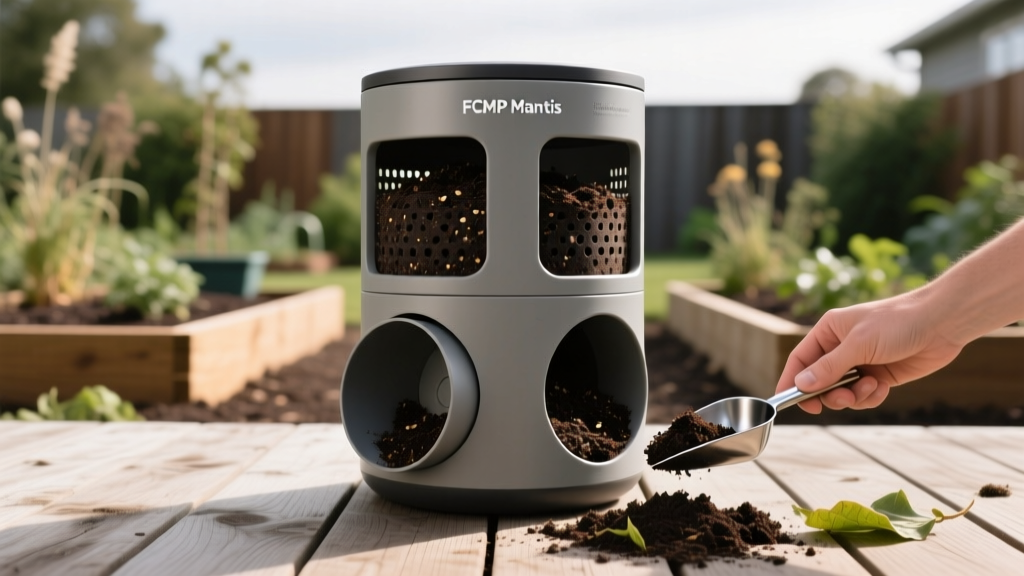
FCMP vs Mantis Dual-Chamber Compost Tumblers 2026: Aeration Guide
Sarah ChenPublished
The Crucial Link Between Core Aeration and Compost Topdressing
As we navigate the 2026 lawn care season, the consensus among turfgrass professionals and agronomists is clearer than ever: core aeration without subsequent topdressing is a massive missed opportunity. Core aeration physically alleviates soil compaction by extracting small plugs of earth, creating vital pathways for oxygen, water, and nutrients to reach the root zone. However, leaving those empty cores exposed to the elements allows them to dry out and collapse, negating much of the structural benefit. This is where high-quality, biologically active compost becomes indispensable. According to University of Minnesota Turfgrass Science, topdressing immediately after core aeration allows the compost to filter directly into the aeration holes, permanently improving soil structure, enhancing microbial activity, and increasing water retention in the root zone.
For the dedicated home gardener, producing a continuous supply of this microbe-rich compost requires the right equipment. While static piles work for massive properties, suburban and urban lawns demand a more controlled, efficient approach. This brings us to the ultimate 2026 showdown for lawn care enthusiasts: the FCMP Dual-Chamber Tumbler versus the Mantis Dual-Chamber Tumbler. Both units promise to accelerate decomposition, but when your goal is specifically to generate fine, screened compost for post-aeration topdressing, their distinct engineering choices make a world of difference.
Why Dual-Chamber Tumblers are Essential for Lawn Care
To understand why we are comparing dual-chamber models, we must look at the timeline of lawn maintenance. Core aeration is typically performed during narrow seasonal windows—early fall for cool-season grasses and late spring for warm-season varieties. If you are using a single-chamber tumbler, you must stop adding fresh kitchen scraps and yard waste weeks before you need the finished compost to allow it to cure. This often leads to a shortage of finished material right when your lawn needs it most.
A dual-chamber tumbler solves this logistical nightmare. It allows you to practice continuous batch composting. While one chamber is actively curing and heating up to break down complex carbon structures, you are simultaneously filling the second chamber with fresh organic matter. This ensures that you always have a reserve of finished, biologically active compost ready to be sifted and applied the moment your core aerator finishes its final pass across the lawn.
FCMP Dual-Chamber Tumbler: 2026 Overview and Performance
The FCMP Outdoor Dual-Chamber Tumbler has remained a staple in the home composting market, and its 2026 iterations continue to refine the user experience. Built with BPA-free, UV-protected polypropylene bins and supported by a galvanized steel frame, the FCMP is designed to withstand harsh weather conditions without degrading. The total capacity sits at roughly 37 gallons, split evenly between the two chambers. For a standard 5,000-square-foot urban lawn, this capacity is generally sufficient to produce enough compost for targeted topdressing of high-traffic areas and heavily compacted zones post-aeration.
Where the FCMP truly shines for aeration-focused gardeners is its internal fin design. The deep, angled fins inside the drum aggressively break up clumps of soil, matted grass clippings, and kitchen waste every time you spin the bin. This aggressive mechanical breakdown is crucial because compost destined for aeration cores must be as fine as possible. Large chunks will simply sit on top of the turf, smothering the grass and failing to penetrate the half-inch holes left by the aerator. The adjustable air vents also allow you to control oxygen flow, which is vital for maintaining the aerobic bacteria necessary for rapid decomposition.
Mantis Dual-Chamber Tumbler: 2026 Overview and Performance
The Mantis Dual-Chamber Compost Tumbler approaches the composting process with a heavy emphasis on heat retention and ergonomic turning. Constructed almost entirely from heavy-duty, rust-proof polymers, the Mantis eliminates the corrosion issues that can plague steel-framed tumblers over several seasons of exposure to irrigation systems and rainfall. Its slightly larger 43-gallon total capacity provides a bit more buffer for homeowners with larger garden beds and expansive lawn areas requiring post-aeration soil amendment.
The standout feature of the Mantis for the lawn care specialist is its superior heat retention. The thick, insulated polymer walls trap the thermal energy generated by microbial activity, allowing the compost to reach the high temperatures required to break down tough thatch and weed seeds. When you are recycling the actual cores pulled from your lawn back into the tumbler, this high-heat environment is essential for destroying any dormant weed seeds or soil-borne pathogens that might be lurking in the compacted clay plugs. Furthermore, the Mantis features a uniquely designed ergonomic grip and a balanced axis, making it significantly easier to turn when the bins are loaded with heavy, wet clay soil and dense grass clippings.
Head-to-Head Comparison Chart
To help you decide which tumbler best supports your core aeration and topdressing regimen, we have broken down the critical specifications of both models as they stand in 2026.
| Feature | FCMP Dual-Chamber Tumbler | Mantis Dual-Chamber Tumbler |
|---|---|---|
| Total Capacity | 37 Gallons | 43 Gallons |
| Frame Material | Galvanized Steel | Rust-Proof Heavy Polymer |
| Bin Material | BPA-Free Polypropylene | Insulated UV-Resistant Polymer |
| Heat Retention | Moderate | High (Excellent for thatch) |
| Internal Mixing Fins | Deep & Aggressive | Standard Curved Baffles |
| Turning Mechanism | Hand-Spin Drum | Ergonomic Grip & Balanced Axis |
| Best Use Case | Breaking down heavy clay cores | Hot composting thatch & weeds |
Processing Compost Specifically for Core Aeration Topdressing
Regardless of whether you choose the FCMP or the Mantis, the material that exits the tumbler is rarely fine enough to be applied directly to the lawn immediately after aeration. Tumbler compost often contains small twigs, un-decomposed corn cobs, or clumps of organic matter. If applied directly, these debris piles will block the aeration holes and create uneven mowing surfaces.
The United States Environmental Protection Agency (EPA) emphasizes that proper screening of compost ensures a uniform product that maximizes soil contact and water infiltration. To prepare your tumbler compost for aeration topdressing, you must build or purchase a compost screen. A simple wooden frame fitted with 1/4-inch hardware cloth works perfectly. Place the screen over a wheelbarrow and shovel the tumbler output across it. The fine, dark, earthy material that falls through is pure gold for your lawn's root zone. The larger pieces that remain on top of the screen should be immediately tossed back into the active chamber of your dual-chamber tumbler to continue breaking down.
Step-by-Step Post-Aeration Topdressing Application
Once you have sifted your FCMP or Mantis compost, timing and application technique are critical. Follow these steps to maximize the benefits of your core aeration and topdressing combination:
- Timing is Everything: Apply the sifted compost within 24 to 48 hours of running your core aerator. The holes are still open and the soil structure is receptive.
- Calculate Your Volume: For a standard topdressing, you want to apply a layer no thicker than 1/4 to 1/2 inch. For a 5,000-square-foot lawn, this translates to roughly 0.5 to 1 cubic yard of sifted compost. Plan your tumbler batches months in advance to meet this volume.
- Even Distribution: Shovel small piles of sifted compost across the lawn. Using a push broom or a specialized lawn drag mat, work the compost into the turf canopy. The goal is to force the compost down into the aeration holes while leaving the grass blades exposed to sunlight.
- Watering In: Immediately after dragging the compost, run your irrigation system or hose for a deep watering cycle. This washes the remaining compost off the grass blades and settles it firmly into the aeration cores, establishing immediate contact with the subsoil and roots.
Final Verdict for the 2026 Lawn Care Season
Both the FCMP and Mantis dual-chamber tumblers are exceptional tools for the modern, eco-conscious homeowner, but they serve slightly different agronomic needs. If your primary challenge is heavy, compacted clay soil and you plan to recycle the actual aeration cores back into your compost, the FCMP Dual-Chamber Tumbler is the superior choice. Its aggressive internal fins will pulverize those dense clay plugs, transforming them into a friable, nutrient-rich topdressing material.
On the other hand, if your lawn suffers from heavy thatch buildup and you want to ensure that any weed seeds pulled up during the aeration process are completely destroyed, the Mantis Dual-Chamber Tumbler is your best ally. Its superior heat retention and rust-proof polymer construction make it a resilient, high-temperature composting engine that will keep your lawn's ecosystem safe and thriving. Whichever model you select, pairing your compost tumbler with an annual core aeration routine is the single most effective strategy for achieving a dense, drought-resistant, and vibrant lawn in 2026 and beyond.
