Home & Garden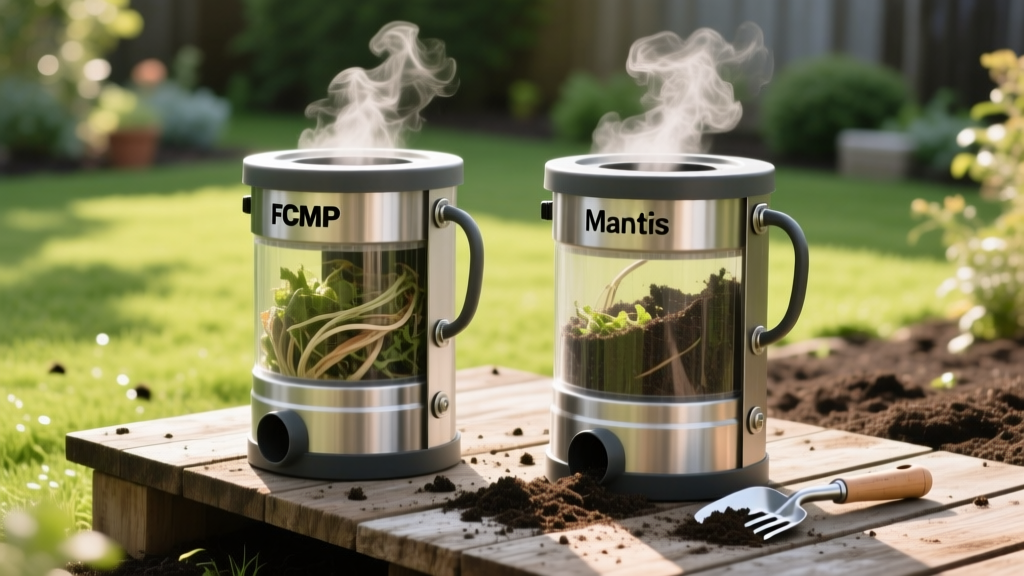
FCMP vs Mantis Dual Compost Tumblers 2026: Lawn Seeding
David ParkPublished
The Critical Link Between Compost, Aeration, and Seeding
As we enter the 2026 spring lawn care season, homeowners and landscaping professionals alike are prioritizing soil health over synthetic chemical interventions. The cornerstone of a resilient, drought-tolerant, and thick lawn lies in the triad of core aeration, overseeding, and compost top-dressing. While many gardeners understand the mechanical benefits of core aeration—relieving soil compaction and allowing oxygen to reach the root zone—the biological component is often overlooked. This is where high-quality, biologically active compost becomes your most valuable asset.
According to the University of Minnesota Turfgrass Science program, overseeding thinning lawns is significantly more successful when seeds are protected and nourished by a compost top-dressing. The compost acts as a moisture-retaining sponge, keeping delicate grass seedlings hydrated during the critical germination window. Furthermore, it introduces beneficial soil microbes that break down thatch and make existing soil nutrients bioavailable to the new grass roots.
To achieve a continuous supply of this 'black gold' for your lawn, a dual-chamber compost tumbler is the ultimate tool. Unlike open piles that can take over a year to break down and often fail to reach the temperatures required to kill weed seeds, tumblers accelerate the process. The dual-chamber design allows you to cure one batch while actively filling the other, ensuring you always have finished compost ready when your lawn needs it.
FCMP Outdoor Dual Chamber Tumbler: 2026 Review
The FCMP Outdoor Dual Chamber Tumbler remains a top contender in 2026 for suburban lawn enthusiasts. Constructed from BPA-free, UV-protected polypropylene and supported by a galvanized steel frame, it is designed to withstand harsh weather conditions year-round. The total capacity is roughly 43 gallons, split evenly between the two chambers.
For the lawn care specialist, the internal design of the FCMP is its standout feature. The deep fins and baffles inside the drum act as an internal mixing mechanism. Every time you spin the tumbler, these fins break up compacted clumps of grass clippings and kitchen scraps, ensuring optimal aeration within the compost itself. This internal aeration is critical for maintaining the aerobic bacteria necessary for rapid decomposition.
However, the FCMP does have a learning curve. When both chambers are completely full and wet, the center of gravity can make spinning the drum slightly strenuous. For best results, lawn owners should fill each chamber only to the recommended line and maintain a strict carbon-to-nitrogen ratio using dry autumn leaves or shredded cardboard to keep the mixture light and crumbly.
Mantis Dual-Chamber Compost Tumbler: 2026 Review
The Mantis Dual-Chamber Compost Tumbler approaches the composting challenge with a focus on ergonomic turning and structural durability. The 2026 models feature reinforced bearings and a geared handle mechanism on select premium tiers, making it incredibly easy to turn even when the barrel is loaded with heavy, wet grass clippings from spring mowing.
Mantis utilizes a slightly different internal baffle system that promotes a tumbling and folding action rather than just dropping the material. This gentle folding is excellent for preserving the structure of larger carbon materials like wood chips or straw, which are often used in lawn-focused compost recipes to ensure the final product is well-aerated and doesn't become anaerobic and smelly.
One distinct advantage of the Mantis for lawn top-dressing is its lower profile and wider sliding doors. When you are ready to harvest your compost for overseeding, the wide opening makes it much easier to shovel out the finished material or tip it directly into a wheelbarrow. The Mantis frame also sits slightly lower to the ground, providing better stability on uneven terrain, which is common in backyard garden setups.
Head-to-Head Comparison Chart
| Feature | FCMP Dual Chamber | Mantis Dual-Chamber |
|---|---|---|
| Total Capacity | 43 Gallons | 40 Gallons |
| Frame Material | Galvanized Steel | Powder-Coated Steel |
| Turning Mechanism | Hand-Spin with Deep Fins | Gear-Assist / Ergonomic Handle |
| Door Size | Standard Sliding | Wide-Access Sliding |
| Best For | High-Volume Kitchen & Leaf Waste | Heavy Grass Clippings & Ergonomic Use |
| 2026 Est. Price | $110 - $130 | $140 - $160 |
Optimizing the C:N Ratio for Lawn-Derived Waste
One of the most common mistakes homeowners make when using compost tumblers is overloading them with fresh grass clippings, which are extremely high in nitrogen. When you mow your lawn weekly during the peak 2026 growing season, it is tempting to dump every catcher-full into the tumbler. However, an excess of nitrogen leads to an anaerobic, slimy, and foul-smelling mess that will harm your lawn rather than help it.
To maintain the ideal Carbon-to-Nitrogen (C:N) ratio of roughly 30:1, you must balance your fresh green grass clippings with ample 'browns'. Keep a dedicated bin of dry autumn leaves, shredded newspaper, or untreated cardboard next to your FCMP or Mantis tumbler. For every scoop of fresh grass clippings you add, incorporate two to three scoops of dry browns. This balance ensures the internal temperature of the tumbler reaches the thermophilic stage (between 135°F and 160°F), which is absolutely necessary to eradicate any weed seeds or lawn pathogens that might have been collected during mowing.
Screening for Seed: The Hidden Step for Lawn Perfection
Whether you choose the FCMP or the Mantis, there is a crucial step required before applying tumbler compost to an aerated and seeded lawn: screening. The Environmental Protection Agency (EPA) emphasizes that finished compost should be dark, crumbly, and earthy-smelling. However, tumblers often leave behind small, uncomposted twigs, corn cobs, or clumps of peat moss.
If you apply unscreened compost over newly sown grass seed, these large chunks can smother the delicate seedlings, blocking sunlight and creating uneven moisture zones. To create the perfect top-dressing material, build a simple screen frame using 1/4-inch hardware cloth. Place the screen over your wheelbarrow, dump the tumbler contents onto it, and work the material through with a hand trowel. The resulting fine, powdery compost is the exact texture needed to filter down into aeration holes and surround grass seeds perfectly.
2026 Step-by-Step Lawn Top-Dressing Guide
To maximize the benefits of your newly harvested compost, follow this precise sequence for your spring or early fall lawn renovation:
- Core Aerate: Use a gas or electric core aerator to pull 3-inch plugs of soil across your entire lawn. Leave the plugs on the surface; they will break down naturally.
- Overseed: Apply your chosen grass seed at the recommended rate (e.g., 6-8 lbs per 1,000 sq ft for Tall Fescue). Use a broadcast spreader for even coverage.
- Screen and Apply Compost: Take your screened FCMP or Mantis compost and spread a 1/4-inch to 1/2-inch layer over the entire lawn. Use a push broom or the back of a landscaping rake to gently work the compost down into the aeration holes and around the seeds.
- Water Deeply: Water the lawn immediately to settle the compost and initiate seed germination. Keep the top inch of soil consistently moist for the next 14-21 days.
By investing in a high-quality dual-chamber tumbler like the FCMP or Mantis in 2026, you are not just reducing household waste; you are manufacturing the ultimate, biologically active lawn fertilizer right in your backyard. The result is a thicker, greener, and more drought-resistant lawn that requires fewer synthetic inputs and stands up to the challenges of modern climate shifts.
