Home & Garden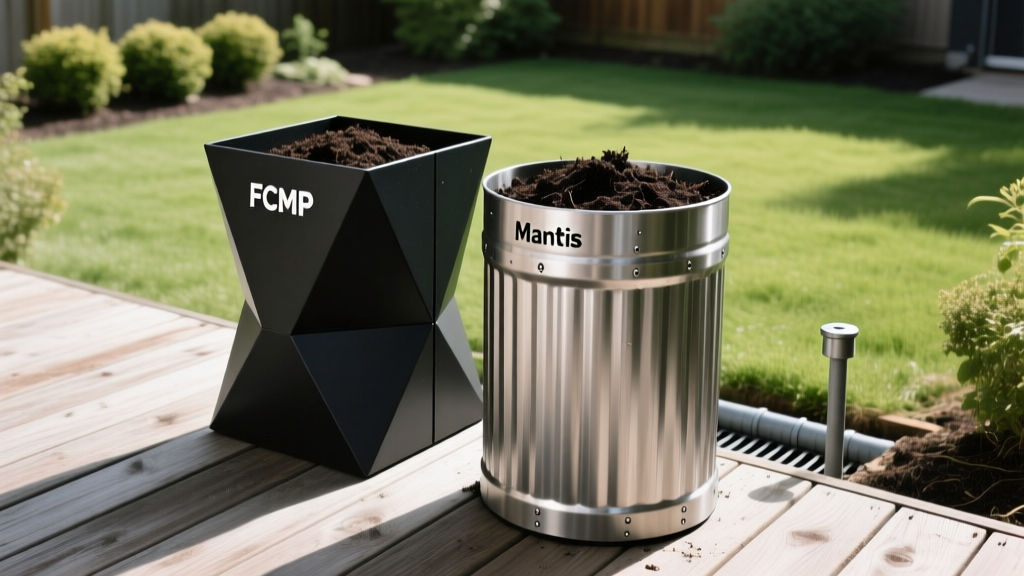
FCMP vs Mantis Compost Tumbler 2026: Yard Waste Guide
Sarah ChenPublished
The Hidden Threat to Landscape Drainage Pipes
Landscape drainage pipes, including corrugated perforated pipes, French drains, and catch basin systems, are the unsung heroes of a healthy, flood-free yard. However, in 2026, with increasingly erratic spring downpours and heavier seasonal storms, these subsurface drainage systems are failing prematurely at an alarming rate. The primary culprit is rarely the pipe itself, but rather the organic debris that surrounds it. When homeowners leave grass clippings, autumn leaves, and pruning waste on the lawn or pile them near drainage grates, this organic matter decomposes into a fine, anaerobic sludge. This sludge washes into the gravel trenches, clogging the geotextile fabric and blocking the pipe perforations, leading to catastrophic yard flooding and expensive excavation repairs.
Why Composting Yard Waste Protects Drainage Infrastructure
The most effective way to protect your landscape drainage pipes is to eliminate the source of the organic sludge before it can wash into your catch basins. By diverting yard waste into a high-efficiency compost tumbler, you not only create nutrient-rich soil amendments for your garden beds but also safeguard your subsurface drainage infrastructure. According to the United States Environmental Protection Agency (EPA), composting yard waste reduces the volume of organic material sent to landfills while simultaneously preventing the localized runoff issues that plague residential drainage systems. Furthermore, the University of Minnesota Extension highlights that properly managed composting systems reduce the spread of organic particulates that typically degrade soil percolation rates around drainage zones.
FCMP Outdoor Hot Spinning vs. Mantis Dual-Chamber: 2026 Showdown
For homeowners looking to manage heavy yard waste and protect their landscape drainage pipes, two models dominate the 2026 market: the FCMP Outdoor Hot Spinning Tumbler and the Mantis Dual-Chamber Compost Tumbler. Both offer enclosed, pest-resistant environments that accelerate decomposition, but they serve slightly different landscaping needs. Below, we break down how each model performs when tasked with processing the bulk organic matter that threatens your drainage systems.
FCMP Outdoor Hot Spinning: The Bulk Waste Workhorse
The FCMP Outdoor Hot Spinning Tumbler is widely regarded as the premier choice for properties with large trees and heavy seasonal leaf drop. Featuring a massive 37-gallon capacity, this tumbler is designed to handle the sheer volume of 'brown' carbon-rich materials that, if left on the lawn, would inevitably wash into your French drain inlets. The 2026 model features an upgraded BPA-free, UV-protected polypropylene body that withstands extreme temperature fluctuations without becoming brittle. Its deep fins and adjustable air vents promote rapid aerobic decomposition, turning bulk leaves and grass clippings into finished compost in as little as four weeks under optimal conditions. Priced at approximately $139 in 2026, the FCMP is a budget-friendly workhorse for bulk waste management. However, its single-chamber design means you must batch compost, requiring a secondary pile or bin if you generate continuous daily kitchen scraps.
Mantis Dual-Chamber: The Continuous Composting Solution
The Mantis Dual-Chamber Tumbler takes a different approach, offering two separate 27-gallon bins (54 gallons total) housed within a single, compact galvanized steel frame. This dual-chamber design is ideal for homeowners who want to continuously process both kitchen scraps and smaller yard clippings without interrupting the curing process of older batches. While its individual chamber capacity is smaller than the FCMP, making it less ideal for massive autumn leaf hauls, it excels at managing a steady stream of daily organic waste. The Mantis features a geared handle that makes turning heavy, wet loads significantly easier than the FCMP's spin-and-crank mechanism. In 2026, the Mantis retails for around $165. Its compact footprint makes it perfect for urban or suburban lots where space near the garden shed is limited, though you will need to pre-shred large branches and bulk leaves to maximize its efficiency.
2026 Feature Comparison Chart
| Feature | FCMP Outdoor Hot Spinning | Mantis Dual-Chamber |
|---|---|---|
| Total Capacity | 37 Gallons (Single Chamber) | 54 Gallons (Dual 27-Gal Chambers) |
| Frame Material | Galvanized Steel | Powder-Coated Steel |
| Turning Mechanism | Body Spin with Deep Fins | Geared Crank Handle |
| Best For | Bulk Autumn Leaves & Heavy Yard Waste | Continuous Kitchen Scraps & Small Clippings |
| 2026 Average Price | $139.00 | $165.00 |
| Drainage Protection Rating | Excellent (Handles high-volume runoff debris) | Good (Requires pre-shredding of bulk waste) |
Preparing Yard Waste to Prevent Drainage Clogs
To ensure your compost tumbler effectively protects your landscape drainage pipes, proper preparation of the organic waste is essential. Large branches, thick stalks, and matted clumps of wet grass do not break down quickly in a tumbler and are often discarded haphazardly when homeowners get frustrated. This discarded waste then finds its way into your yard's drainage grates. Always run autumn leaves and thin twigs through a mulcher or lawn mower before adding them to your tumbler. This increases the surface area for microbes, speeding up the composting process and ensuring that no bulky debris is left sitting near your catch basins. Furthermore, maintain a strict 3-to-1 ratio of browns (carbon) to greens (nitrogen) to prevent the tumbler from becoming an anaerobic, sludgy mess that defeats the purpose of your drainage protection strategy.
Siting Your Tumbler to Protect Drainage Zones
Where you place your compost tumbler is just as critical to your landscape drainage pipes as the waste you put inside it. Compost tumblers produce leachate—a nutrient-rich, particulate-heavy liquid that drains from the bottom of the bin during the decomposition process. If you site your FCMP or Mantis tumbler directly over or immediately adjacent to a French drain gravel trench, a dry well, or a catch basin inlet, this leachate will carry fine organic solids directly into your subsurface piping. Over time, these solids will accumulate, creating a stubborn biological clog that restricts water flow. In 2026, best practices dictate that you position your compost tumbler at least 10 to 15 feet away from any known landscape drainage pipe inlets or gravel percolation zones. Place a drip tray or a bed of coarse wood chips beneath the tumbler to filter the leachate naturally before it reaches the soil profile, ensuring your expensive drainage infrastructure remains clear and fully functional.
Final Verdict for the Drainage-Conscious Gardener
When evaluating the FCMP Outdoor Hot Spinning versus the Mantis Dual-Chamber from the perspective of landscape drainage pipe protection, the winner depends entirely on the type of organic threat your yard faces. If your primary drainage enemy is massive seasonal leaf drop and heavy grass clippings that wash into your corrugated pipes during spring thaws, the 37-gallon FCMP is the undisputed champion. Its bulk capacity allows you to rapidly sequester high-volume yard waste before it can reach your catch basins. Conversely, if your drainage issues are exacerbated by a steady, year-round accumulation of mixed kitchen scraps and fine garden prunings, the Mantis Dual-Chamber offers the continuous processing power needed to keep your yard pristine. Whichever model you choose in 2026, committing to enclosed composting is one of the smartest, most cost-effective investments you can make to extend the lifespan of your landscape drainage system.
