Home & Garden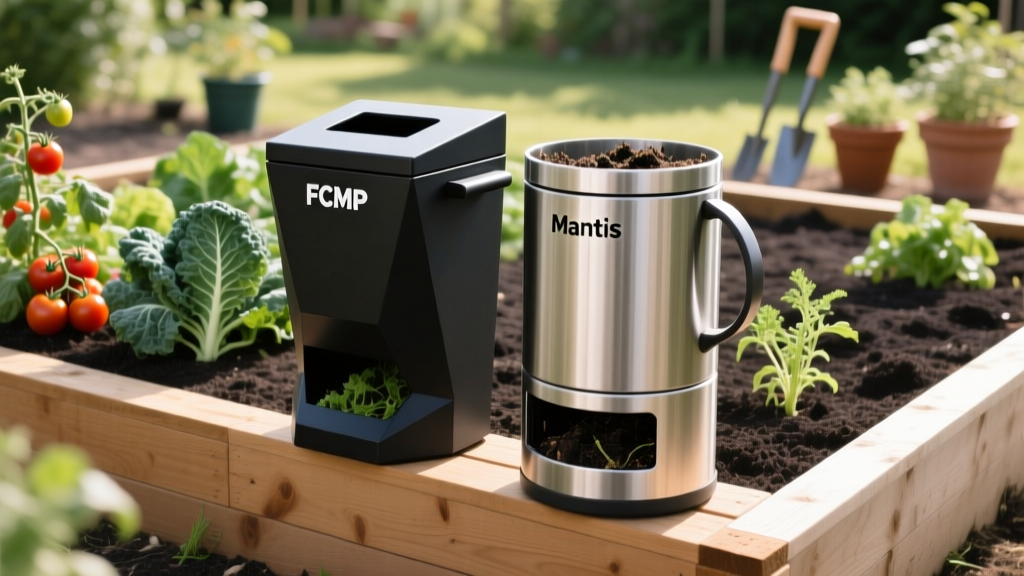
2026 FCMP vs Mantis Dual-Chamber Compost Tumbler Review
Robert HayesPublished
The 2026 Raised Bed Gardening Boom and the Compost Connection
Raised bed vegetable gardening has experienced a massive resurgence in 2026, driven by a desire for hyper-local, garden-to-table living and the need for optimized soil drainage in unpredictable weather patterns. However, the Achilles heel of any raised bed is nutrient depletion. Because raised beds are essentially closed ecosystems with intensive planting schedules, the soil requires constant replenishment. This is where high-quality compost becomes the lifeblood of your garden. For urban and suburban gardeners, dual-chamber compost tumblers offer a fast, pest-proof, and space-efficient way to generate the rich organic matter that heavy-feeding vegetables like tomatoes, peppers, and squash demand.
In this comprehensive 2026 review, we are putting two of the most popular tumblers on the market head-to-head: the FCMP IM4000 Dual Chamber Tumbler and the Mantis Dual-Chamber Compost Tumbler. We will evaluate their build quality, composting speed, ease of use, and, most importantly, how effectively they produce the dark, crumbly humus required to keep raised bed vegetable gardens thriving year after year.
Why Dual-Chamber Tumblers are Essential for Raised Beds
Single-chamber composters suffer from a major logistical flaw: every time you add fresh kitchen scraps, you reset the composting clock. For a raised bed gardener who needs a steady supply of finished compost for spring soil amending and mid-summer side-dressing, a single-chamber bin simply cannot keep up. Dual-chamber tumblers solve this problem by allowing for continuous composting. You fill one chamber with fresh greens and browns while the second chamber cures and finishes. By the time you harvest finished compost for your raised beds, the other side is well on its way to becoming the next batch.
Furthermore, tumblers elevate the composting process off the ground, which is crucial for keeping rodents out of your kitchen scraps. According to the Environmental Protection Agency's guide to composting basics, maintaining proper aeration and temperature is vital for breaking down organic matter quickly and killing off weed seeds or pathogens—both of which are critical factors when creating soil amendments for edible vegetable beds.
FCMP IM4000 Dual Chamber Tumbler: 2026 Deep Dive
The FCMP Outdoor IM4000 has long been a staple in the gardening community, and its 2026 manufacturing run continues to dominate the budget-friendly segment. Retailing between $90 and $110, it offers an impressive 37-gallon total capacity (split into two 18.5-gallon chambers). The body is constructed from 100% post-consumer recycled, BPA-free polypropylene, which is UV-protected to prevent degradation under the harsh summer sun.
For raised bed gardeners, the IM4000's internal design is its standout feature. The deep, angled fins act as mixing blades, breaking up clumps of wet kitchen scraps and ensuring that oxygen reaches the aerobic bacteria. The galvanized steel frame provides decent stability, though it can wobble slightly on uneven terrain. The sliding drop-down doors are large enough to accommodate a standard garden trowel or small hand rake, making it relatively easy to scoop out finished compost when it is time to top-dress your raised beds.
- Pros: Excellent internal aeration fins, large capacity, highly affordable, UV-resistant recycled plastic.
- Cons: Sliding doors can stick if wet compost freezes in the tracks during winter; frame can wobble on soft soil.
Mantis Dual-Chamber Compost Tumbler: 2026 Deep Dive
The Mantis Dual-Chamber Tumbler approaches the composting process with a focus on ergonomic engineering and heavy-duty durability. Priced at a premium of $140 to $160 in 2026, the Mantis model features a robust, rust-proof powder-coated aluminum and steel frame. Instead of relying solely on gravity and internal fins, many Mantis dual-chamber models incorporate a geared crank handle or a specialized spinning axis that makes turning heavy, wet loads significantly easier on the back and shoulders.
With a slightly smaller total capacity of roughly 30 gallons, the Mantis is ideal for gardeners with smaller raised bed footprints or those who generate a moderate amount of kitchen waste. The aeration spikes inside the Mantis chamber are aggressively angled, which is excellent for piercing through dense layers of dry autumn leaves or cardboard—common 'browns' used to balance nitrogen-rich vegetable scraps. The locking lid mechanism is also superior to the FCMP, ensuring that curious raccoons or neighborhood pets cannot pry it open.
- Pros: Superior ergonomic turning mechanism, heavy-duty rust-proof frame, secure locking lid, excellent for dense materials.
- Cons: Higher price point, smaller overall capacity, crank mechanisms require occasional lubrication.
Head-to-Head Comparison Chart
| Feature | FCMP IM4000 Dual Chamber | Mantis Dual-Chamber |
|---|---|---|
| 2026 Retail Price | $90 - $110 | $140 - $160 |
| Total Capacity | 37 Gallons | 30 Gallons |
| Frame Material | Galvanized Steel | Powder-Coated Aluminum/Steel |
| Turning Mechanism | Hand-Spin with Deep Fins | Ergonomic Spin / Geared Crank |
| Best For | High-volume waste, budget buyers | Ease of use, smaller spaces, heavy loads |
Integrating Tumbler Compost into Raised Vegetable Beds
Producing the compost is only half the battle; applying it correctly to your raised beds is where the magic happens. Tumbler compost tends to be slightly finer and more uniform than open-pile compost, making it an exceptional seed-starting medium and top-dressing material.
Spring Soil Amending: Two weeks before your last frost date, spread a 2-inch layer of finished compost from your tumbler across the surface of your raised beds. Use a broadfork or garden fork to gently incorporate it into the top 4 to 6 inches of the existing soil. This replenishes the microbial life that heavy-feeding crops like brassicas and nightshades require.
Mid-Season Side-Dressing: When your indeterminate tomatoes and vining squash begin to set fruit, pull the soil back slightly from the base of the plant, add a handful of cured tumbler compost, and water it in. The slow-release nutrients will prevent blossom end rot and sustain fruit production through the late summer heat.
Compost Tea for Foliar Feeding: Because tumbler compost is highly aerobic, it is teeming with beneficial bacteria. Steep a shovelful of finished compost in a 5-gallon bucket of rainwater for 48 hours, strain it, and use the liquid to water the base of your leafy greens and root vegetables.
Mastering the Carbon-to-Nitrogen Ratio for Heavy Feeders
A common mistake raised bed gardeners make is dumping pure nitrogen-rich kitchen scraps (fruit peels, coffee grounds, vegetable trimmings) into their tumblers without adequate carbon. This results in a slimy, anaerobic mess that smells like ammonia and will burn the delicate roots of your vegetables if applied prematurely.
According to research published by the University of Minnesota Extension, the ideal Carbon-to-Nitrogen (C:N) ratio for rapid composting is approximately 30:1. For every bucket of green kitchen scraps you add to your FCMP or Mantis tumbler, you must add two to three buckets of 'browns'. In 2026, with many municipalities offering shredded paper and cardboard recycling alternatives, gardeners are increasingly using unbleached corrugated cardboard, dry autumn leaves, and untreated wood shavings as carbon sources. Shredding these browns before adding them to the tumbler will cut your composting time in half, yielding finished humus in as little as 4 to 6 weeks during the peak heat of July.
Moisture and Aeration: Overcoming the Tumbler Challenge
Tumblers are enclosed environments, which means they do not benefit from natural rainfall or ground-dwelling earthworms. It is entirely up to the gardener to manage moisture levels. The contents of your tumbler should always feel like a wrung-out sponge. If you live in an arid climate or are experiencing a dry summer, you must actively add water to the tumbler when you add dry browns.
Conversely, if your tumbler becomes waterlogged, the aerobic bacteria will die off, and anaerobic decomposition will take over. If you open the sliding door of your FCMP or the lid of your Mantis and detect a foul, rotting odor, stop adding greens immediately. Add a generous amount of dry shredded paper or sawdust, and spin the tumbler vigorously for a full minute to introduce oxygen. Proper aeration is the key to generating the sweet, earthy-smelling compost that your raised bed root vegetables—like carrots, radishes, and beets—need to develop straight, unobstructed taproots.
Final Verdict for the 2026 Growing Season
Choosing between the FCMP IM4000 and the Mantis Dual-Chamber Tumbler ultimately comes down to your specific raised bed setup, physical capabilities, and budget.
If you have a large raised bed garden that produces a high volume of plant waste at the end of the season, and you are looking for maximum capacity on a budget, the FCMP IM4000 is the undisputed champion. Its 37-gallon capacity and aggressive internal fins make it a workhorse for high-volume composting.
However, if you are gardening in a smaller urban space, struggle with the physical exertion of spinning a heavy, wet drum, or want a premium, rust-proof frame that will last for decades, the Mantis Dual-Chamber Tumbler is worth the premium investment. Its ergonomic design ensures that turning your compost remains a joy rather than a chore, guaranteeing a steady supply of black gold for your raised beds throughout the 2026 growing season and beyond.
