Home & Garden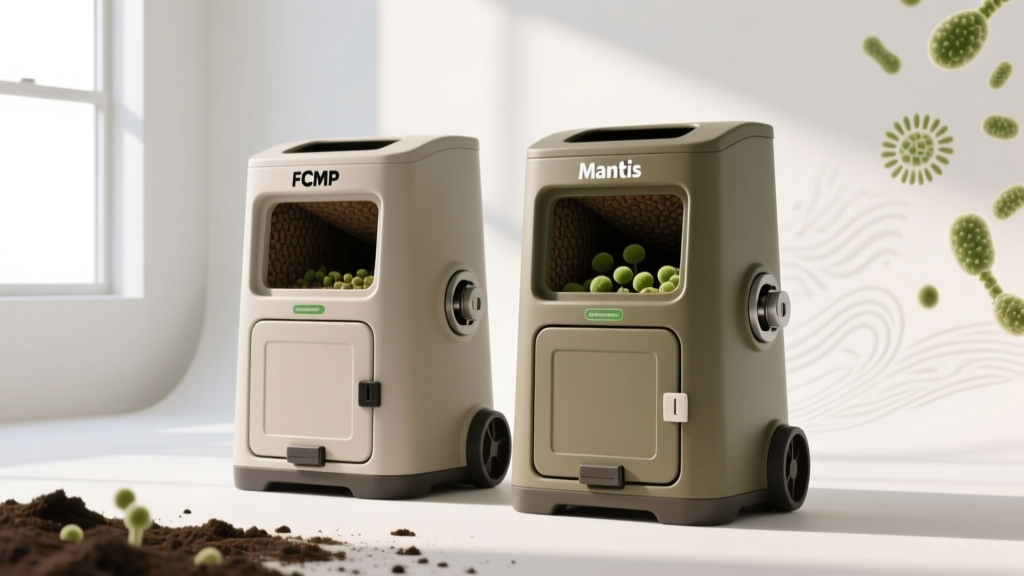
FCMP vs Mantis Dual-Chamber Composters 2026: Bio-Control Guide
Anna KowalskiPublished
The 2026 Shift Toward Biological Pest Control
As we navigate the 2026 gardening season, the paradigm of home lawn and garden care has decisively shifted away from synthetic interventions and toward robust, ecologically balanced systems. At the heart of this movement is the integration of beneficial insects and biological control agents to manage garden pests naturally. While many gardeners focus on planting pollinator strips or installing insect hotels, the true foundation of a bio-control strategy begins beneath the surface—and more specifically, in the compost bin. High-quality compost is not merely a fertilizer; it is a thriving habitat and a delivery system for the micro-arthropods, predatory nematodes, and beneficial fungi that keep destructive pests in check.
For urban and suburban gardeners, dual-chamber compost tumblers have become the gold standard for processing organic waste efficiently. However, not all tumblers create the ideal environment for the microbial life that supports broader bio-control networks. In this comprehensive guide, we compare two of the most popular models on the market: the FCMP IM4000 Dual-Chamber Tumbler and the Mantis Dual-Chamber Compost Tumbler. We will evaluate them strictly through the lens of beneficial insect habitat creation, microbial food web support, and biological pest management.
Why Tumbler Compost Matters for Beneficial Insects
It is a common misconception that compost tumblers are entirely sealed off from the garden ecosystem. While it is true that the elevated, enclosed design of a tumbler excludes macro-invertebrates like earthworms and ground beetles during the active, high-heat decomposition phase, the output of the tumbler is what matters most for bio-control. According to the Environmental Protection Agency (EPA), properly aerated compost teems with microscopic life that forms the base of the soil food web.
When you apply finished, microbially diverse compost to your garden beds, you are inoculating your soil with organisms that directly support beneficial insects. For example, predatory soil mites and rove beetles require the humid, humus-rich environment that only well-rotted, biologically active compost can provide. Furthermore, compost is the primary vector for introducing entomopathogenic (insect-attacking) fungi like Beauveria bassiana and beneficial nematodes like Steinernema feltiae, which actively hunt fungus gnats, grubs, and root-feeding larvae. The efficiency with which a tumbler processes organic matter directly dictates the quality of this biological blank canvas.
FCMP IM4000 Dual-Chamber: Deep Fins and Aerobic Microbes
The FCMP IM4000 has remained a dominant force in the composting market through 2026, largely due to its internal architecture. The interior of the FCMP features deep, aggressive finning designed to break up clumps and force oxygen into the core of the compost mass as you spin the barrel.
The Aerobic Advantage for Bio-Control
Oxygen is the critical variable in cultivating the specific aerobic bacteria and fungi required for disease suppression and bio-control. Anaerobic conditions breed pathogens and produce organic acids that can harm the delicate root systems of your plants, thereby stressing them and making them more susceptible to sap-sucking pests like aphids and spider mites. The deep fins of the FCMP IM4000 ensure that the compost remains strictly aerobic, fostering populations of Trichoderma fungi. These beneficial fungi are notorious for parasitizing harmful soil-borne pathogens, effectively acting as a biological shield for your plant roots.
However, the aggressive fins require a careful balance of moisture. If your compost mix is too wet, the deep fins can compact the material rather than fluff it, leading to localized anaerobic pockets. To maximize the bio-control potential of the FCMP, gardeners must maintain a strict carbon-to-nitrogen ratio and monitor moisture levels closely, ensuring the material feels like a wrung-out sponge before spinning.
Mantis Dual-Chamber Tumbler: Angled Spikes and Moisture Dynamics
The Mantis Dual-Chamber Tumbler approaches the aeration challenge differently. Instead of deep, longitudinal fins, the Mantis utilizes a series of angled interior spikes and a slightly more cylindrical drum profile. This design choice has profound implications for moisture retention and the cultivation of specific microbial communities.
Moisture Retention and Fungal Dominance
Beneficial fungi, which are essential for breaking down complex lignins and forming symbiotic relationships with plant roots (mycorrhizae), generally prefer slightly higher moisture environments and less physical disruption than bacteria. The angled spikes of the Mantis tumbler provide excellent aeration but are slightly less aggressive at shredding dense, wet materials. This allows the compost to retain a bit more moisture, creating an environment where fungal networks can begin to establish during the later, cooler stages of the composting cycle.
According to research highlighted by the Cornell Waste Management Institute, fungal-dominant compost is particularly effective at suppressing foliar diseases when used as a top dressing or in compost tea extracts. By fostering a fungal-rich environment in the Mantis tumbler, gardeners can produce a finished product that, when applied to the soil surface, creates a habitat highly attractive to predatory ground beetles and spiders, which rely on the complex micro-topography of fungal-rich humus for hunting and overwintering.
The Curing Phase: Inviting the Bio-Control Army
Neither the FCMP nor the Mantis tumbler is designed to house beneficial insects during the active composting phase. The thermophilic (hot) stage of composting reaches temperatures between 130°F and 160°F, which is lethal to most insects and macro-organisms. The true bio-control magic happens during the curing phase.
Once the tumbler has finished its hot cycle and the material has cooled to ambient temperature, it must be cured. This is where you transition the compost from a sterile, pathogen-free state to a living, breathing ecosystem. Here is how to use your tumbler's output to build a bio-control stronghold in 2026:
- Ground-Level Transfer: Move the finished compost from the tumbler to a ground-level curing bin or directly onto your garden beds. This allows earthworms, predatory nematodes, and micro-arthropods to migrate into the humus.
- Nematode Inoculation: During the curing phase, water the compost with a solution containing live beneficial nematodes (Heterorhabditis bacteriophora). The moist, organic-rich environment of the cured compost acts as a perfect carrier, allowing the nematodes to multiply before you apply them to pest-prone garden zones.
- Compost Tea Extraction: Use the finished compost from either tumbler to brew actively aerated compost tea (AACT). Spraying AACT on plant foliage introduces competitive microbes that outcompete powdery mildew and botrytis, while also deterring pests that dislike the microbial biofilm on the leaves.
'Healthy soil is not just a medium for plant growth; it is a complex biological battlefield where beneficial organisms naturally suppress pests and diseases. The quality of your compost dictates the strength of your biological army.'
Feature Comparison Chart: FCMP vs. Mantis (2026 Models)
| Feature | FCMP IM4000 Dual-Chamber | Mantis Dual-Chamber Tumbler |
|---|---|---|
| Capacity | 37 Gallons (5 cu. ft.) | 37 Gallons (5 cu. ft.) |
| Aeration Mechanism | Deep longitudinal fins | Angled interior spikes |
| Best Microbial Profile | Bacteria-dominant (Hot/Fast) | Fungal-dominant (Cool/Slow) |
| Moisture Management | Excellent drainage, dries faster | Retains moisture well |
| Bio-Control Application | Ideal for nematode inoculation | Ideal for compost tea & fungal extracts |
| Frame Durability | Galvanized steel, high stability | Powder-coated steel, compact footprint |
Final Verdict for the Eco-Conscious Gardener
Choosing between the FCMP IM4000 and the Mantis Dual-Chamber Tumbler in 2026 ultimately depends on your specific bio-control strategy and garden ecosystem. If your primary goal is rapid, hot composting to eliminate weed seeds and soil-borne pathogens—creating a sterile, bacteria-rich base that you will later inoculate with predatory nematodes and beneficial bacteria—the FCMP IM4000 is the superior choice. Its aggressive aeration fins guarantee the oxygen flow necessary for high-heat thermophilic cycles.
Conversely, if you are focused on building fungal-dominant compost for disease-suppressive mulches, brewing compost teas, and creating a humid, humus-rich habitat for predatory ground beetles and rove beetles, the Mantis Dual-Chamber Tumbler offers the ideal moisture retention and gentler turning action. Both tumblers are exceptional tools for the modern, eco-conscious gardener. By understanding the biological nuances of how these tumblers process organic matter, you can harness the power of compost to cultivate a thriving, self-regulating garden ecosystem that relies on nature's own pest-control agents.
