Home & Garden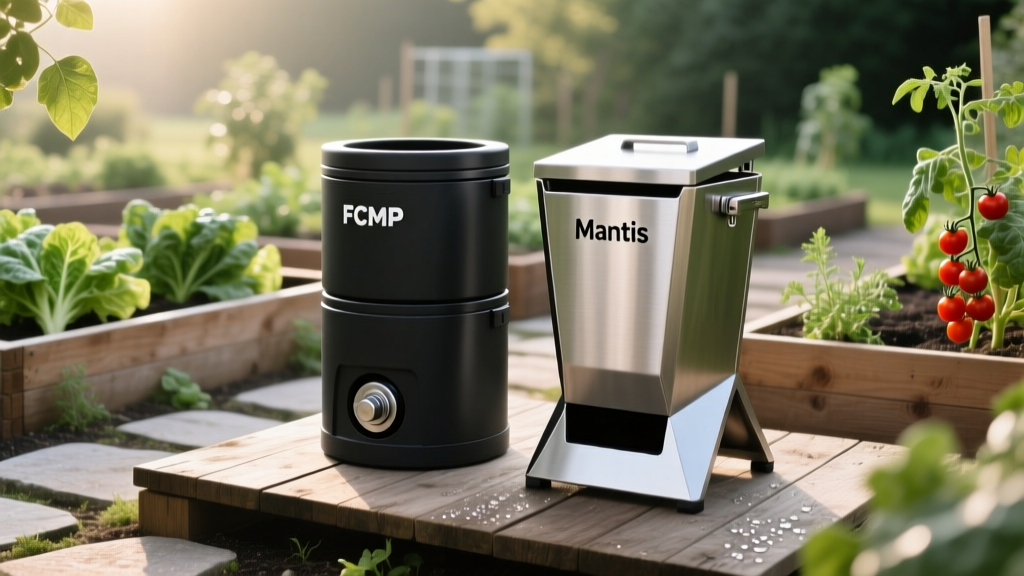
FCMP vs Mantis Compost Tumblers: 2026 Foodscaping Guide
Robert HayesPublished
The Backbone of Foodscaping: Why Dual-Chamber Composting Matters
In 2026, the art of foodscaping—seamlessly integrating edible plants into traditional ornamental landscapes—has moved from a niche gardening trend to a mainstream landscape design staple. Whether you are planting vibrant Swiss chard alongside your hostas, using highbush blueberries as a living privacy hedge, or bordering your walkways with fragrant rosemary and trailing strawberries, the success of your edible landscape relies entirely on soil health. To achieve the nutrient-dense, biologically active soil required for these dual-purpose plants, continuous composting is essential. This is where dual-chamber compost tumblers become the unsung heroes of the modern foodscape.
Unlike single-bin composters that force you to stop adding fresh scraps while a batch cures, dual-chamber tumblers allow for continuous processing. You fill one chamber with fresh kitchen scraps and yard waste while the second chamber cures into finished, black-gold compost. According to the Environmental Protection Agency (EPA), composting not only diverts valuable organic matter from landfills but also creates a vital soil amendment that suppresses plant diseases and reduces the need for chemical fertilizers. For the edible landscape, this means healthier, more resilient plants that look beautiful and produce bountiful harvests.
In this comprehensive 2026 guide, we are putting two of the most popular tumblers on the market head-to-head: the FCMP Outdoor IM4000 Dual Chamber Tumbler and the Mantis Dual-Chamber Compost Tumbler. We will evaluate their design, capacity, aeration, and overall suitability for the unique demands of foodscaping.
FCMP Outdoor IM4000 Dual Chamber Tumbler: A 2026 Overview
The FCMP Outdoor IM4000 has long been a staple in home gardens, and its 2026 iteration continues to dominate the budget-friendly segment of the market. With a total capacity of 37 gallons (divided into two roughly 18.5-gallon chambers), it is perfectly sized for urban and suburban foodscapes where space is at a premium but soil amendment needs remain high.
Design and Aeration
The FCMP features a BPA-free, UV-protected polypropylene bin mounted on a galvanized steel frame. The interior of each chamber is equipped with deep, adjustable fins. These fins are critical for foodscaping because they break up compacted materials like wet fruit scraps and dense grass clippings, ensuring that oxygen reaches the aerobic bacteria responsible for rapid decomposition. The adjustable air vents allow you to control airflow, which is vital when composting high-nitrogen materials like coffee grounds and vegetable peelings.
Pros and Cons for Edible Landscapes
- Pros: Excellent price-to-performance ratio; lightweight and easy to spin even when full; deep fins provide superior aeration for fast-curing compost.
- Cons: The sliding doors can be slightly cumbersome to align when the bin is full; the 37-gallon capacity may require frequent emptying for larger, heavily mulched foodscapes.
Mantis Dual-Chamber Compost Tumbler: A 2026 Overview
The Mantis Dual-Chamber Compost Tumbler is engineered for gardeners who demand heavy-duty performance and slightly higher capacity. Boasting a 43-gallon total capacity, the Mantis provides a bit more room for the bulky brown materials (like dried leaves and shredded cardboard) necessary to balance the nitrogen-rich green materials generated in a kitchen-heavy foodscape.
Design and Pest Resistance
Mounted on a robust, powder-coated steel frame that resists rust and weathering, the Mantis tumbler features a secure, twist-locking door mechanism. In an edible landscape, pest control is paramount. The smell of decomposing fruit and vegetable scraps can attract rodents and raccoons, which can wreak havoc on nearby ornamental edibles. The Mantis is renowned for its tight seals and sturdy latches, making it highly pest-resistant. Furthermore, its ergonomic hand grips make turning the heavier 43-gallon load surprisingly manageable.
Pros and Cons for Edible Landscapes
- Pros: Larger 43-gallon capacity; superior pest-resistant locking doors; heavy-duty powder-coated frame withstands harsh weather; excellent moisture retention.
- Cons: Higher price point; heavier to rotate when both chambers are fully loaded with dense, wet materials.
2026 Head-to-Head Comparison Chart
To help you visualize how these two composters stack up for your specific landscape needs, review the detailed comparison table below.
| Feature | FCMP Outdoor IM4000 | Mantis Dual-Chamber |
|---|---|---|
| Total Capacity | 37 Gallons | 43 Gallons |
| Frame Material | Galvanized Steel | Powder-Coated Steel |
| Bin Material | BPA-Free Polypropylene | BPA-Free Recycled Plastic |
| Aeration System | Deep Interior Fins & Vents | Interior Baffles & Vents |
| Door Mechanism | Sliding Drop Panels | Twist-Lock Secure Lids |
| Pest Resistance | Moderate | High |
| Assembly Difficulty | Moderate (approx. 45 mins) | Easy (approx. 30 mins) |
| 2026 Est. Price Range | $110 - $130 | $150 - $180 |
Aeration, Moisture, and the Biology of Edible Landscapes
Creating compost specifically for foodscaping requires an understanding of soil biology. Ornamental edibles, such as artichokes, rainbow chard, and fruiting shrubs, are heavy feeders. They require compost that is fully cured and rich in humus. The University of Minnesota Extension emphasizes that maintaining the correct carbon-to-nitrogen ratio (roughly 30:1) and adequate moisture is the key to fostering the thermophilic bacteria that break down organic matter efficiently.
Tumblers can sometimes dry out faster than open piles. When using either the FCMP or the Mantis, you must monitor moisture levels closely. The compost should feel like a wrung-out sponge. If you are composting a lot of dry autumn leaves (browns) from your landscape trees, you may need to add water or extra nitrogen-rich greens (like fresh grass clippings or coffee grounds) to keep the biological engine running. The FCMP's adjustable air vents give it a slight edge in moisture and temperature control, while the Mantis's solid construction excels at retaining heat during the cooler shoulder seasons of early spring and late autumn.
Practical Foodscaping Applications for Your Finished Compost
Once your dual-chamber tumbler has produced a batch of dark, earthy-smelling compost, how should you apply it to your edible landscape? Here are the best methods for 2026:
- Top-Dressing Fruiting Shrubs: Apply a two-inch layer of finished compost around the drip line of your blueberry bushes, raspberries, and dwarf fruit trees. This slow-release feeding method improves soil structure without burning delicate feeder roots.
- Amending Raised Beds: When preparing your raised beds for seasonal transitions—such as swapping out spring radishes for autumn kale—work a generous three inches of compost into the top six inches of the existing soil to replenish depleted micronutrients.
- Mulching Ornamental Edibles: Use compost as a nutrient-rich mulch around the base of ornamental edibles like nasturtiums, calendula, and lavender. It suppresses weeds while feeding the soil web.
- Brewing Compost Tea: Steep a few shovelfuls of your tumbler compost in aerated water for 48 hours. Use this liquid gold to foliar-feed your tomato plants and pepper bushes, boosting their natural disease resistance.
Final Verdict: Which Tumbler Wins in 2026?
Choosing between the FCMP and Mantis dual-chamber compost tumblers ultimately depends on the scale of your foodscape and your local wildlife pressures. If you are designing a compact, urban edible garden and want a highly efficient, budget-friendly tumbler that cures soil amendments rapidly, the FCMP Outdoor IM4000 is an outstanding choice. Its deep aeration fins are unmatched for breaking down kitchen scraps quickly.
However, if your edible landscape is sprawling, generates a high volume of yard waste, or is situated in an area with heavy rodent and raccoon activity, the Mantis Dual-Chamber Compost Tumbler is the superior investment. Its larger capacity, robust powder-coated frame, and secure twist-lock doors provide the peace of mind and volume needed to sustain a large-scale foodscape throughout the entire 2026 growing season. As the Royal Horticultural Society (RHS) notes, the best composting system is the one that fits seamlessly into your gardening routine and local environment, ensuring a steady supply of organic matter for your soil.
